If you've ever had a spoonful of onion jam on a burger, folded into a grilled cheese, or spread under a slice of baked brie, you already know it doesn't taste like anything else in the condiment aisle. It's sweet, it's savory, it's a little sharp at the edges, and it takes something as ordinary as an onion and turns it into something you'd genuinely miss if it disappeared from your fridge.
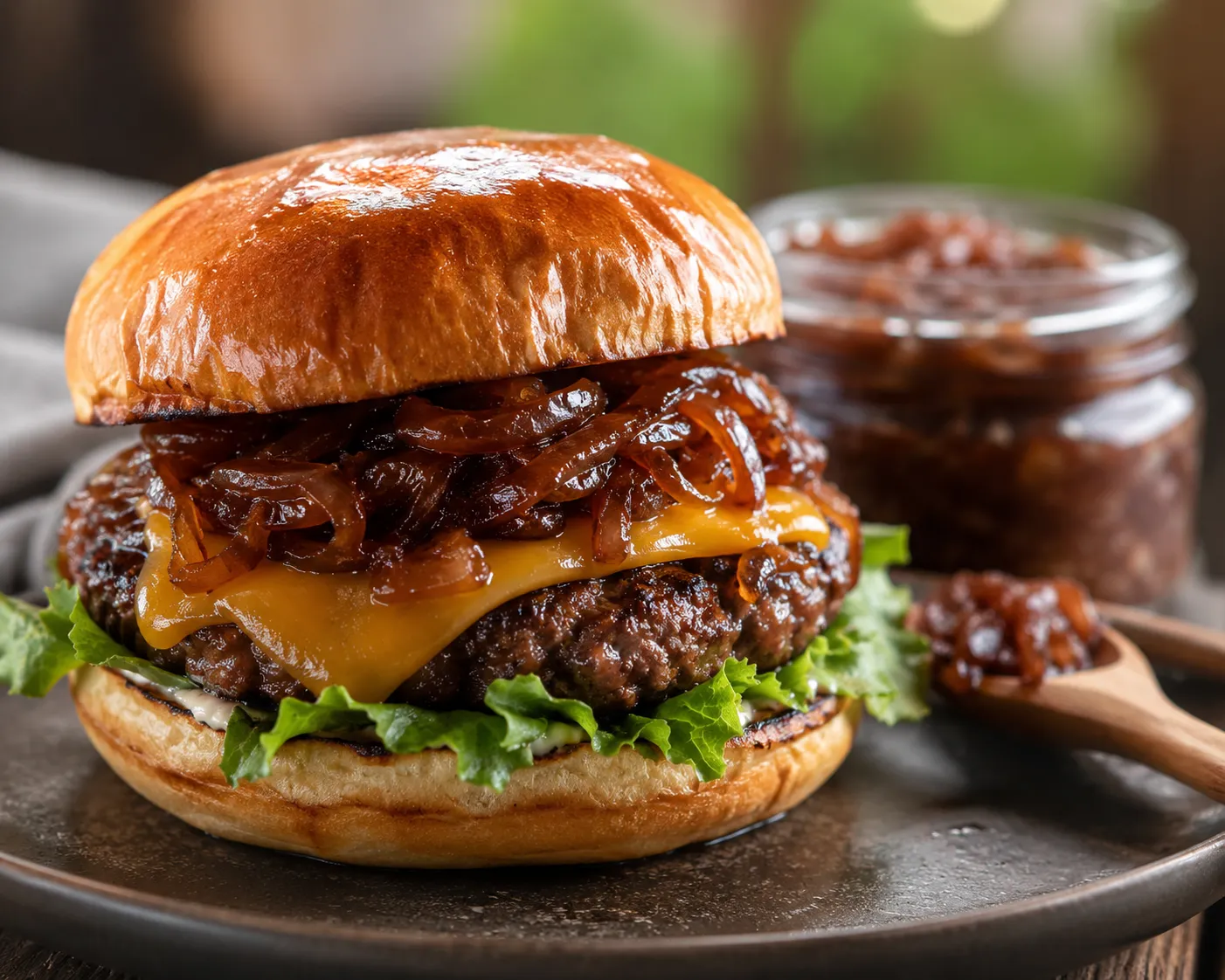
The confusing part is that onion jam looks simple on paper — onions, sugar, vinegar, heat — and yet most first attempts come out either too sweet, too thin, too bitter, or scorched on the bottom of the pan. This guide walks through what onion jam actually is, how it differs from caramelized onions and onion marmalade, the science behind why it works, a full method with troubleshooting, variations by region and dietary need, storage and food-safety basics, and answers to the questions people actually search for.
What Is Onion Jam, Exactly?
Onion jam is onions cooked low and slow with sugar and an acid (usually vinegar, sometimes wine or citrus) until they break down into a thick, spreadable, deeply savory-sweet preserve. It sits in the same family as chutney and marmalade but leans more savory, which is why it works as well next to a cheese board as it does on a sandwich.
The terms get used loosely, so here's a quick way to tell them apart:
Caramelized onions: onions slowly browned in fat until sweet and soft. No added sugar or vinegar required. Thinner, less concentrated.
Onion jam: caramelized onions taken further, with added sugar and vinegar, cooked down until thick and glossy enough to hold a spoon shape.
Onion marmalade: essentially the same idea as onion jam, more common in British and Irish usage; some cooks use the terms interchangeably.
Onion chutney: usually includes more spice, sometimes fruit, and a stronger vinegar presence, closer to an Indian-style condiment.
None of these labels are policed by anyone — recipes cross these lines constantly — but understanding the spectrum helps you predict texture and sweetness before you start cooking.
The Science: Why Onions Turn Sweet and Sticky
Raw onions are pungent because of sulfur compounds released when their cells are cut or crushed. Slow cooking does two things at once. First, heat breaks down those sulfur compounds, which is why cooked onion smells sweeter and milder than raw onion. Second, and more importantly for jam, onions contain natural sugars (mostly fructose, glucose, and sucrose) that concentrate as water cooks off and undergo the Maillard reaction and caramelization at higher, drier heat — the same browning chemistry responsible for seared steak and toasted bread crust.
This is why rushing caramelized onions on high heat produces onions that are browned on the outside but raw-tasting in the middle, while low, patient heat gives you onions that are sweet all the way through. Onion jam takes this one step further: after the onions have softened and started to caramelize, you add sugar and vinegar and reduce the whole mixture until the natural pectin-like starches and the added sugar create a jammy, spoonable consistency.
Choosing Your Onions
Not all onions behave the same way in a pot.
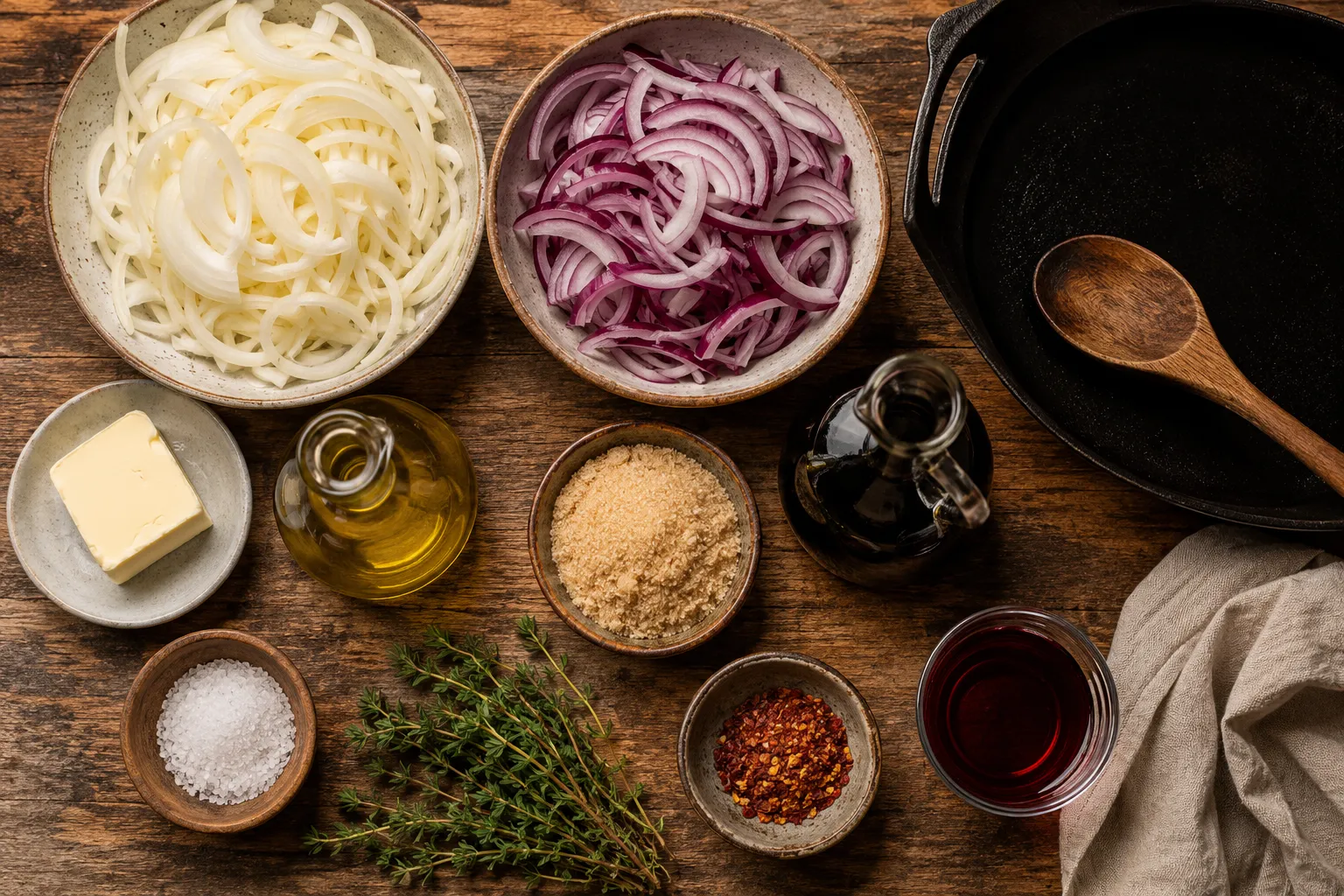 Yellow onions are the standard choice — balanced sweetness, reliable texture, widely available.
Red onions bring a fruitier, slightly sharper flavor and a beautiful deep purple-red color once cooked down, which is why a lot of onion jam recipes default to red.
Sweet onions (Vidalia, Walla Walla) caramelize faster because they start with more sugar, but they can turn cloying in a jam unless you balance with extra vinegar.
Shallots make a more delicate, refined jam — often used for fine-dining-style accompaniments — but cost more and take longer to prep.
Yellow onions are the standard choice — balanced sweetness, reliable texture, widely available.
Red onions bring a fruitier, slightly sharper flavor and a beautiful deep purple-red color once cooked down, which is why a lot of onion jam recipes default to red.
Sweet onions (Vidalia, Walla Walla) caramelize faster because they start with more sugar, but they can turn cloying in a jam unless you balance with extra vinegar.
Shallots make a more delicate, refined jam — often used for fine-dining-style accompaniments — but cost more and take longer to prep.
A mix of yellow and red onions is a reasonable default if you're not sure: you get color, balance, and depth without leaning too far in one direction.
The Method: A Reliable Base Recipe
This isn't the only way to make onion jam, but it's a dependable structure you can adjust once you understand it.
1. Slice evenly
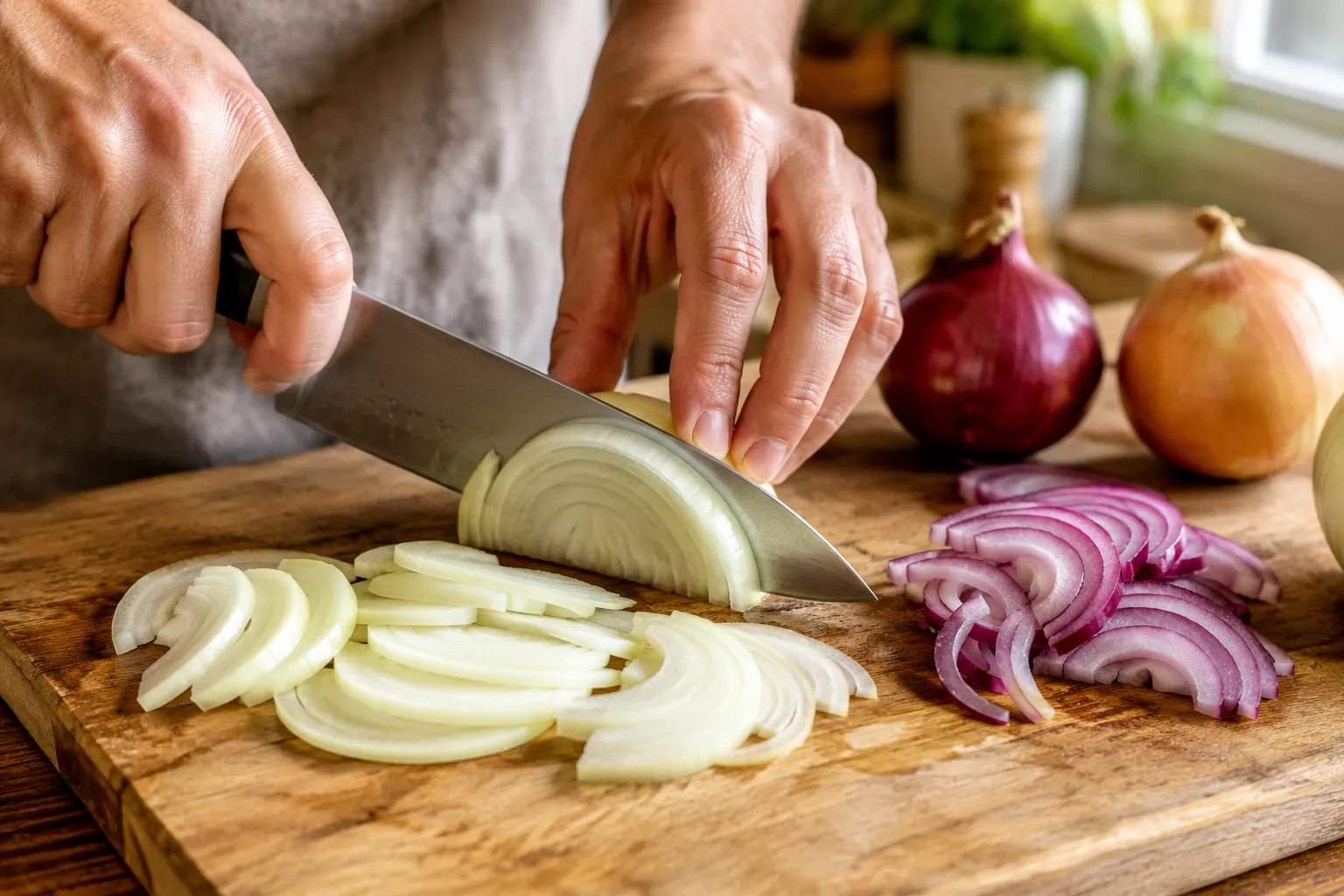 Uneven slices cook unevenly — some pieces will burn while others are still raw. Aim for consistent, thin half-moons.
2. Start low and slow
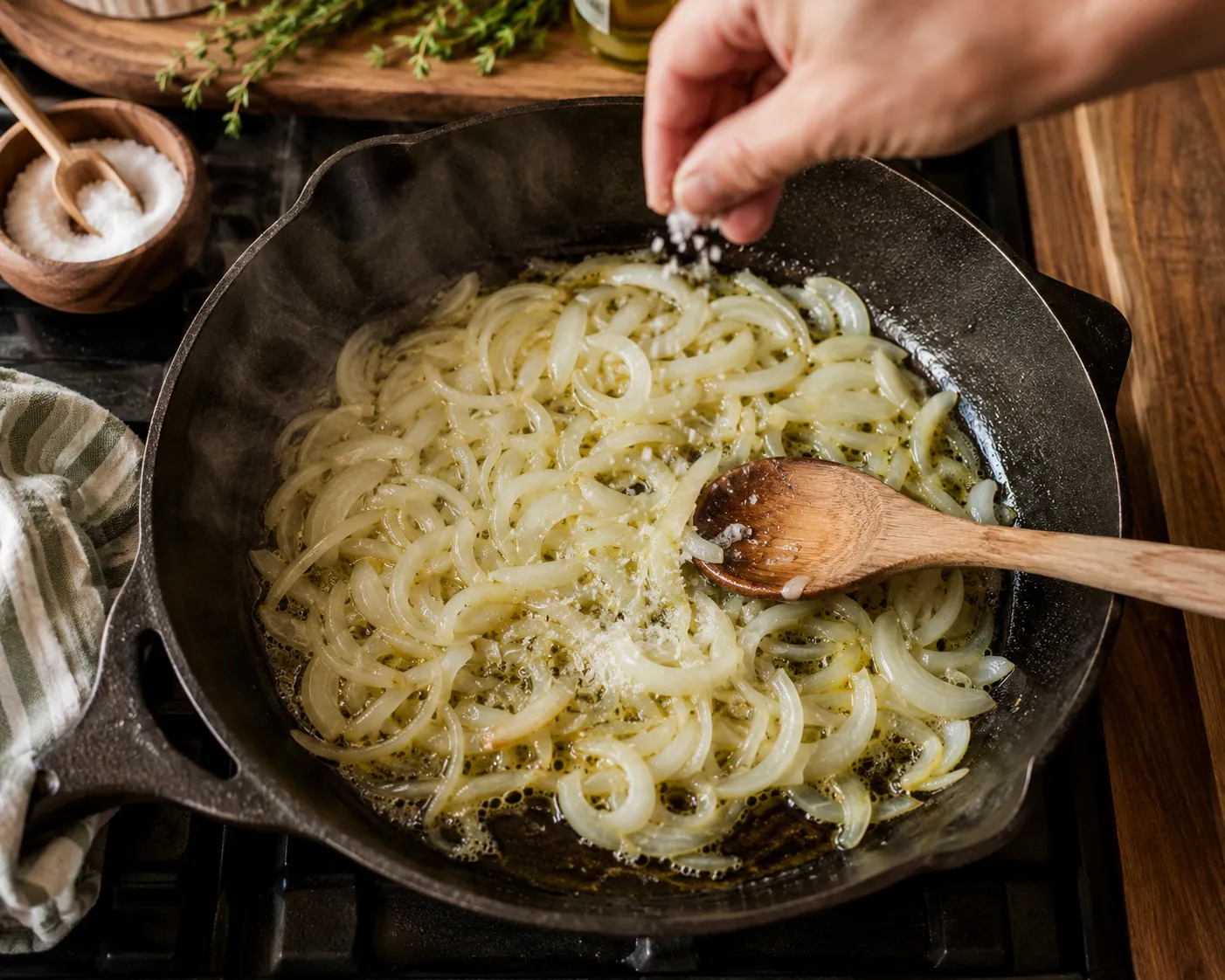 Melt the fat in a heavy-bottomed pan over medium-low heat. Add the onions with a pinch of salt (salt draws out moisture, which helps them soften rather than fry). Stir occasionally.
3. Be patient with the caramelization stage
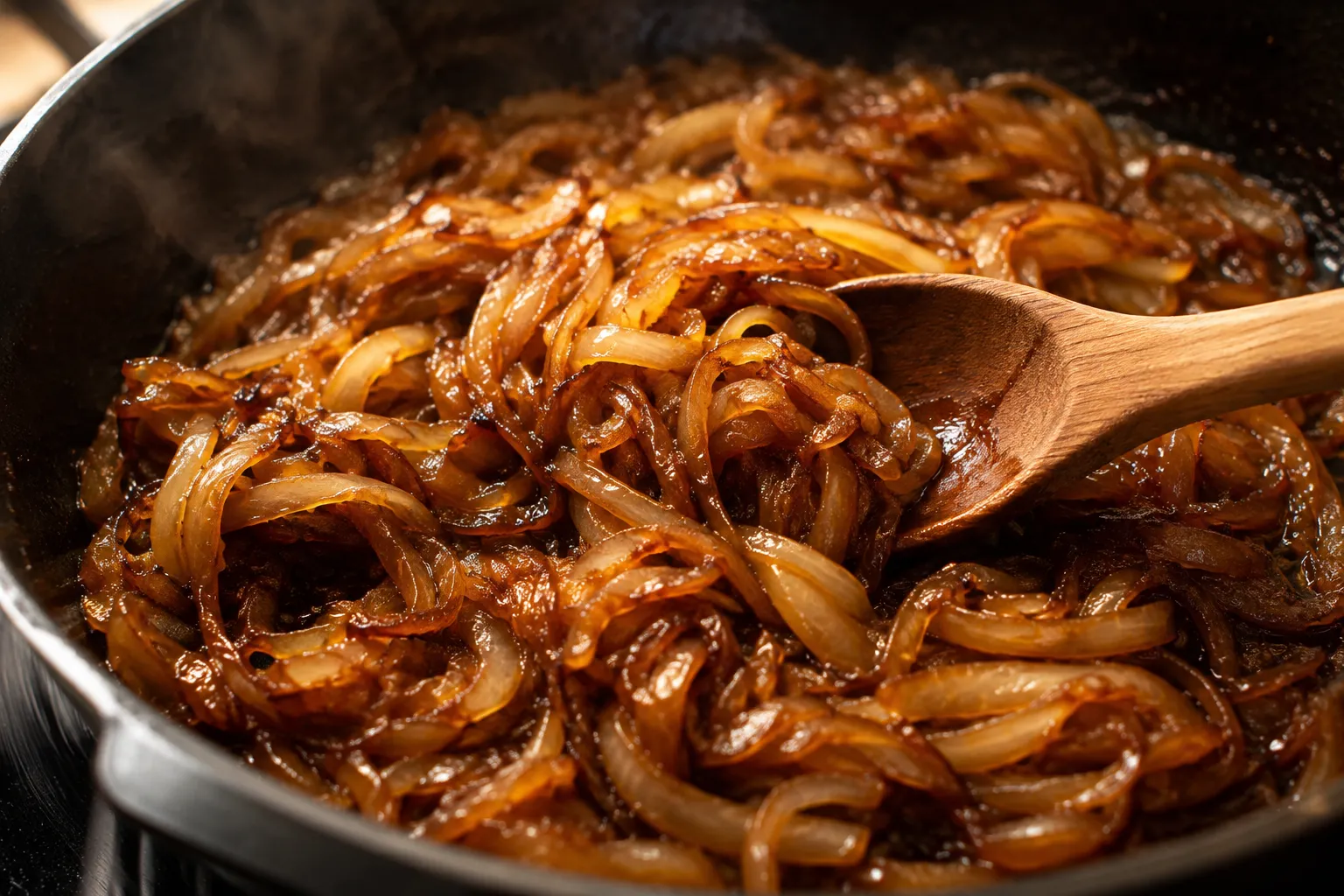 This takes 30–45 minutes, not 10. The onions should go from white/purple to translucent to golden to deep amber. Resist the urge to raise the heat to speed this up — it trades flavor for time.
4. Deglaze and add sugar
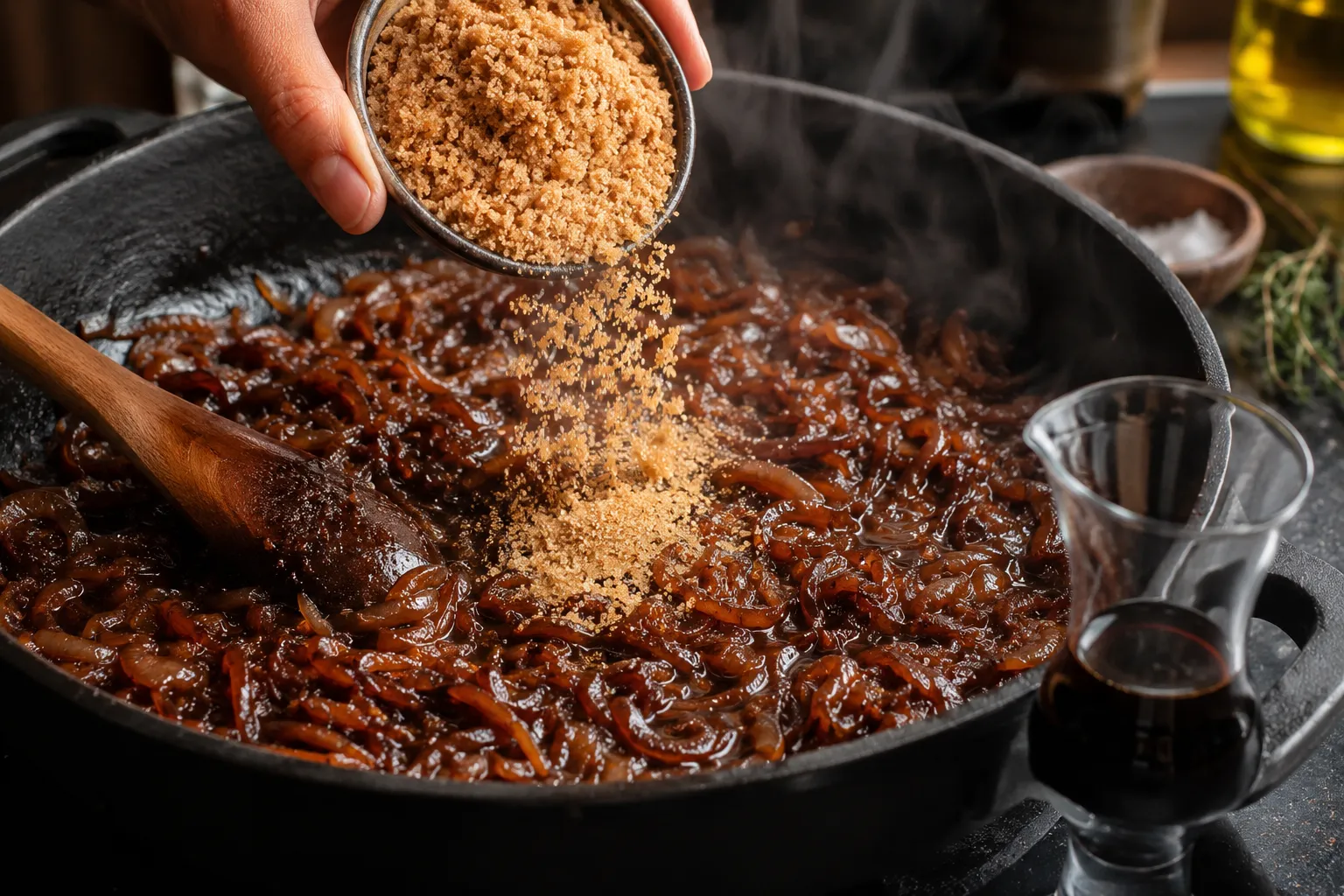 Once the onions are deeply golden, add the sugar and let it dissolve and start to caramelize slightly, then add the vinegar. It will bubble and smell sharp — that's normal, the sharpness will mellow as it reduces.
5. Reduce to jam consistency
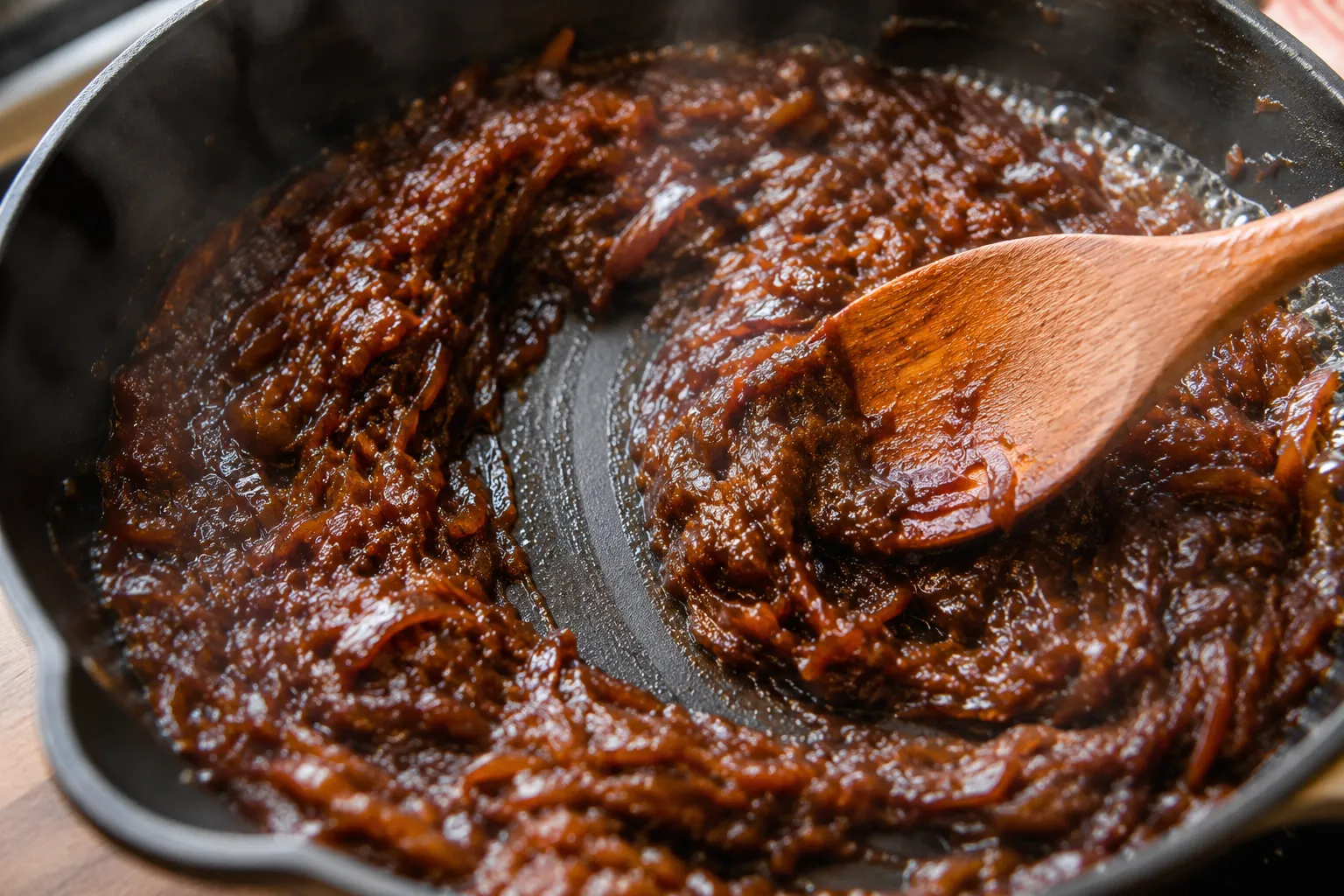 Lower the heat further and let the mixture simmer, stirring occasionally to prevent sticking, for another 20–30 minutes. You're looking for a glossy, thick, spoonable texture — when you drag a spoon across the bottom of the pan, it should leave a trail that doesn't immediately fill back in.
6. Adjust and cool
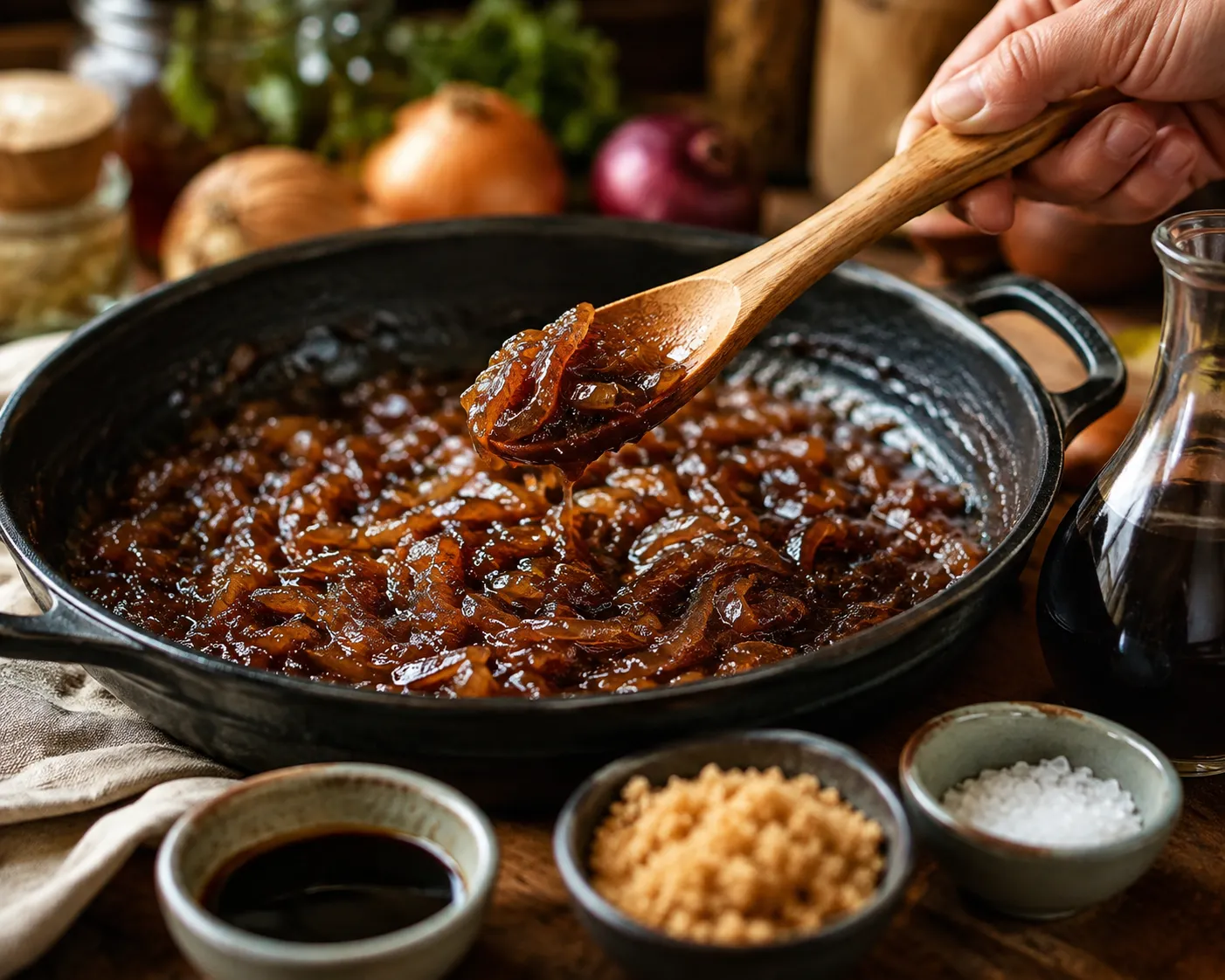 Taste. Add more vinegar if it's too sweet, more sugar if it's too sharp, more salt if it tastes flat.
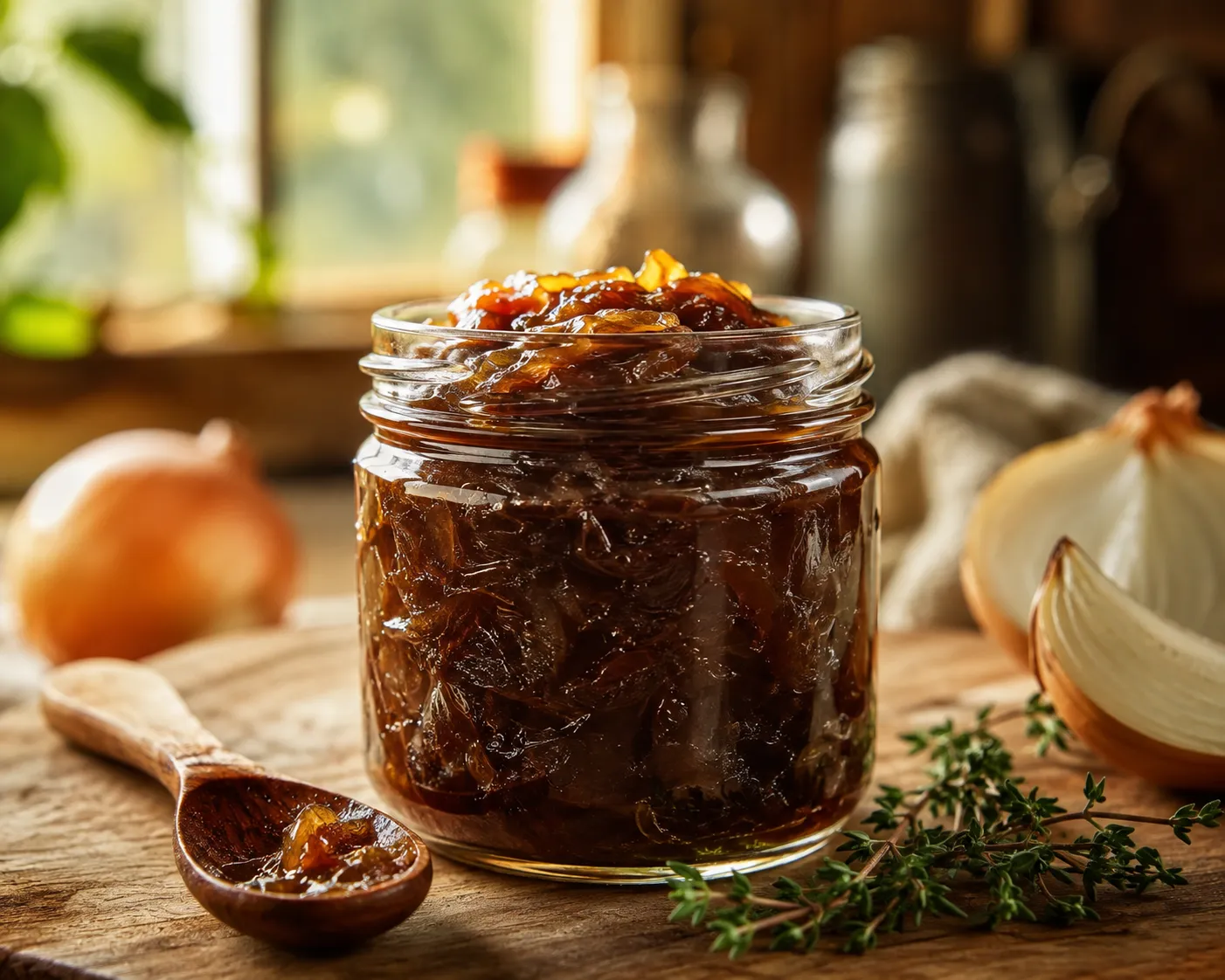 Onion jam thickens further as it cools, so slightly loose is fine off the heat.
Common Mistakes and How to Fix Them
It's too sweet. Add vinegar or a squeeze of lemon a tablespoon at a time, off heat, tasting as you go. A pinch of salt also helps cut sweetness even when the mixture isn't actually salty.
It's too thin. Simmer longer, uncovered, at a gentle heat. If you're in a hurry, a teaspoon of cornstarch slurry can help, though purists will tell you a longer reduction gives a better flavor than a thickener.
It tastes bitter or burnt. This almost always means the heat was too high at some stage, or sugar caramelized past the point of no return. Unfortunately, there's no fixing scorched sugar — start again with lower heat and more attention.
It's watery and never thickens. Some onion varieties, especially very sweet or very fresh ones, release more water. Keep the lid off throughout and give it more time — patience solves most texture problems in jam-making.
It sticks and burns on the bottom. Use a heavy-bottomed pan (enameled cast iron works well) and stir more frequently as the mixture thickens, since sugar-heavy mixtures scorch fast once most of the water has cooked off.
Flavor Variations
Once you understand the base method, onion jam is very forgiving to riff on:
Bacon onion jam: render diced bacon first, cook the onions in the rendered fat, stir the bacon back in at the end. Popular for burger toppings.
Fig and onion jam: add chopped dried or fresh figs during the reduction stage for a cheese-board-friendly version.
Balsamic and thyme: swap in balsamic vinegar and add fresh thyme in the last 10 minutes for a more restaurant-style, herbaceous jam.
Spiced onion jam: a pinch of smoked paprika, cumin, or chili flake gives it more depth for pairing with grilled meats.
Vegan/vegetarian version: use olive oil instead of butter — the recipe is otherwise naturally plant-based.
Lower-sugar version: reduce sugar by up to half and lean more on a longer caramelization time, which builds natural sweetness before any sugar is added at all.
Storage and Food Safety
Onion jam is not the same as a shelf-stable, properly canned preserve, and it's worth being clear about the difference so nobody ends up with foodborne illness.
Refrigerator storage: kept in a clean, airtight container, onion jam typically keeps for about 2–3 weeks in the fridge. Always use a clean utensil to serve it, since introducing bacteria from a used spoon shortens its life.
Freezing: onion jam freezes well for up to about 3 months. Portion it into small containers or ice cube trays so you can thaw only what you need.
True shelf-stable canning: if you want jars that sit safely at room temperature on a shelf, you need to follow a tested, acid-balanced recipe and process it in a water bath canner according to official food-safety guidelines (in the US, the USDA's National Center for Home Food Preservation is the standard reference). Homemade adjustments to sugar or vinegar ratios can change the acidity enough to make a recipe unsafe for shelf storage, even if it tastes fine — this is the one place in jam-making where "just eyeball it" is genuinely bad advice. If in doubt, treat your onion jam as a refrigerator or freezer preserve rather than a canned one.
What to Serve Onion Jam With
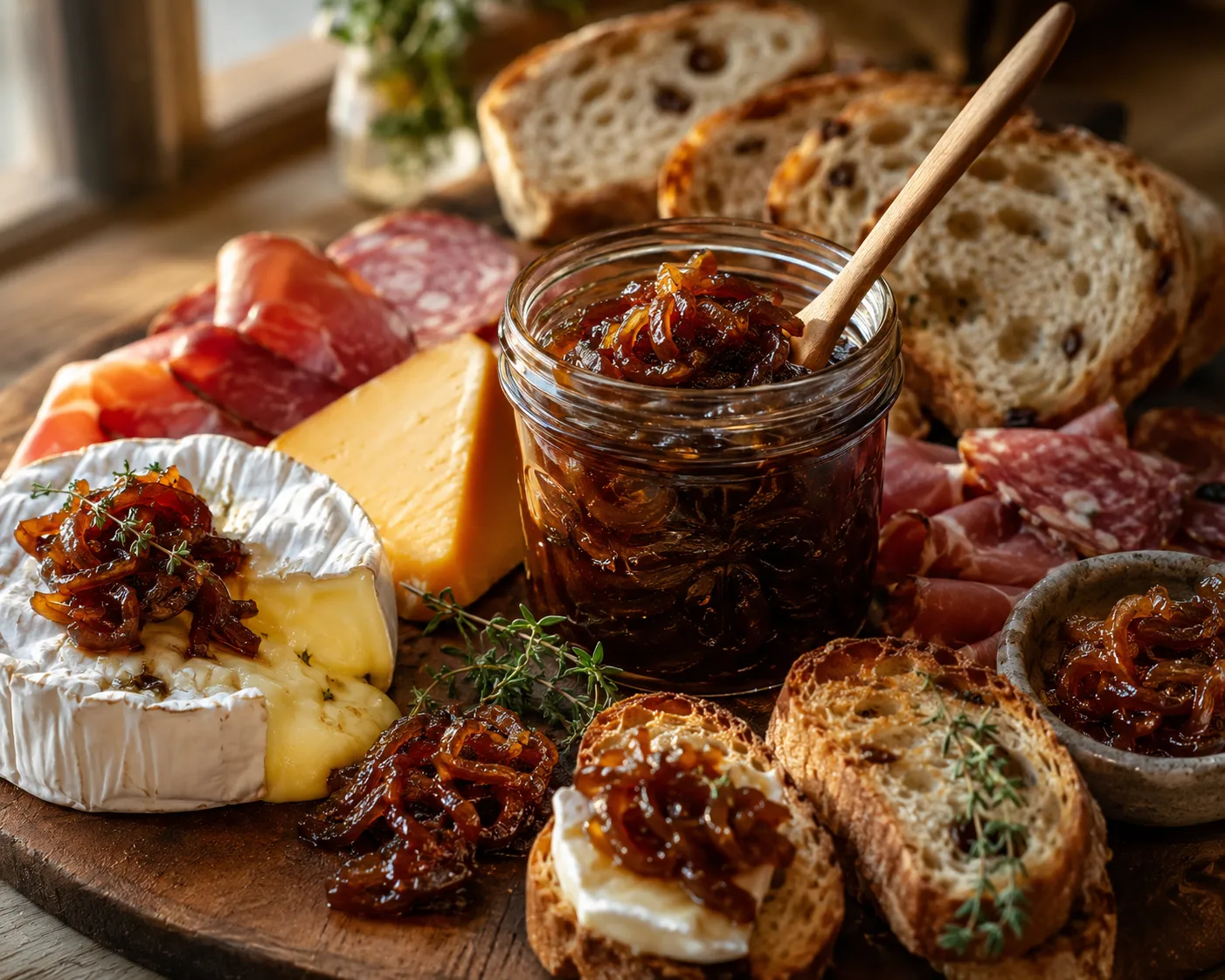
Onion jam earns its keep because it's useful in more places than people expect:
Spread under melted brie, camembert, or a sharp cheddar
On a burger instead of ketchup or plain caramelized onions
Stirred into a grilled cheese before it hits the pan
Alongside pâté, terrine, or charcuterie boards
Spooned over roasted sausages or pork chops
Mixed into a savory tart or galette filling
Whisked into a vinaigrette for a sweet-savory salad dressing
Frequently Asked Questions
Plan for about an hour total — 30 to 45 minutes of slow caramelizing, then 20 to 30 minutes of reduction once sugar and vinegar go in. There isn't a reliable shortcut; rushing the heat changes the flavor.
Yes, though it will be less sweet and less thick. Extending the initial caramelizing time develops natural sugars in the onion itself, so you can reduce (not necessarily eliminate) added sugar and still get good flavor.
Balsamic gives the deepest, most rounded flavor. Red wine vinegar is brighter and sharper. Apple cider vinegar adds a slight fruitiness. Any of them work — the right choice depends on whether you want the jam to lean rich or lean tangy.
Almost always overheated sugar or onions cooked at too high a temperature for too long. Lower heat and more stirring is the fix going forward.
Functionally, yes, in most recipes — "marmalade" is more common in British usage, "jam" more common in American usage, and the ingredients and method largely overlap.
Only if you follow a tested, acid-verified recipe and proper water-bath canning procedure. Otherwise, treat it as a refrigerator or freezer item.
Red onions for color and a fruity edge, yellow onions for balance, sweet onions if you want less added sugar (but more vinegar to balance), and shallots for a more delicate, elevated version.
Yes — caramelize the onions on the stovetop first for better flavor, then transfer to a slow cooker with the sugar and vinegar on low for 3–4 hours, checking and stirring occasionally so it doesn't scorch on the sides.
It should coat a spoon, look glossy rather than watery, and hold a rough shape when a small amount is spooned onto a cold plate and cooled for a minute.
Generally yes, since the core ingredients (onions, sugar, vinegar) don't contain gluten — but always check the label on any vinegar or added flavorings if you're cooking for someone with celiac disease, since cross-contamination and additives vary by brand.
Final Thought
Onion jam rewards patience more than skill. The ingredient list is short enough that there's nowhere to hide a rushed step — the whole character of the finished jam comes from how slowly you let the onions break down before you ever add sugar or vinegar. Get that part right, and the rest is mostly about tasting, adjusting, and deciding how sweet, sharp, or savory you want the final spoonful to be.