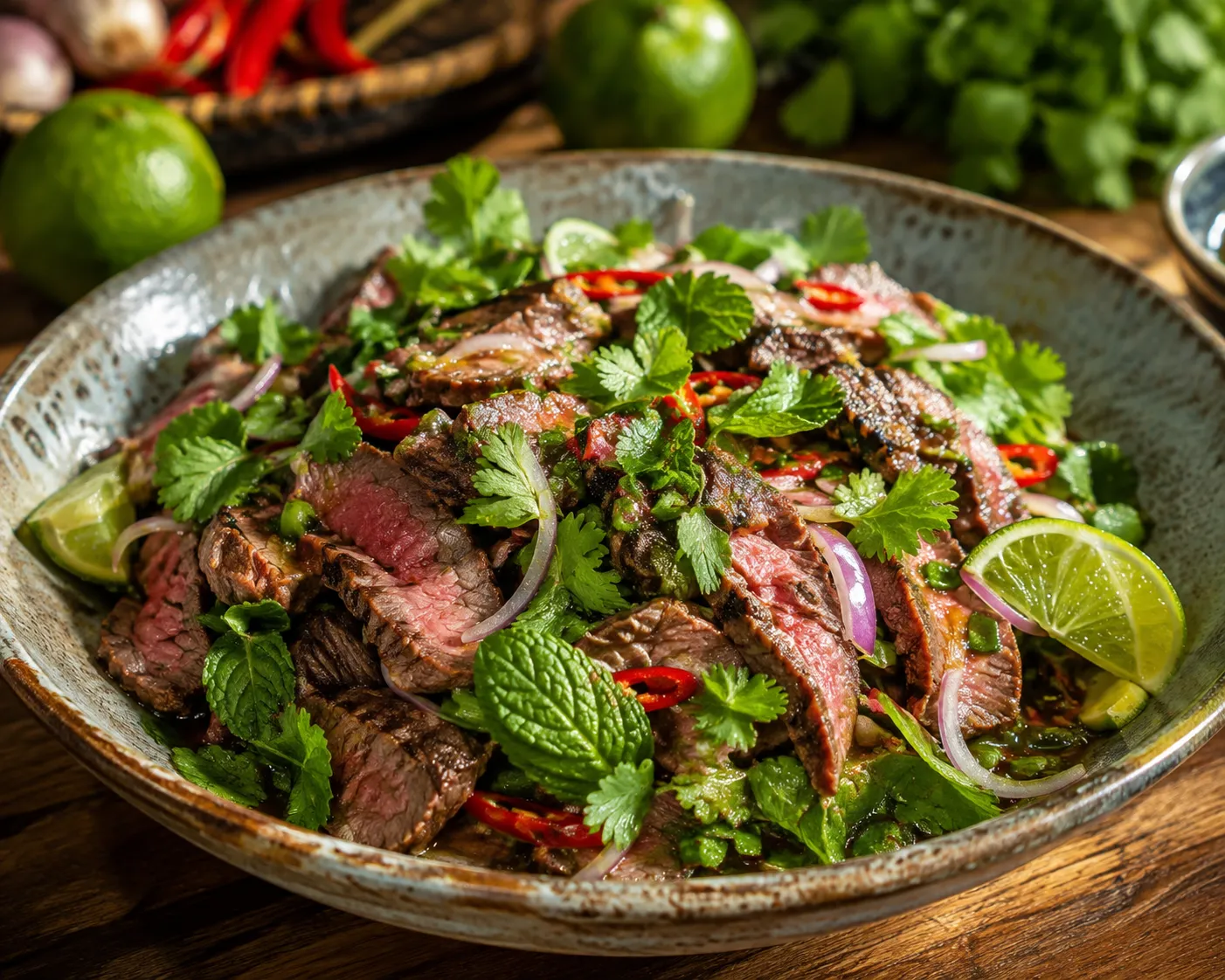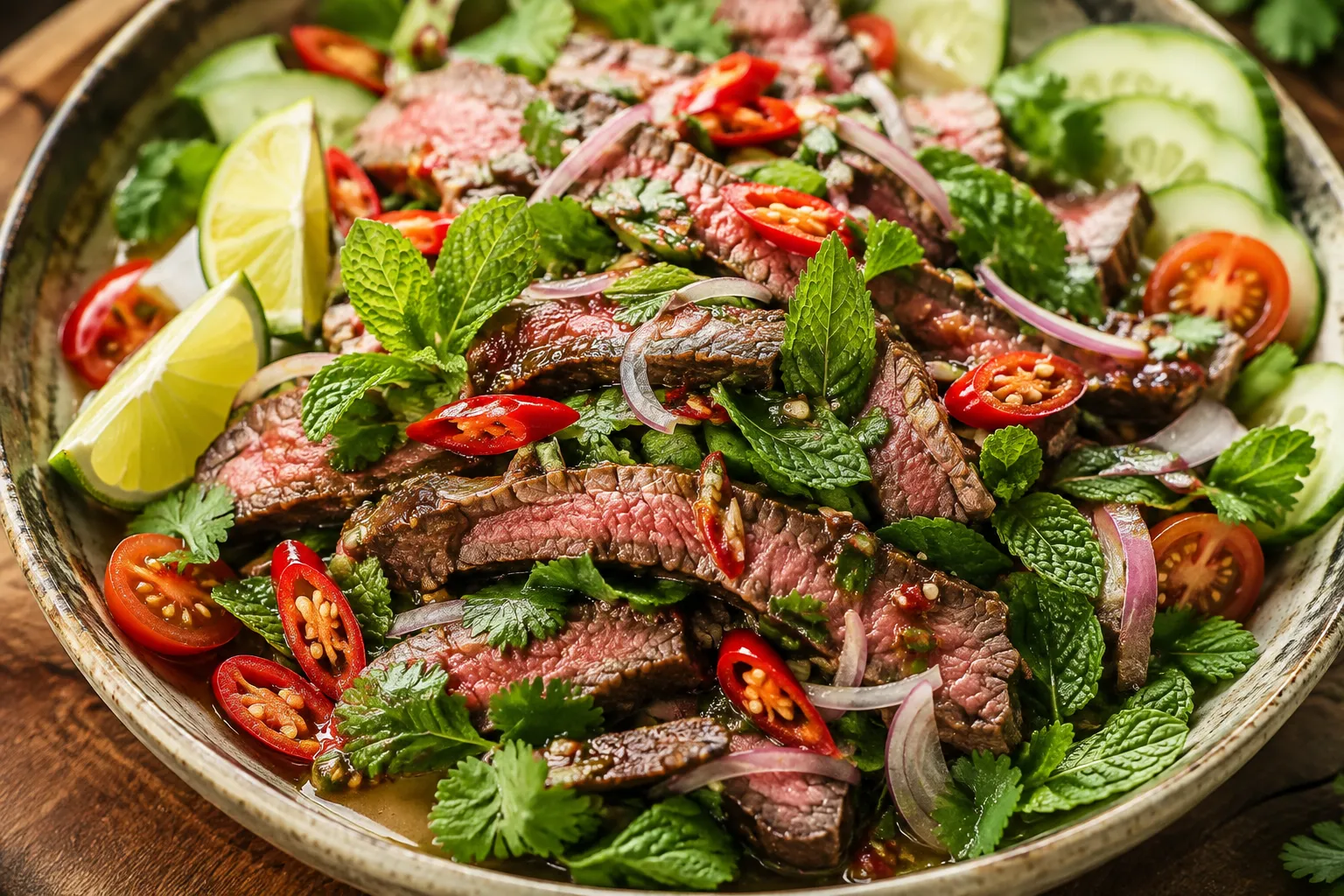
The first time I made Thai beef salad, I overcooked the steak, drowned it in fish sauce, and forgot the herbs entirely. It tasted like sad, salty meat. That dish — usually called yum nua (ยำเนื้อ) in Central Thailand or nam tok (น้ำตก, "waterfall") in the Isaan northeast — is not complicated. But it is unforgiving. Every ingredient does one specific job, and skipping or fumbling any of them collapses the whole thing.
This guide covers what actually matters: how to cook the beef, how to build the dressing so it's balanced instead of one-note, the difference between the two main regional styles, and the mistakes that turn a vibrant, herbaceous salad into wet lettuce with meat on top.
What Is Thai Beef Salad, Exactly?
Thai beef salad is thin-sliced grilled or seared beef tossed with a dressing built on fish sauce, lime juice, and chile, then mixed with shallots, mint, and cilantro. It's served warm or room temperature, never cold from the fridge, and it's built around contrast — hot meat against cool herbs, char against acid, heat against a touch of sweetness.
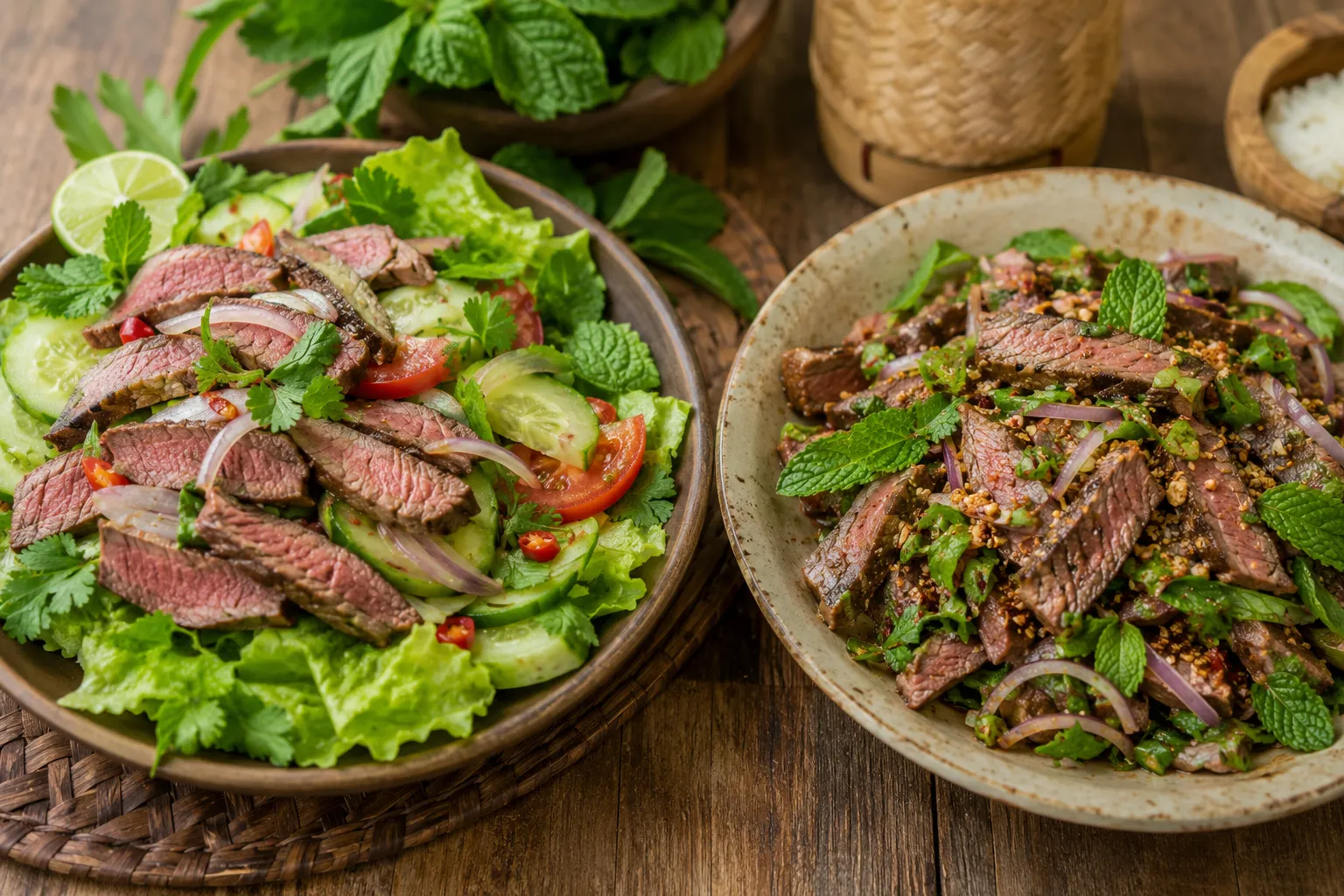
There are two names because there are, loosely, two traditions:
Neither is more "authentic" than the other. They're regional siblings, the way New York and Nashville hot chicken are both fried chicken but not remotely interchangeable in flavor.
The Cut of Beef Actually Matters
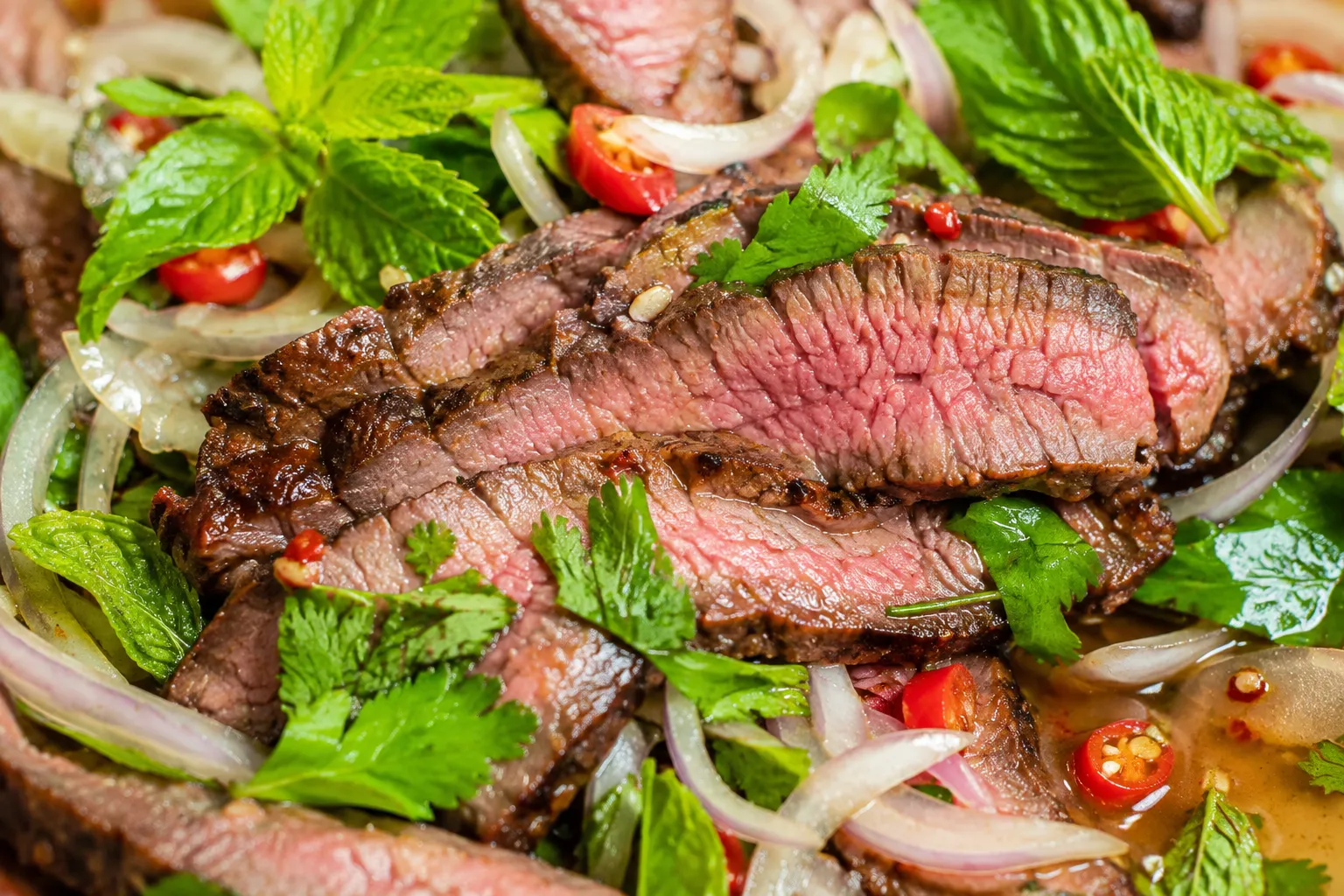
Skip filet mignon. It's tender but bland, and in a dish this assertive, blandness is a liability, not a virtue. You want beef with actual flavor that can stand up to fish sauce and lime.
| Cut | Why it works | Watch out for |
|---|---|---|
| Flank steak | Great beefy flavor, takes a marinade well, widely available | Must be sliced thin against the grain or it's chewy |
| Skirt steak | More marbling than flank, cooks fast, very flavorful | Cooks very fast — easy to overshoot medium-rare |
| Sirloin | Leaner, milder, good if you want the herbs to lead | Less dramatic char flavor than flank or skirt |
| Ribeye | Rich, forgiving, hard to mess up | More expensive, arguably too rich for a salad meant to be bright |
| Hanger steak | Deep, almost livery beef flavor, traditional in some regional versions | Can be harder to find at a standard grocery store |
My own preference is flank steak, seared hard on a screaming-hot cast iron pan rather than grilled — you get more consistent char without flare-ups, and you control doneness more precisely than over open flame.
---
How to Cook It
The beef should land at medium-rare, then rest, then slice. That order is not optional.
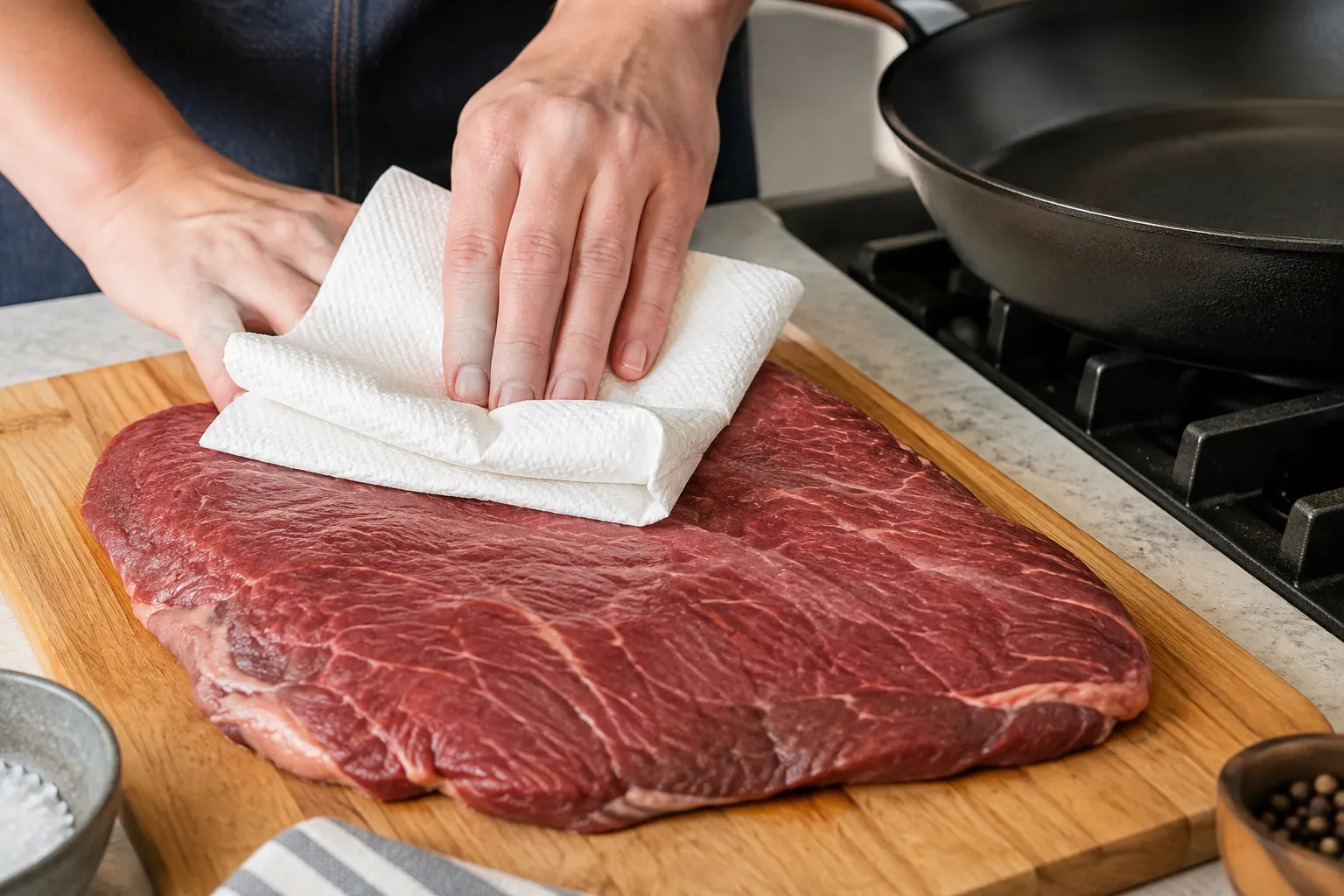
1. Pat the steak fully dry. Wet beef steams instead of searing.
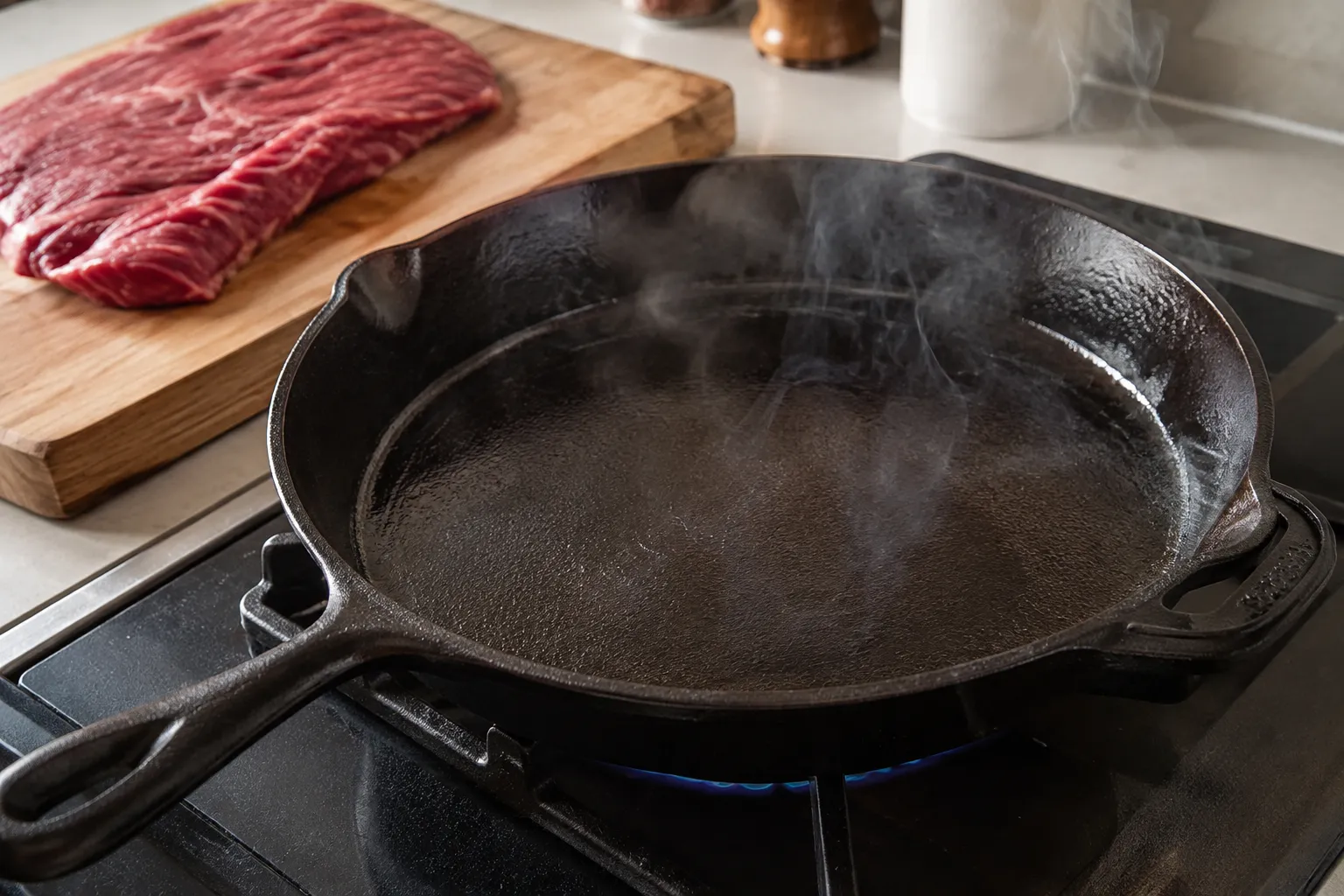
2. Get the pan or grill genuinely hot. You want a hard sear in under 2 minutes per side for a flank steak roughly ¾-inch thick.
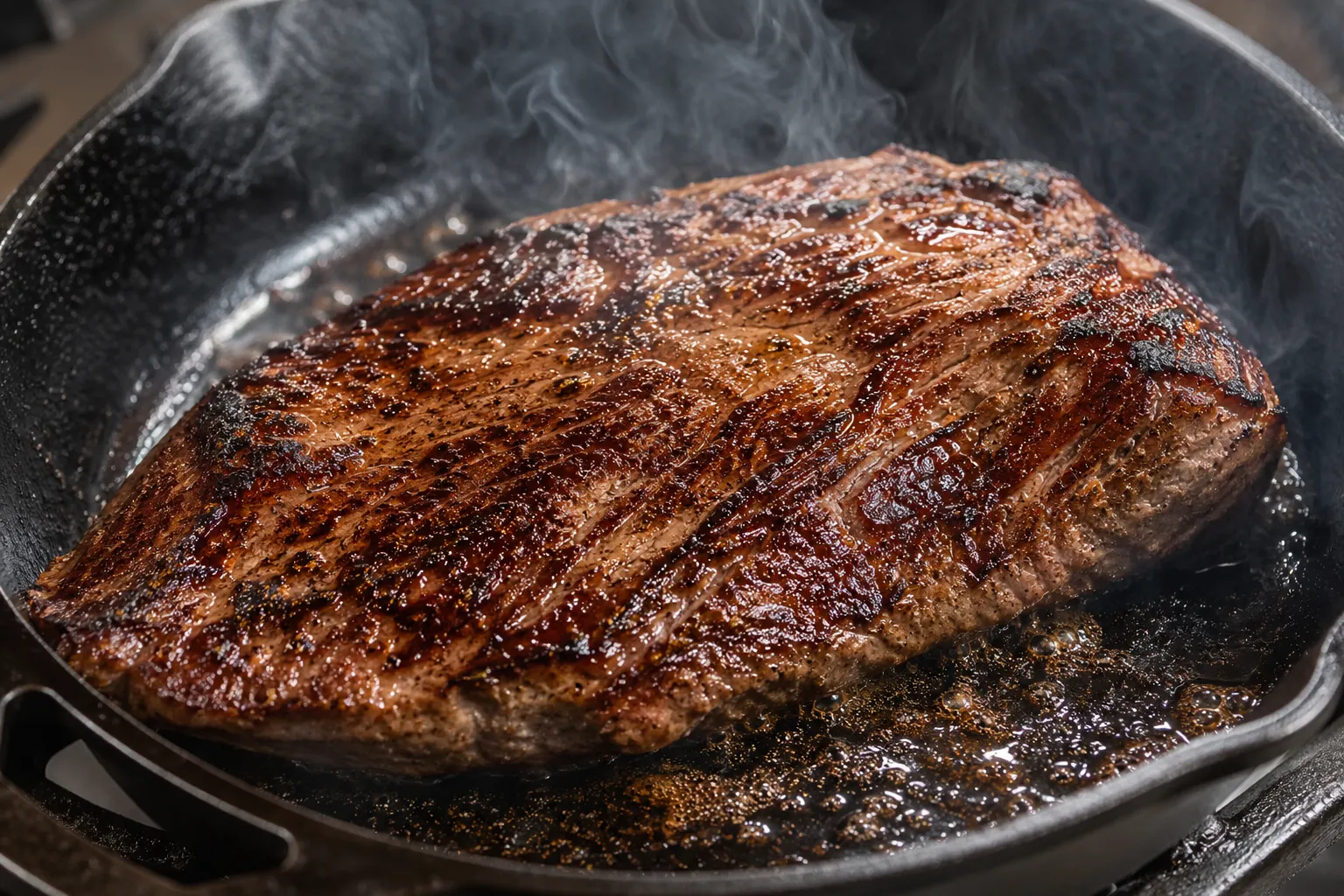
3. Sear the beef hard. Pull it at 125–130°F internal for medium-rare; it will climb a few more degrees while resting.
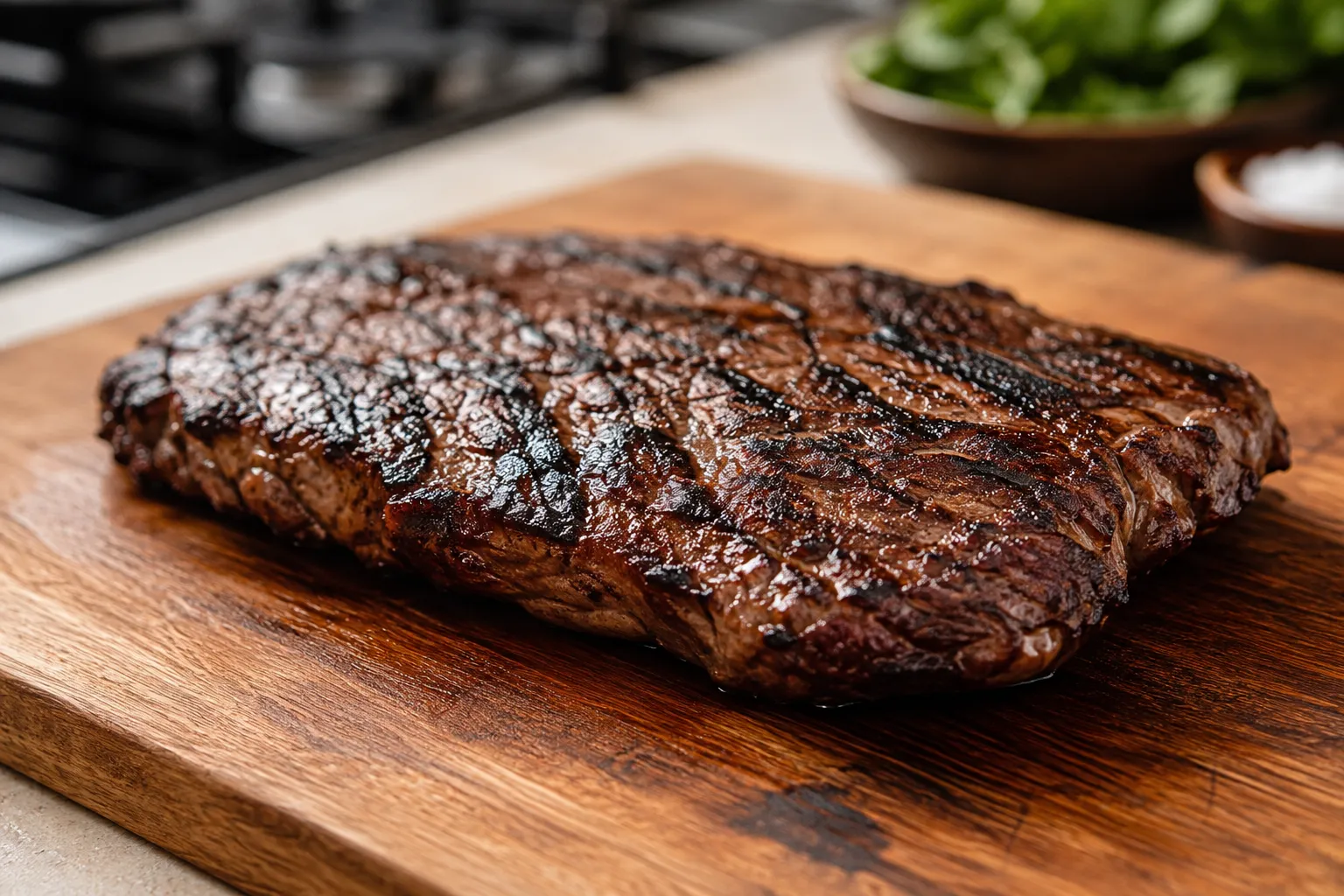
4. Rest it for a full 5–10 minutes before slicing. Cutting early dumps all the juice onto the board instead of into the meat.
5. Identify the grain direction. Look closely at how the muscle fibers run.
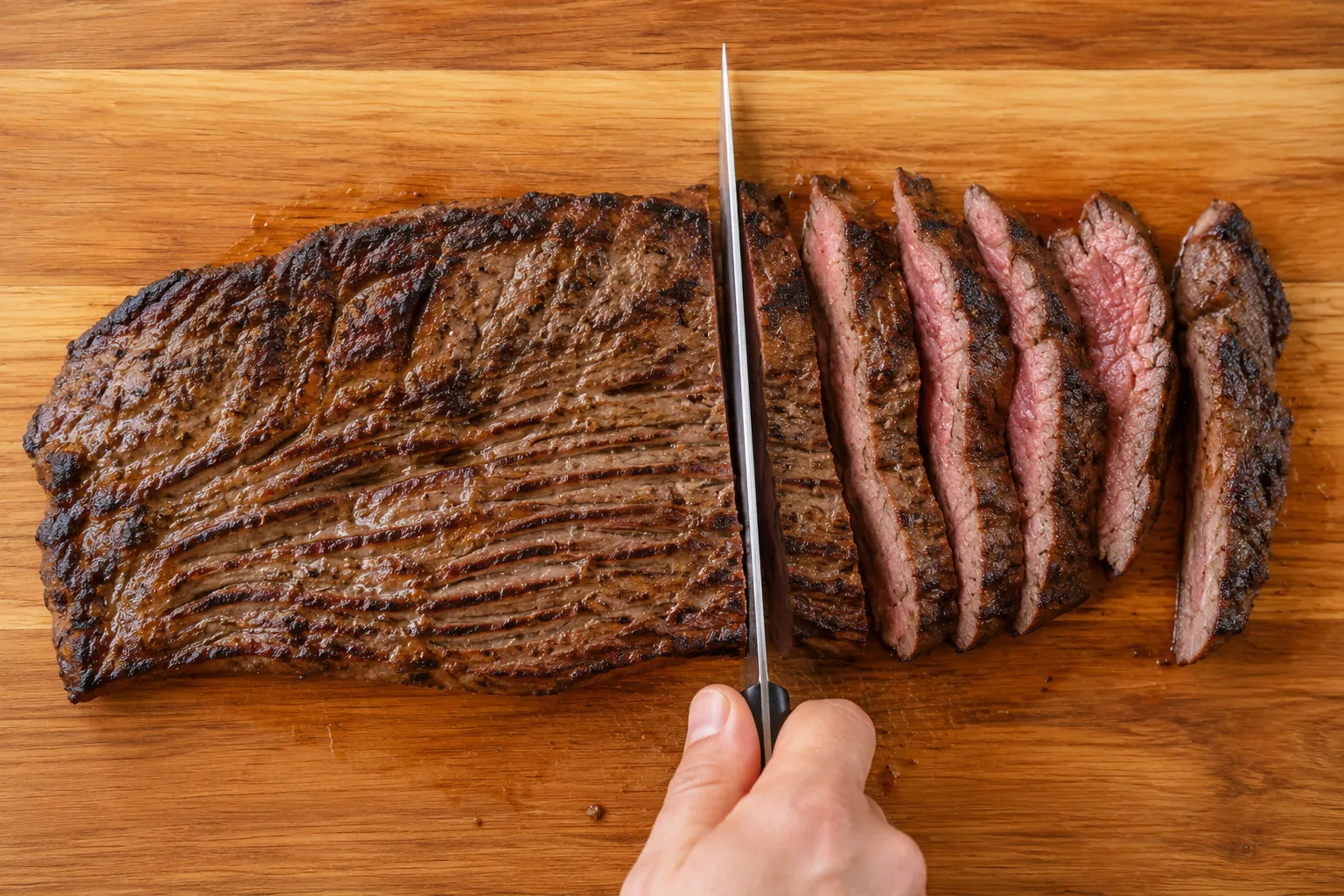
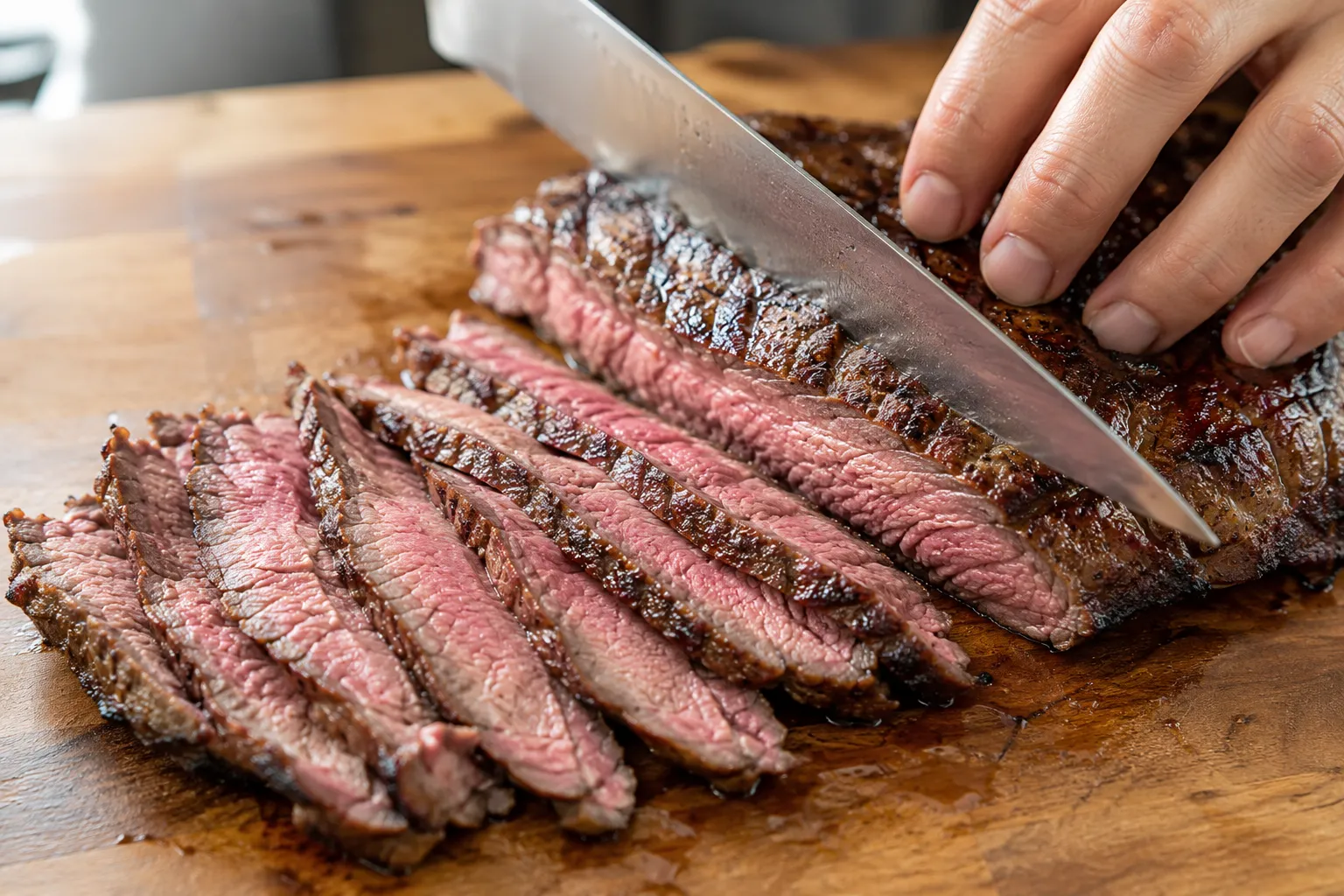
6. Slice thin, against the grain, on a slight bias. This is the single most-skipped step, and it's the difference between tender ribbons and something you're chewing for a while.
---
Building the Dressing: The Part Everyone Underestimates
The dressing is where most home versions fail, because people treat it like a vinaigrette instead of what it actually is: a balance of four distinct forces that all need to be present and none of which should dominate.
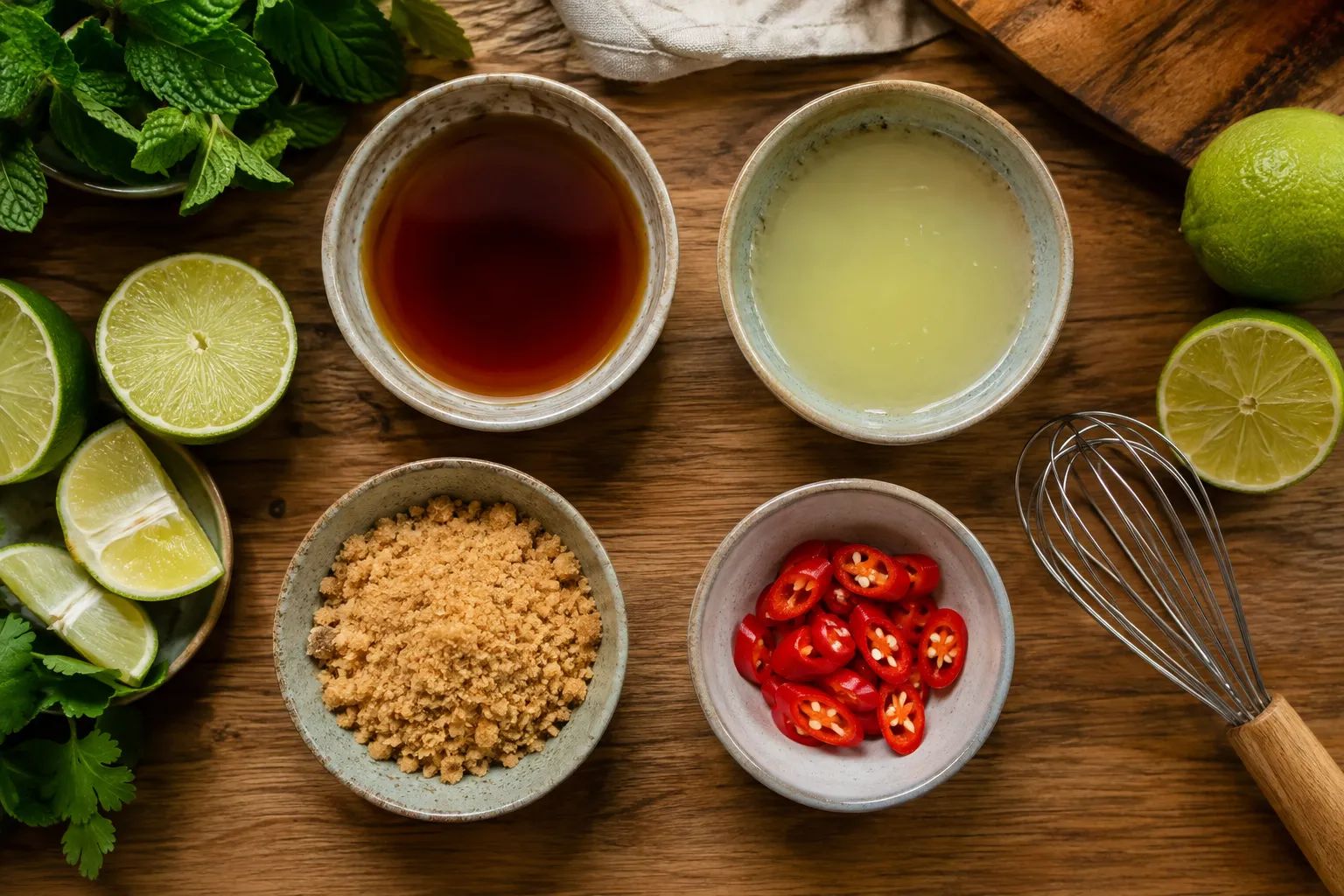
A workable starting ratio is 3 tablespoons fish sauce, 3 tablespoons fresh lime juice, 1–2 teaspoons sugar (dissolved into the warm liquid), and chile to taste, starting conservative and adding more.
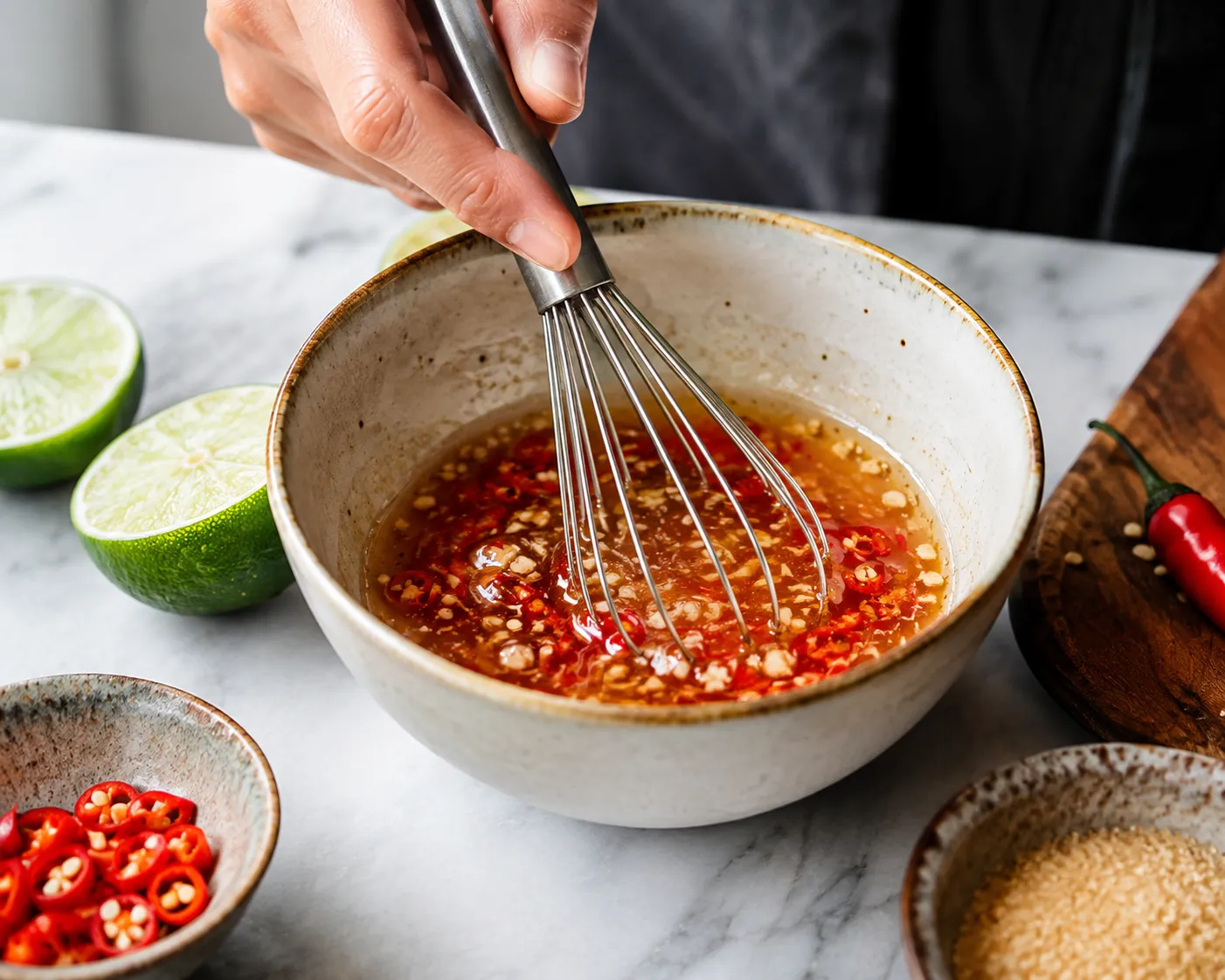
Taste it on its own before it touches the beef — it should hit you as aggressively salty-sour-sweet-hot all at once, almost too intense to sip. That intensity is intentional. Once it's tossed with beef, herbs, and any base vegetables, it mellows out considerably. A dressing that tastes "balanced" on its own will taste flat and underseasoned once diluted into the salad.
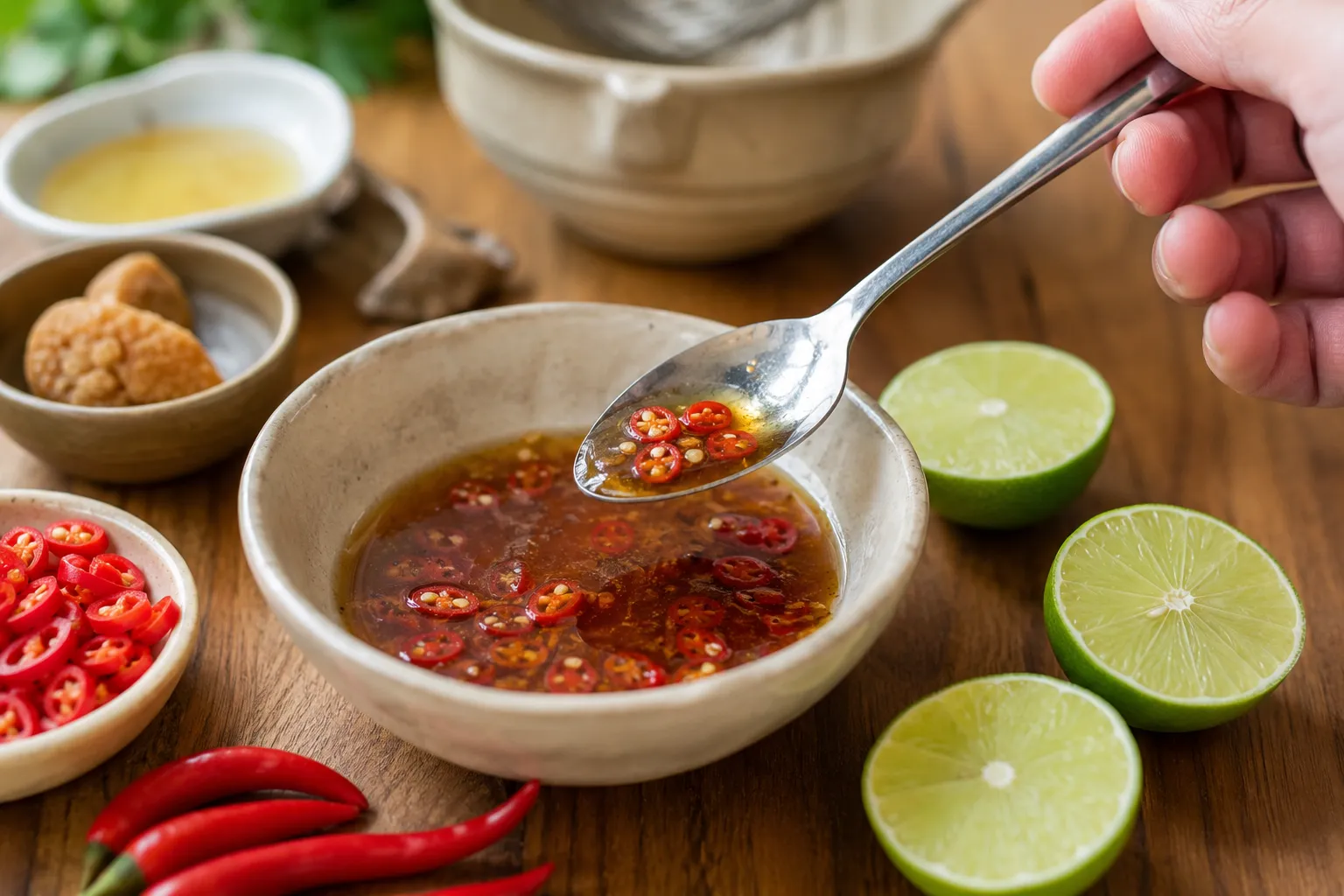
Bottled lime juice will flatten the whole dish. Fresh limes are non-negotiable here — the aromatic oil in the zest that gets released when you squeeze fresh fruit is part of what makes the sourness taste bright instead of just sharp.
On fish sauce: brand genuinely matters more than people expect, because quality varies enormously. Three widely available, well-regarded options are Red Boat, Squid Brand, and Three Crabs — all fermented, all reasonably traditional. Cheaper blended fish sauces can taste harsh or one-dimensionally salty rather than having the deeper umami funk you want underneath the citrus.
---
The Herbs Are Not a Garnish
This is where a lot of Westernized versions go wrong: mint and cilantro get sprinkled on top at the end like parsley on a plate of pasta. In real yum nua, the herbs are a primary ingredient, not decoration, and they should be added in real volume — a loosely packed cup of mint leaves and a similar amount of cilantro for a salad serving three or four people is not excessive.
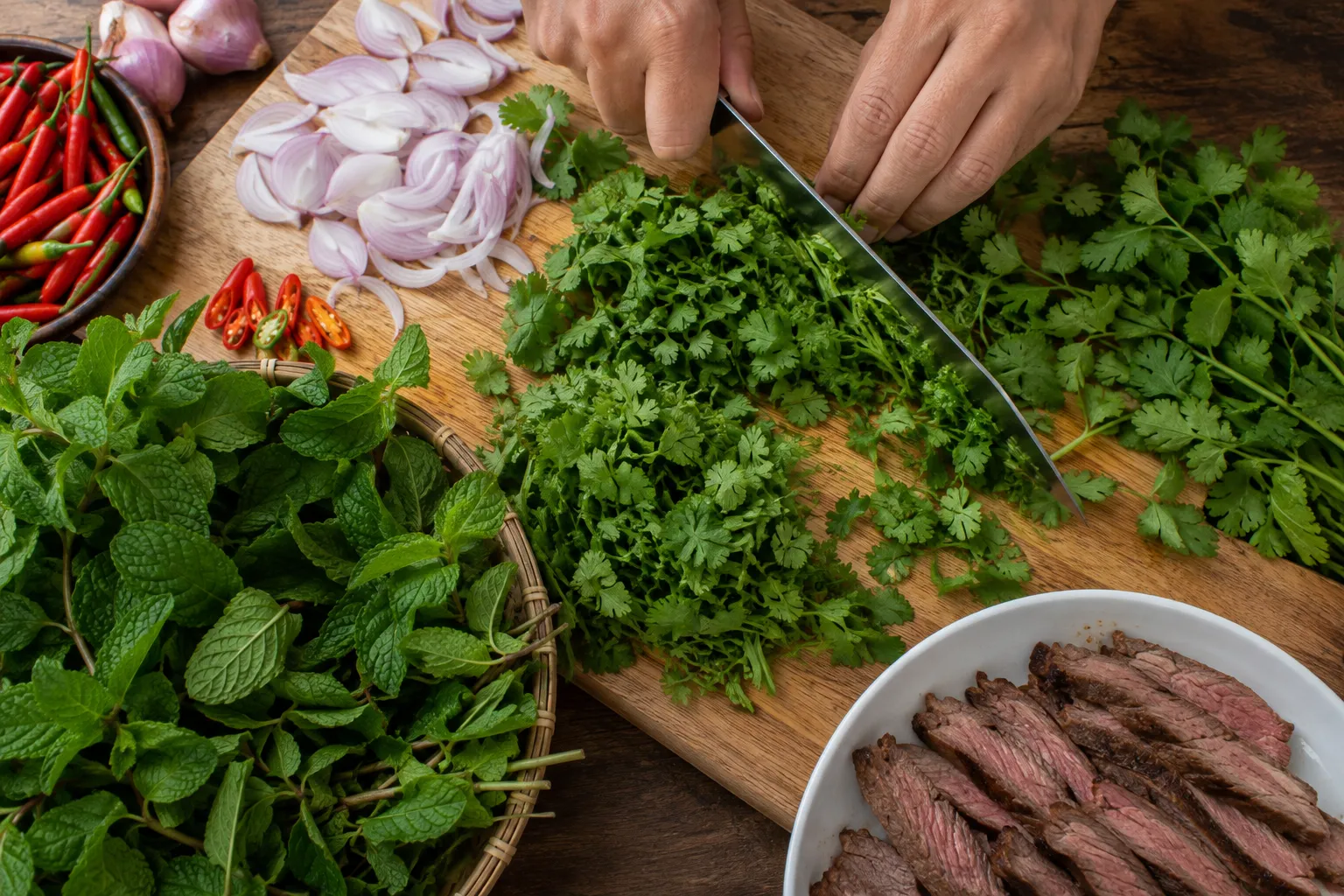
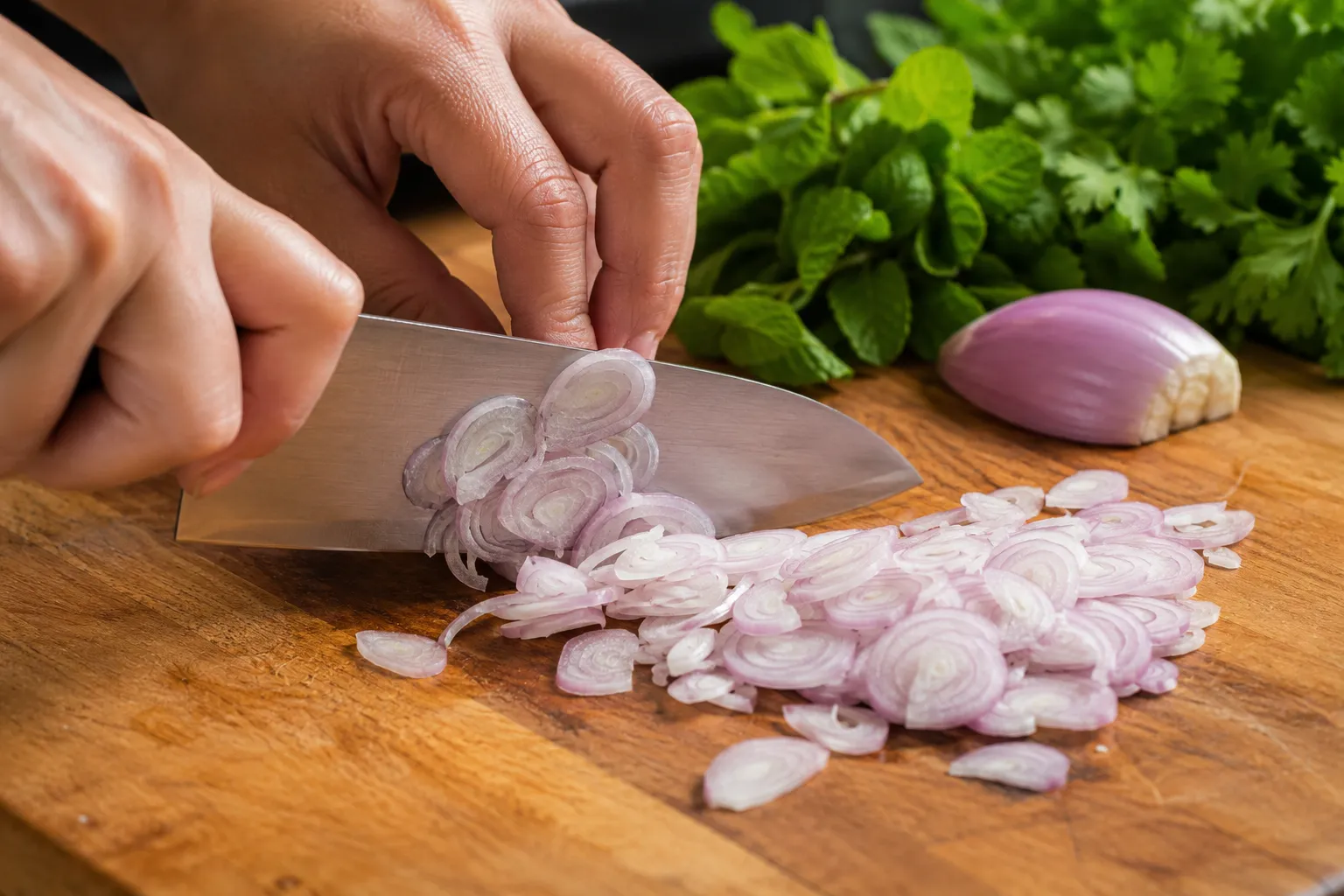
Thin-sliced shallot is the other non-negotiable. It should be sliced paper-thin, ideally soaked briefly in cold water to soften the raw bite, then added generously. Shallot brings a sweet, sharp bite that lettuce or cucumber simply can't replace.
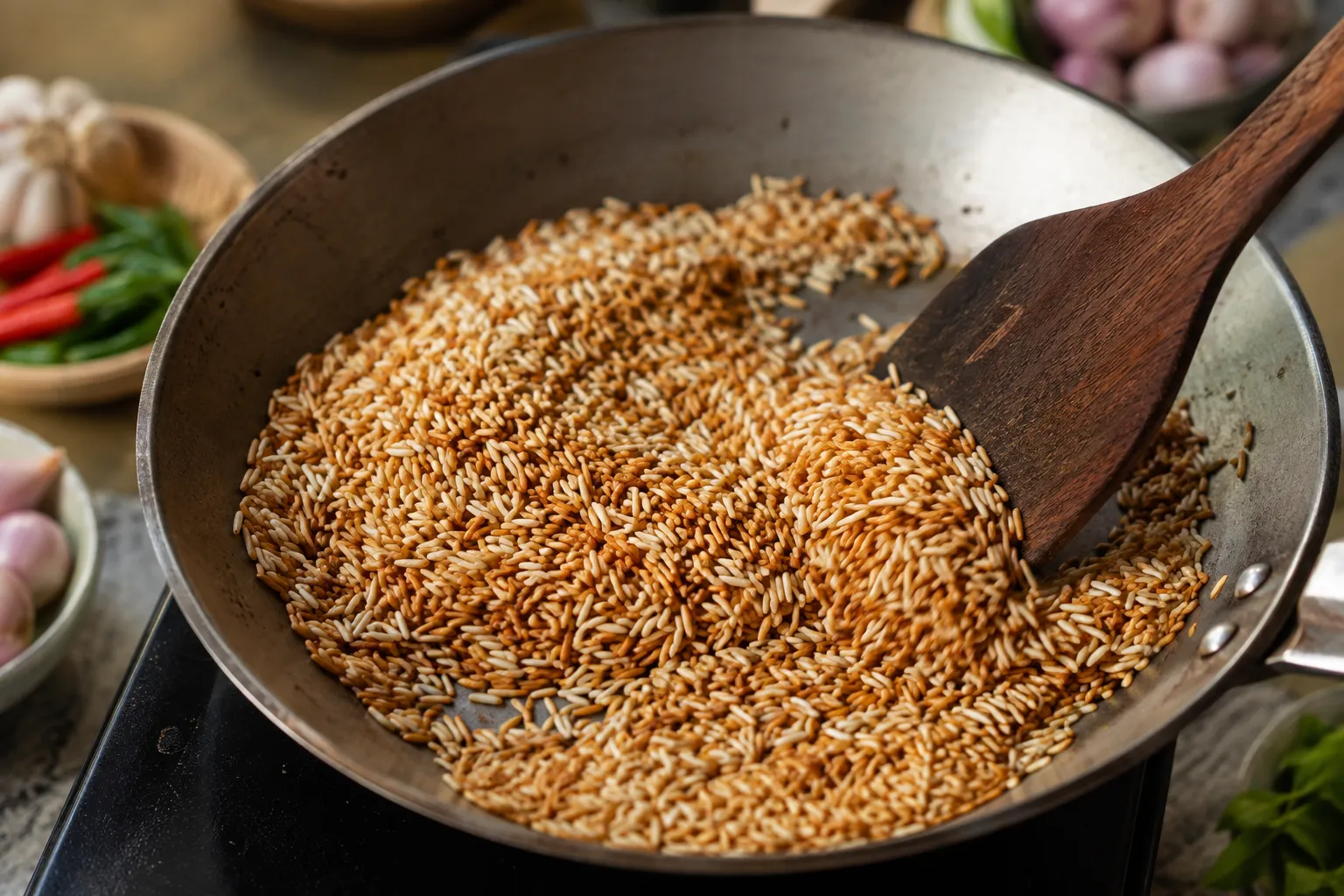
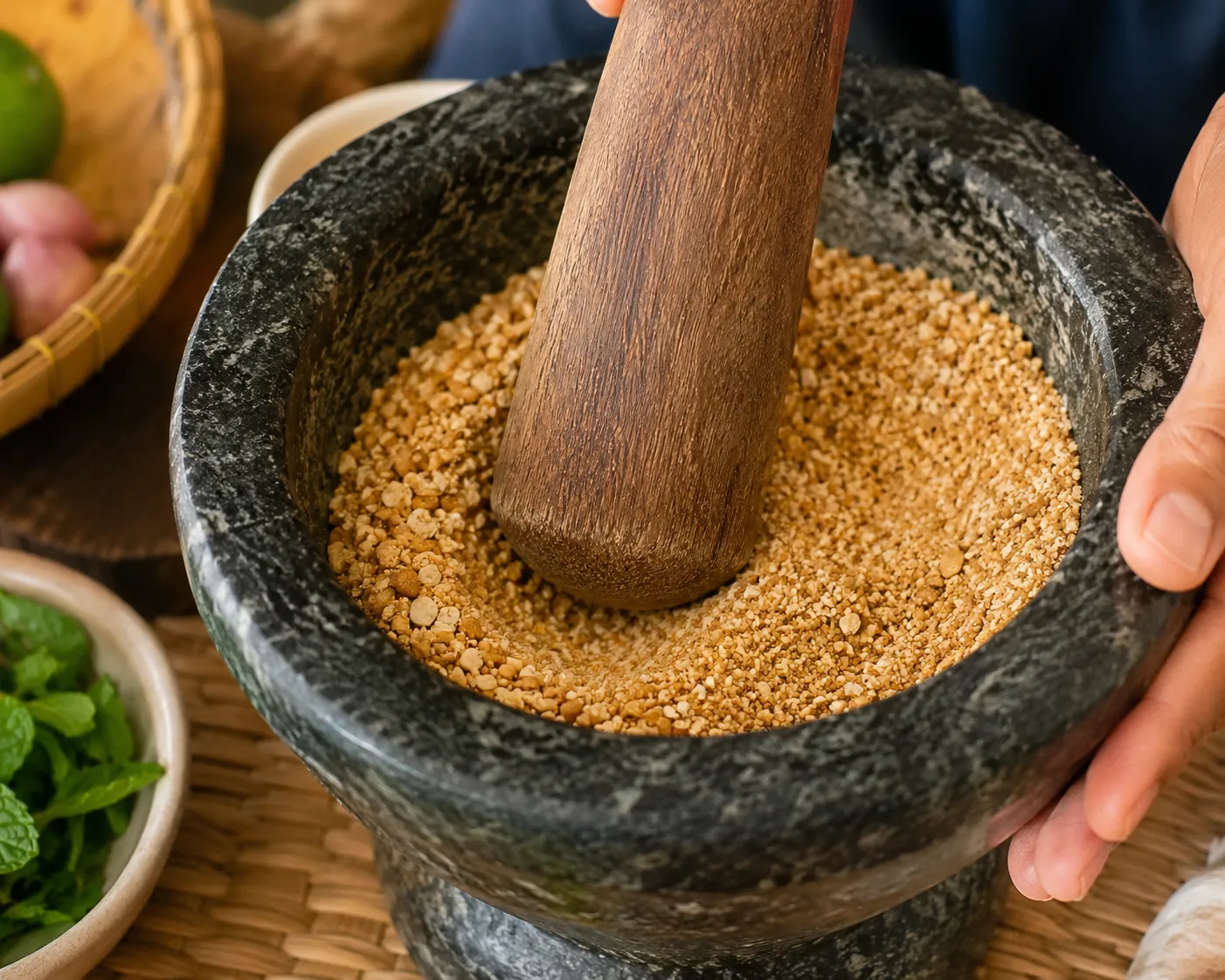
If you're making the Isaan-style nam tok version, add toasted rice powder (khao khua) — raw jasmine rice toasted dry in a pan until deep golden brown, then ground coarsely in a mortar or spice grinder. It adds a nutty crunch and a subtle thickening effect to the dressing that's genuinely hard to replicate with anything else. Skipping it doesn't ruin the dish, but it does turn nam tok into a slightly different, less textured salad.
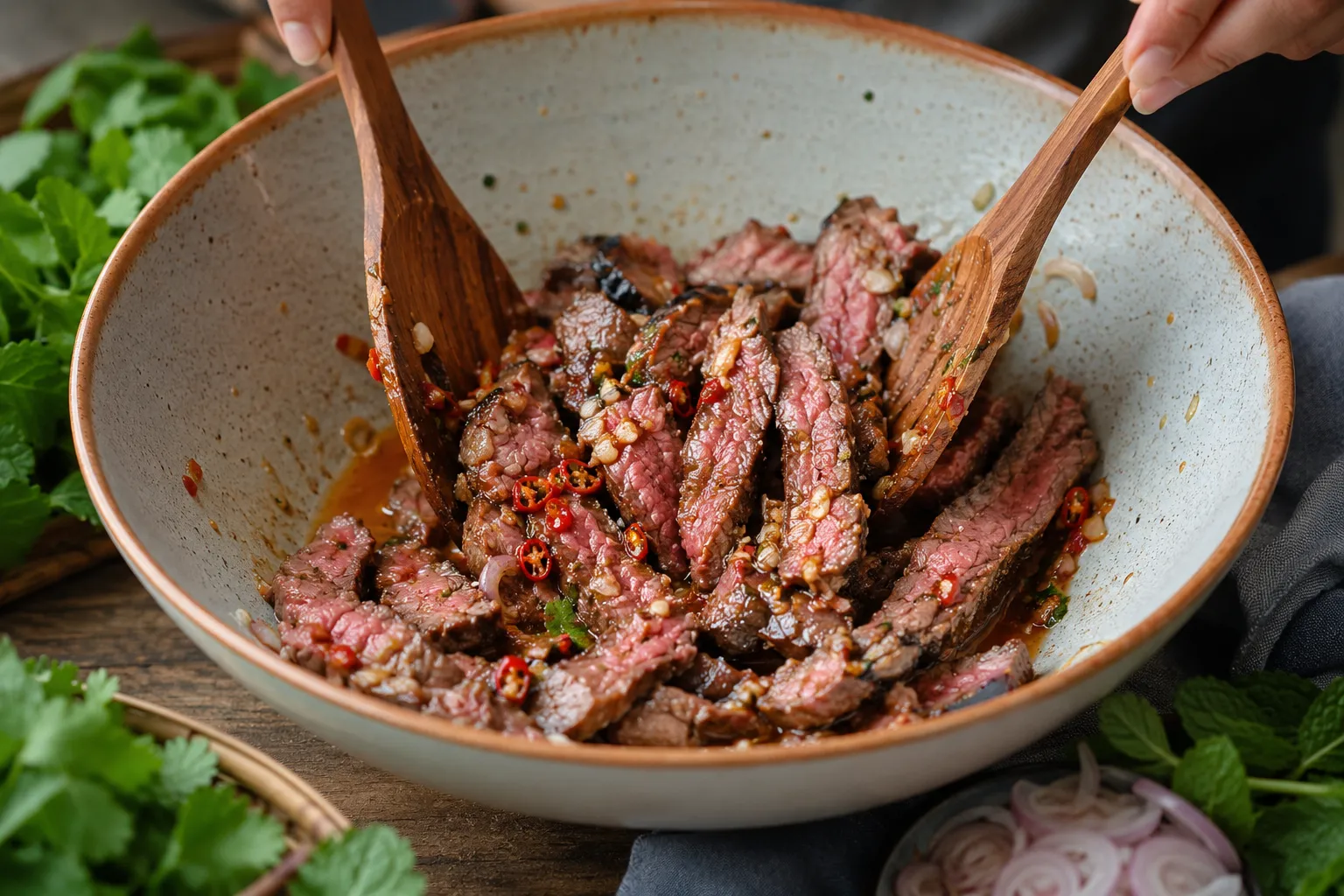
Finally, toss the warm beef with the dressing, herbs, shallots, and rice powder right before serving!
---
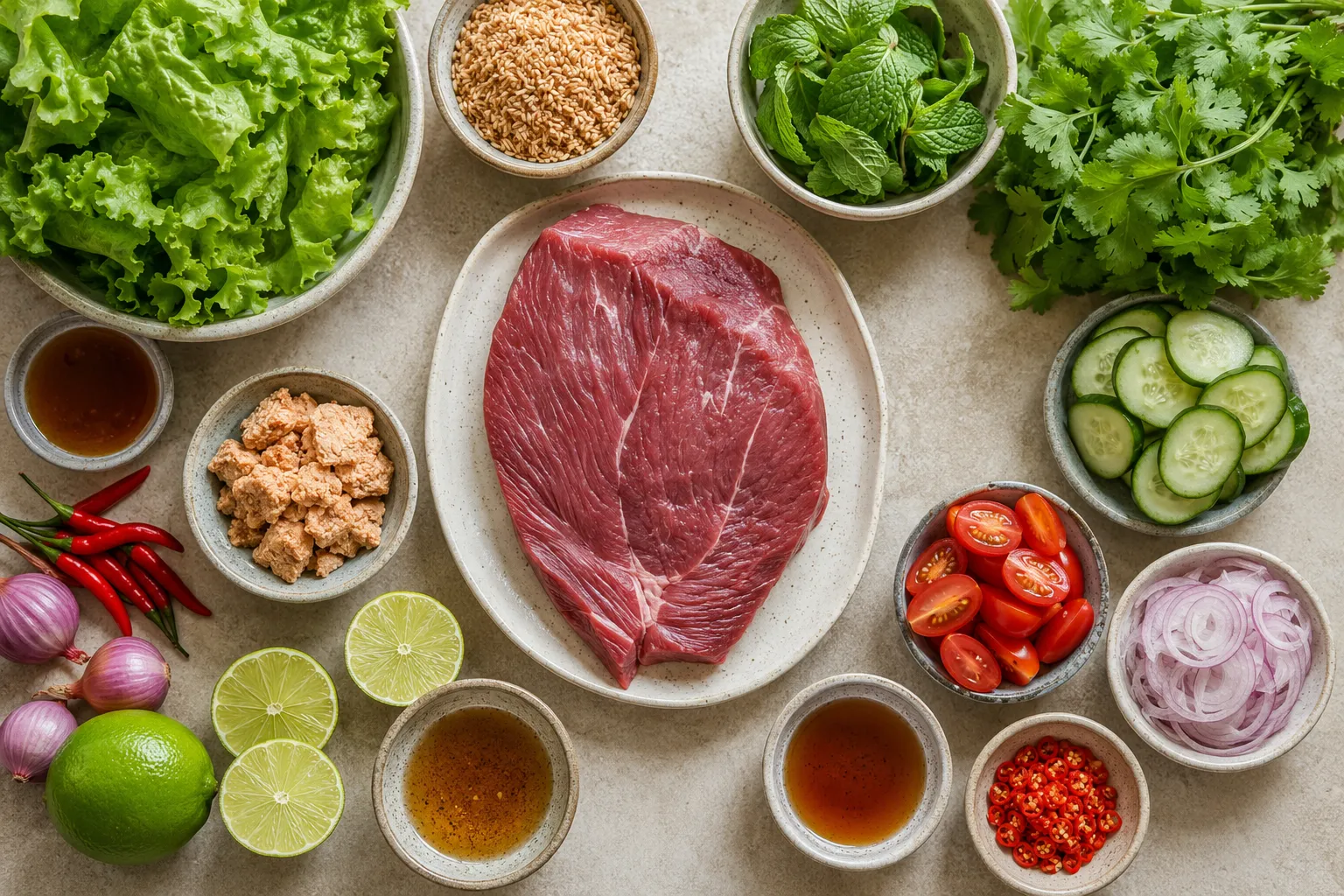
Ingredients Overview
---
Common Mistakes That Wreck This Dish
1. Overcooking the beef. Past medium, the meat turns from tender to work. This dish depends on the contrast between tender beef and crisp herbs — well-done beef flattens that entirely. 2. Slicing with the grain instead of against it. Even perfectly cooked beef turns stringy and tough if you slice parallel to the muscle fibers instead of across them. 3. Dressing the salad too early. Lime juice and salt will wilt herbs and vegetables within minutes. Toss everything together right before serving, not while you're still plating side dishes. 4. Serving it cold. This is meant to be eaten warm or at room temperature, ideally within 15–20 minutes of the beef coming off the heat. Refrigerating leftover beef and reheating it later for a "cold salad" produces a genuinely different, worse texture. 5. Under-seasoning out of caution. Because the dressing tastes intense on its own, people back off and under-salt or under-acid the finished salad. Trust the ratio, taste as you go, and remember the dressing is supposed to be diluted by everything else in the bowl.
---
A Simple, Reliable Version
#### Ingredients (Serves 3–4):
#### Method: 1. Sear the steak hot, rest 5–10 minutes, slice thin against the grain. 2. Whisk fish sauce, lime juice, sugar, and chile together. 3. Toss the warm sliced beef with the dressing first so it soaks in slightly, then fold in shallot and herbs (and rice powder, if using) right before serving.
---
Frequently Asked Questions
---
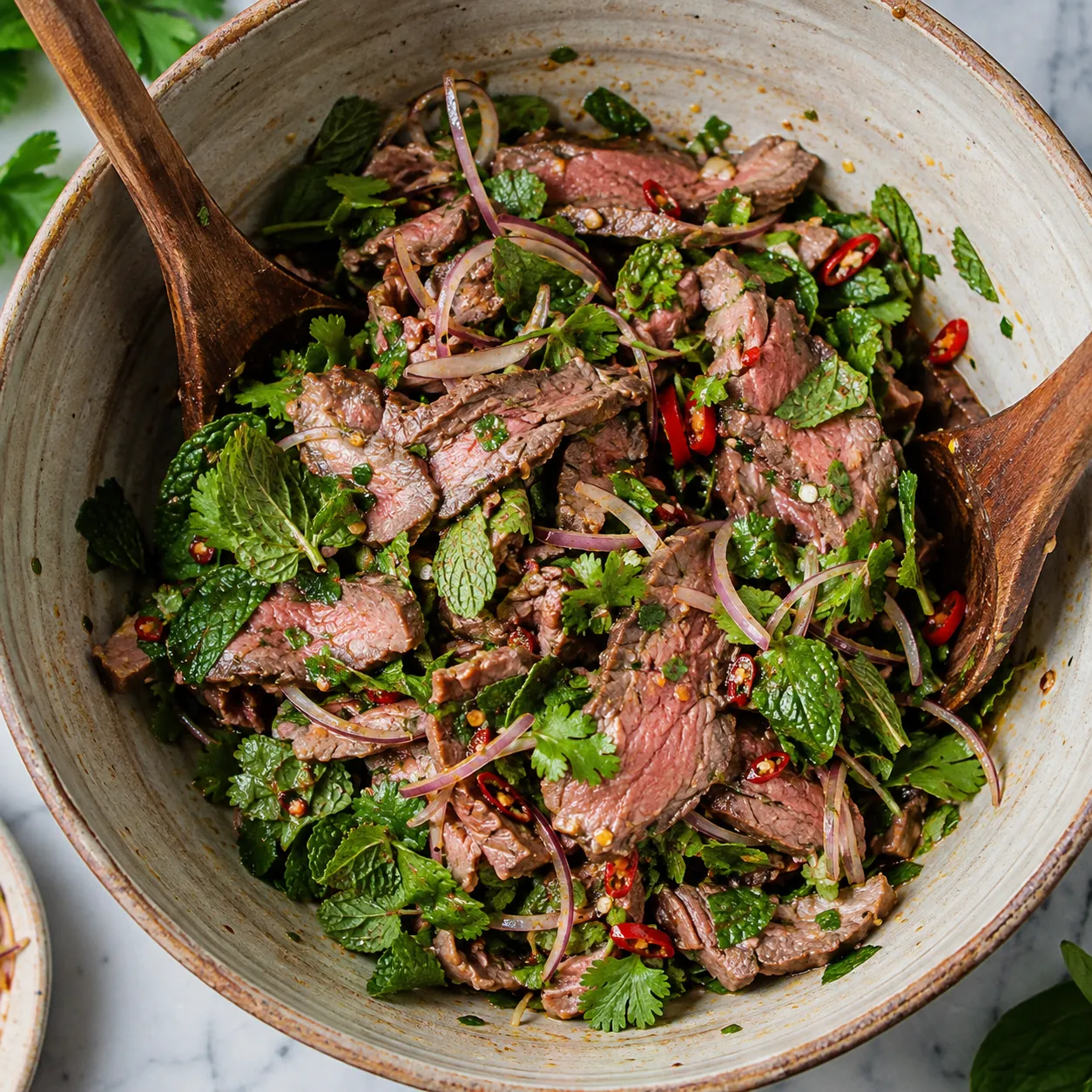
Final Serving