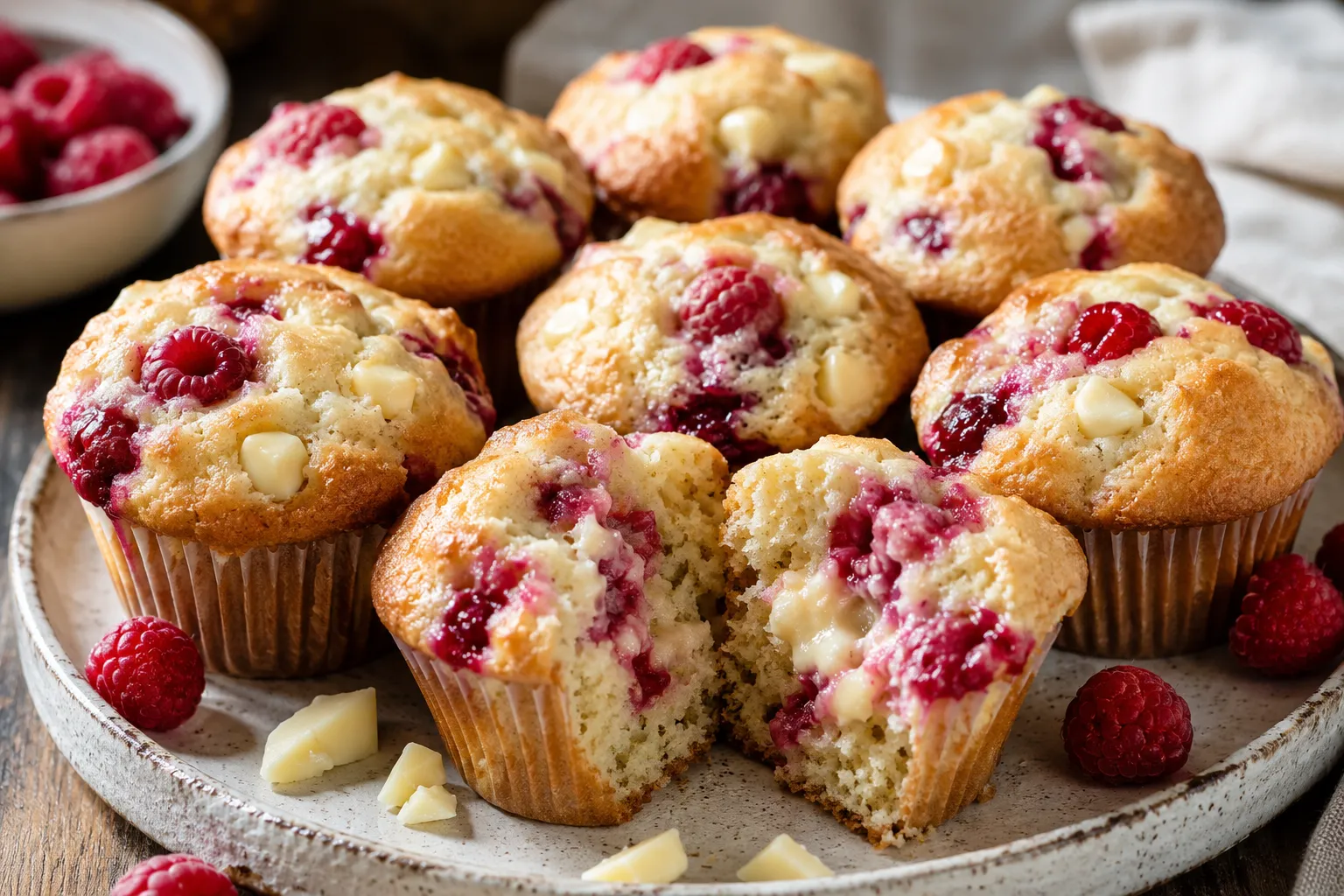
There's a specific kind of heartbreak that comes from pulling a tray of muffins out of the oven, cutting one open, and finding a soggy purple streak running through the middle instead of neat pockets of jammy raspberry. If that's happened to you, you're not doing anything wrong exactly — you're just missing a few details that most recipes skip over. This guide covers all of them.
Raspberry white chocolate muffins are one of those bakery-case classics that look simple but trip people up in predictable ways: berries sink, chocolate melts into greasy puddles, muffins turn out dense instead of that domed, bakery-style rise. None of that is inevitable. It comes down to ingredient temperature, mixing technique, and a couple of small tricks bakers use to keep fruit suspended and chocolate intact.
Why Raspberry and White Chocolate Work So Well Together
Raspberries are tart and slightly floral, with enough acidity to cut through richness. White chocolate is almost pure sweetness and fat, with very little of the bitterness you get from dark or milk chocolate. Put them together and you get a natural push-and-pull: the tartness keeps the sweetness from feeling flat, and the chocolate rounds out the raspberry's sharper edges. It's the same logic behind raspberry-and-cream desserts generally — pair a sharp fruit with something rich and mellow, and both flavors get more interesting.
This is also why the combination holds up so well in a muffin format specifically. Muffins are forgiving of bold mix-ins because the batter itself is usually fairly plain — butter or oil, sugar, eggs, flour, a leavener, and dairy. That plainness gives the raspberry and white chocolate room to be the star instead of competing with a heavily spiced or flavored base.
---
Ingredients: What Actually Matters
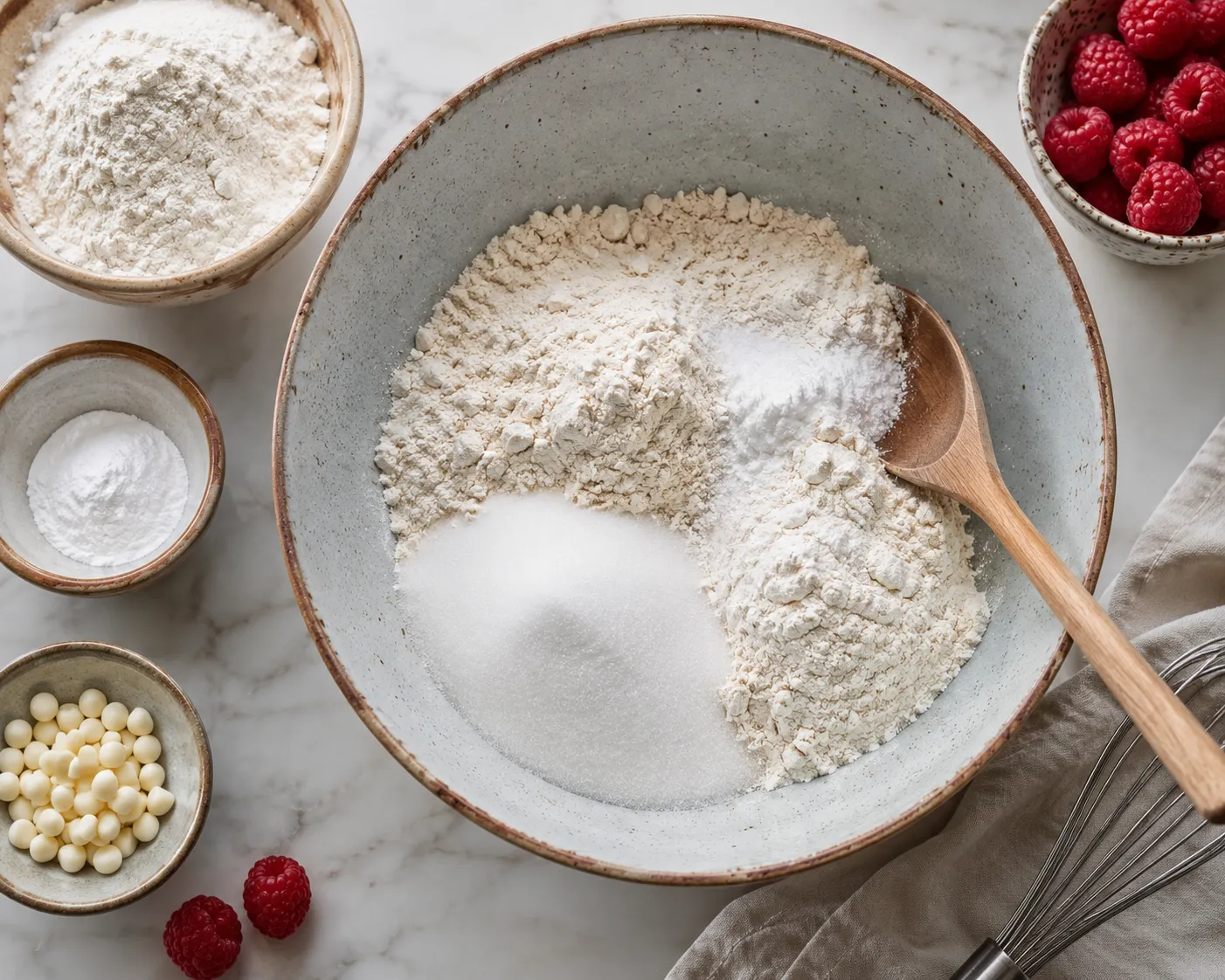
A basic batch uses roughly 2 cups of all-purpose flour, 2 teaspoons baking powder, a pinch of salt, 3/4 cup sugar, 1/2 cup melted butter or neutral oil, 2 eggs, 3/4 cup milk or buttermilk, a teaspoon of vanilla, 1 to 1.5 cups of raspberries, and about 3/4 cup of white chocolate chips or chopped white chocolate.
A few notes on the ingredients that make a real difference:
---
Why Berries Sink and How to Stop It & Mixing Technique
Overmixing is the number one reason muffins turn out tough and gummy instead of light. Once flour is introduced to a wet mixture, gluten starts developing, and the more you stir, the more that gluten tightens up — which is great for bread and terrible for muffins.
1. Prepare the dry ingredients.
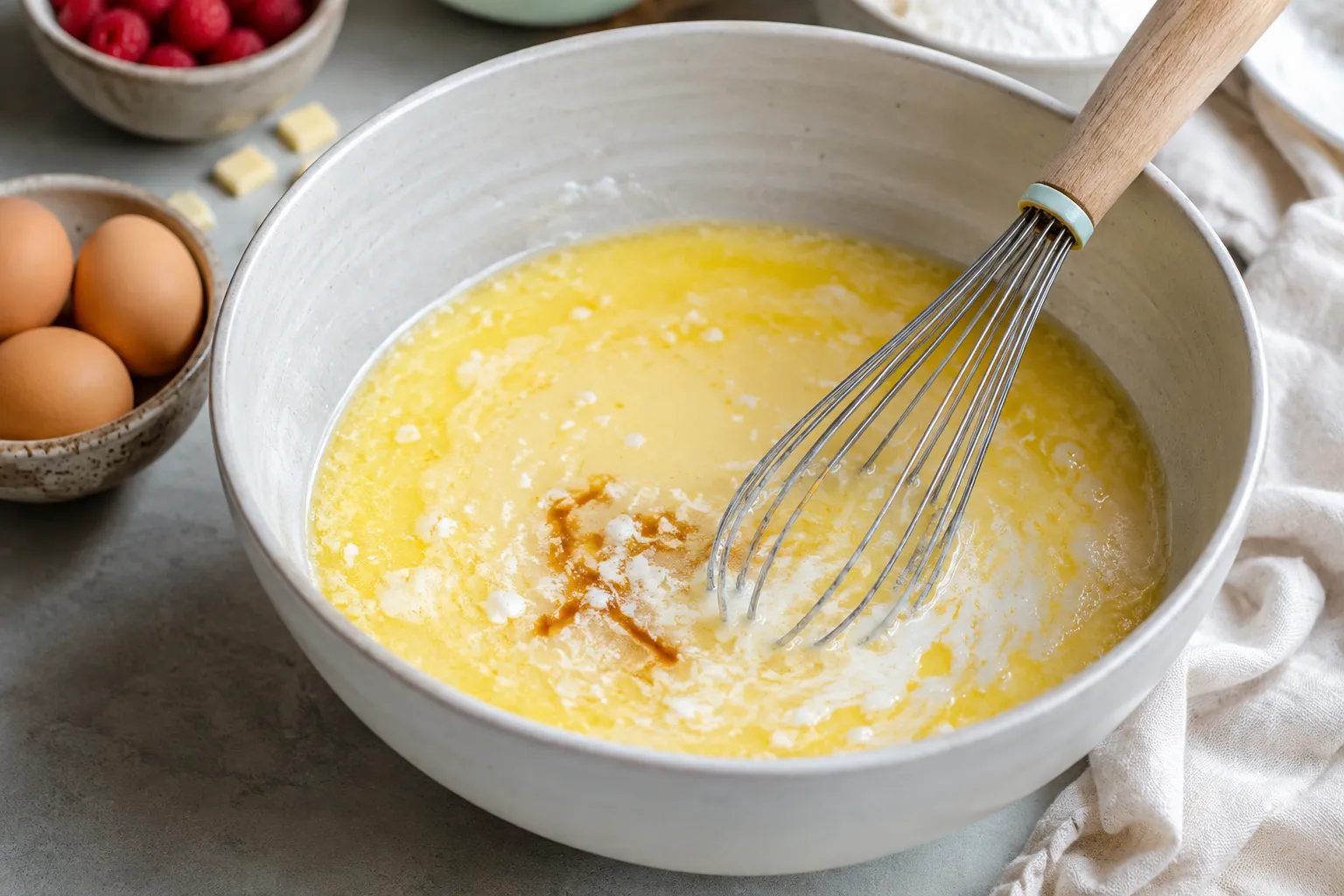
2. Whisk the wet ingredients.
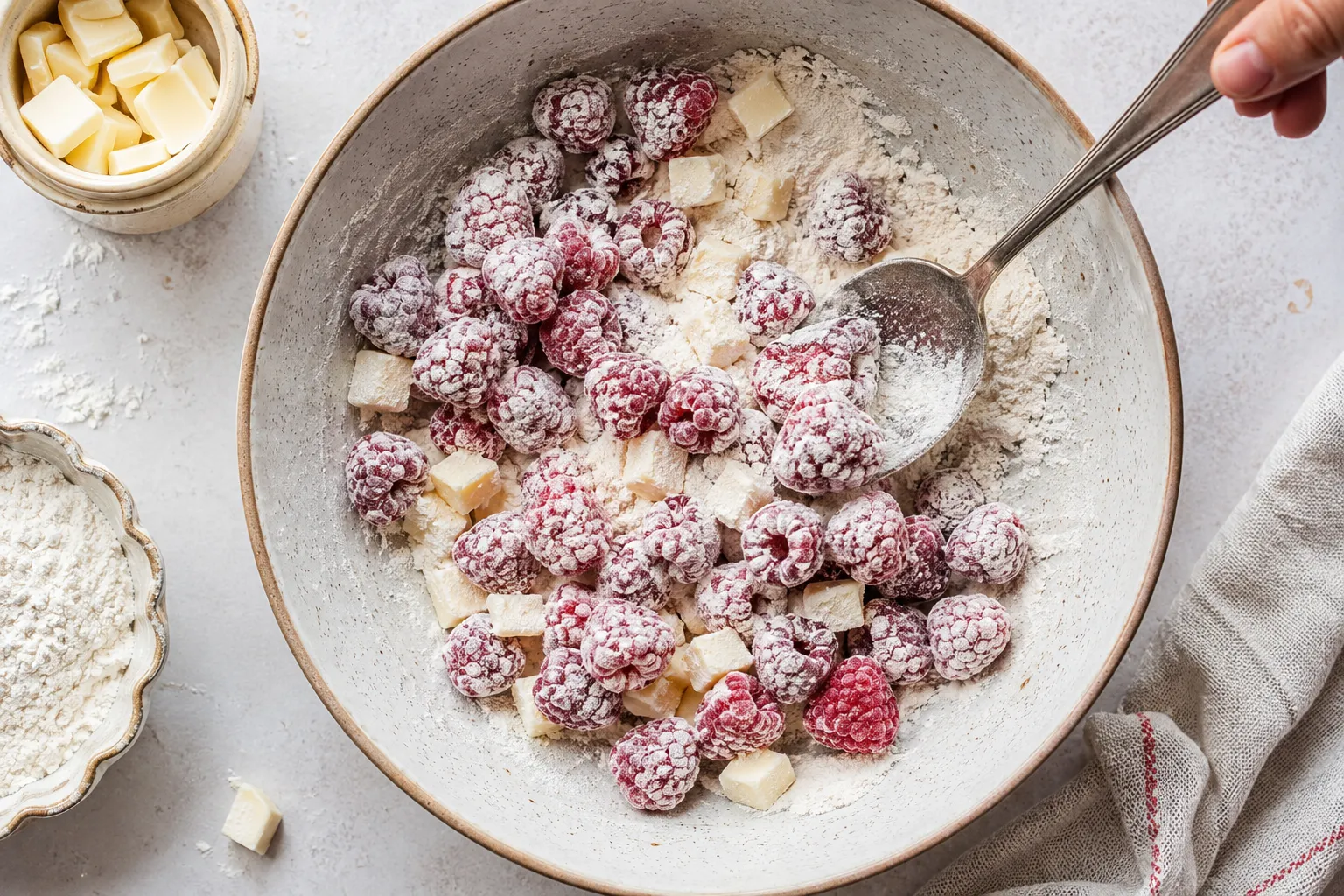
3. Coat berries and chocolate in flour. Toss your raspberries and chocolate chunks in a tablespoon or two of the flour mixture before folding them into the batter. The flour coating adds friction, which slows the mix-ins from dropping straight to the bottom of the muffin cup while it bakes.
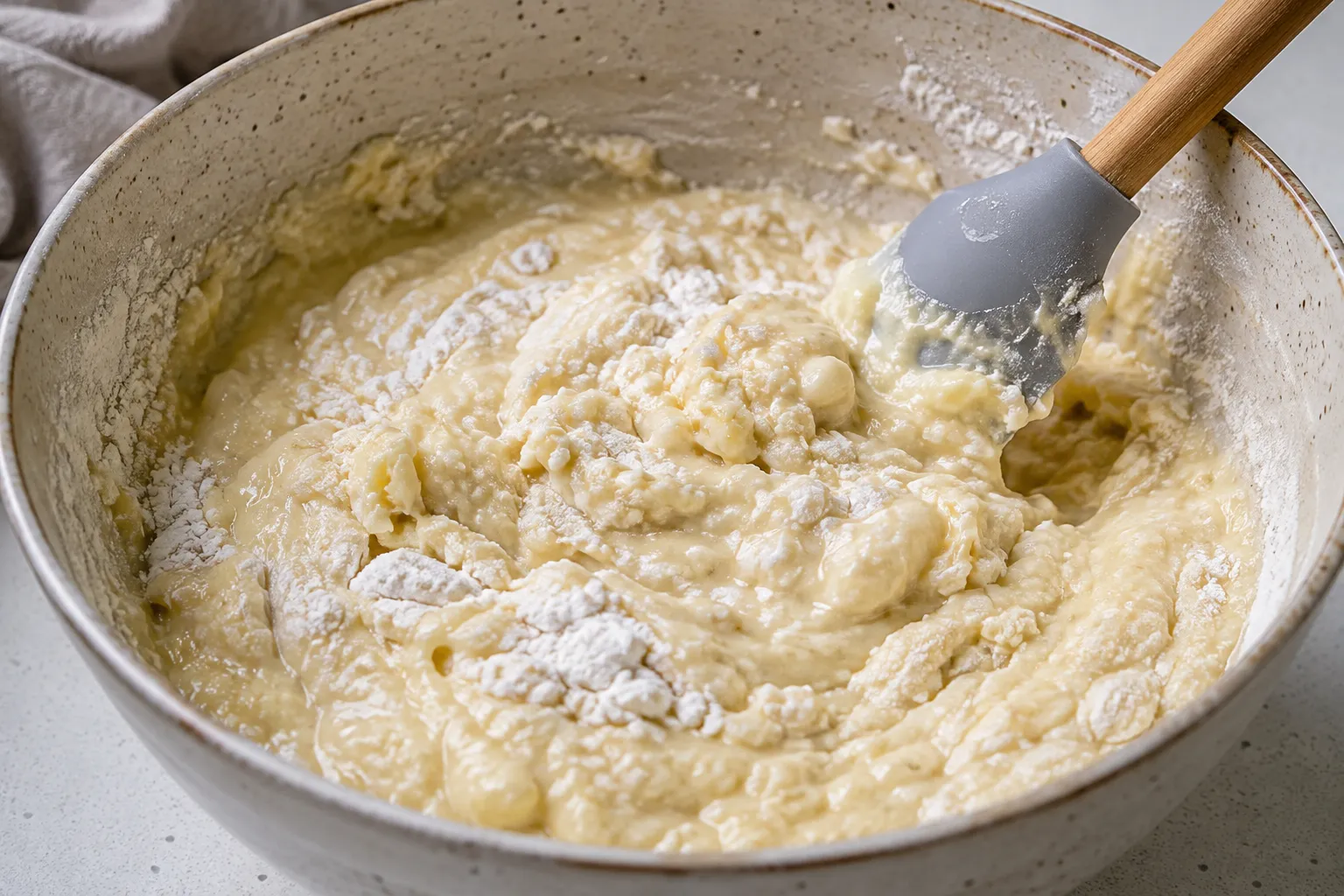
4. Combine wet and dry ingredients with minimal folds. Combine wet and dry ingredients with as few strokes as possible — usually 10 to 15 folds with a spatula, stopping while a few dry streaks are still visible.
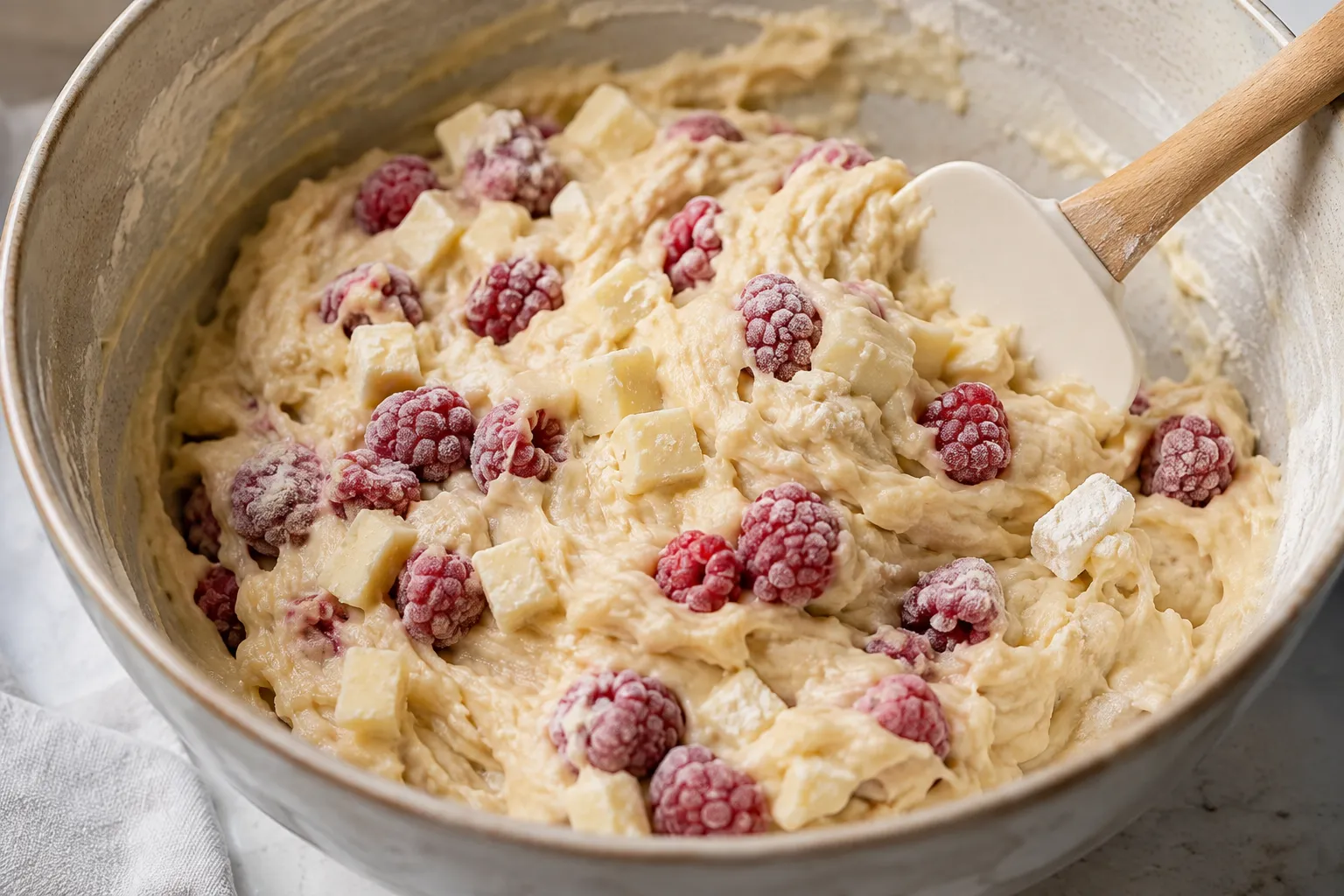
5. Gently fold in raspberries and white chocolate last. Fold gently to avoid crushing the berries against the sides of the bowl.
---
Getting the Bakery-Style Domed Top
That tall, rounded muffin top you see in bakery cases comes down to two things: oven temperature and how full you fill the tin.
6. Fill the muffin tin generously. Fill your muffin cups generously — closer to the top of the liner rather than the usual two-thirds mark most recipes suggest. Overfilling slightly gives the batter more room to dome outward and over the edges.
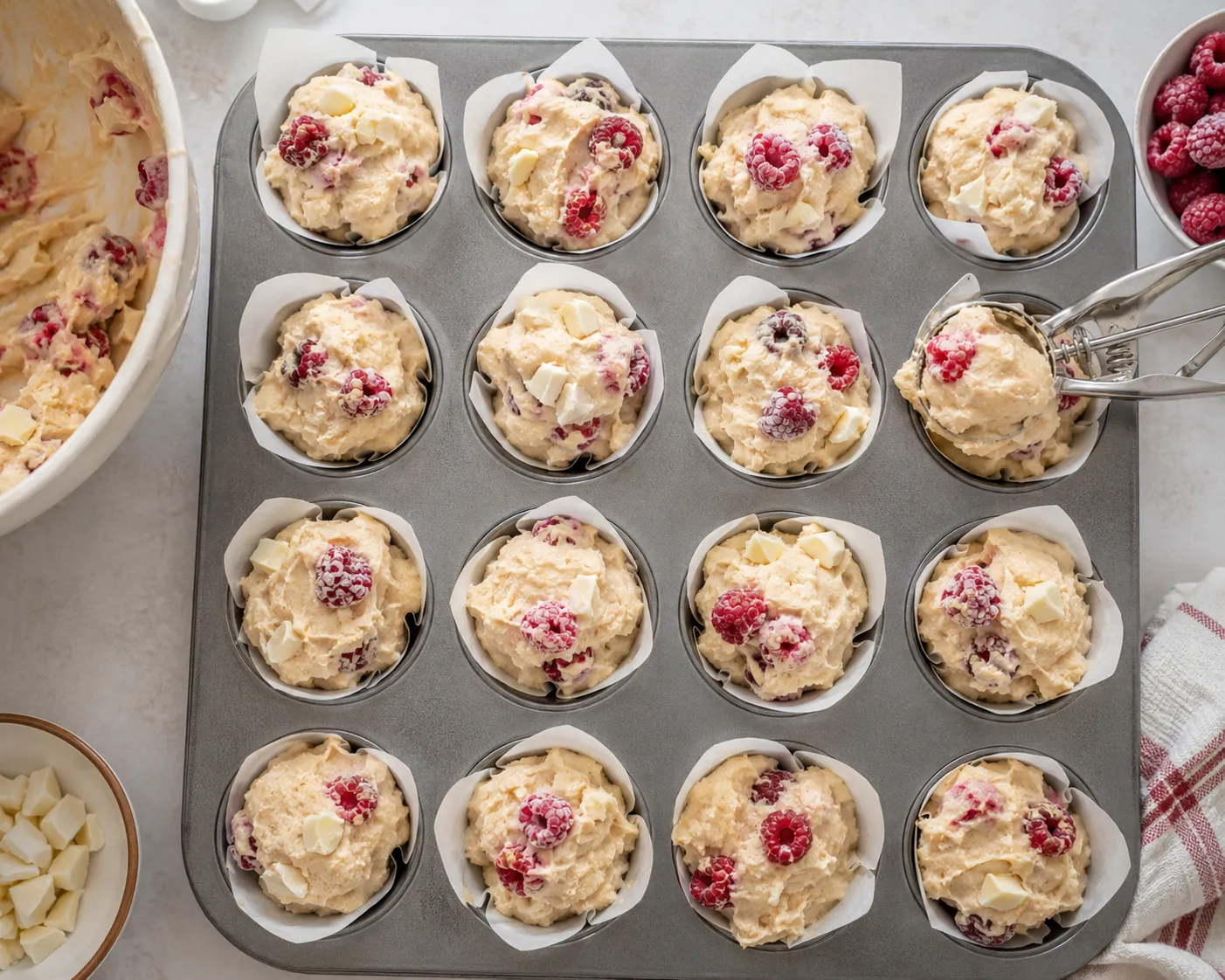
7. Bake at high initial heat. Start your muffins at a higher temperature than you'd expect — around 425°F (218°C) for the first 5 minutes, then drop it to 350°F (177°C) for the remaining 15 to 18 minutes. That initial blast of heat causes rapid steam expansion in the batter, which pushes the tops up quickly before the structure sets.
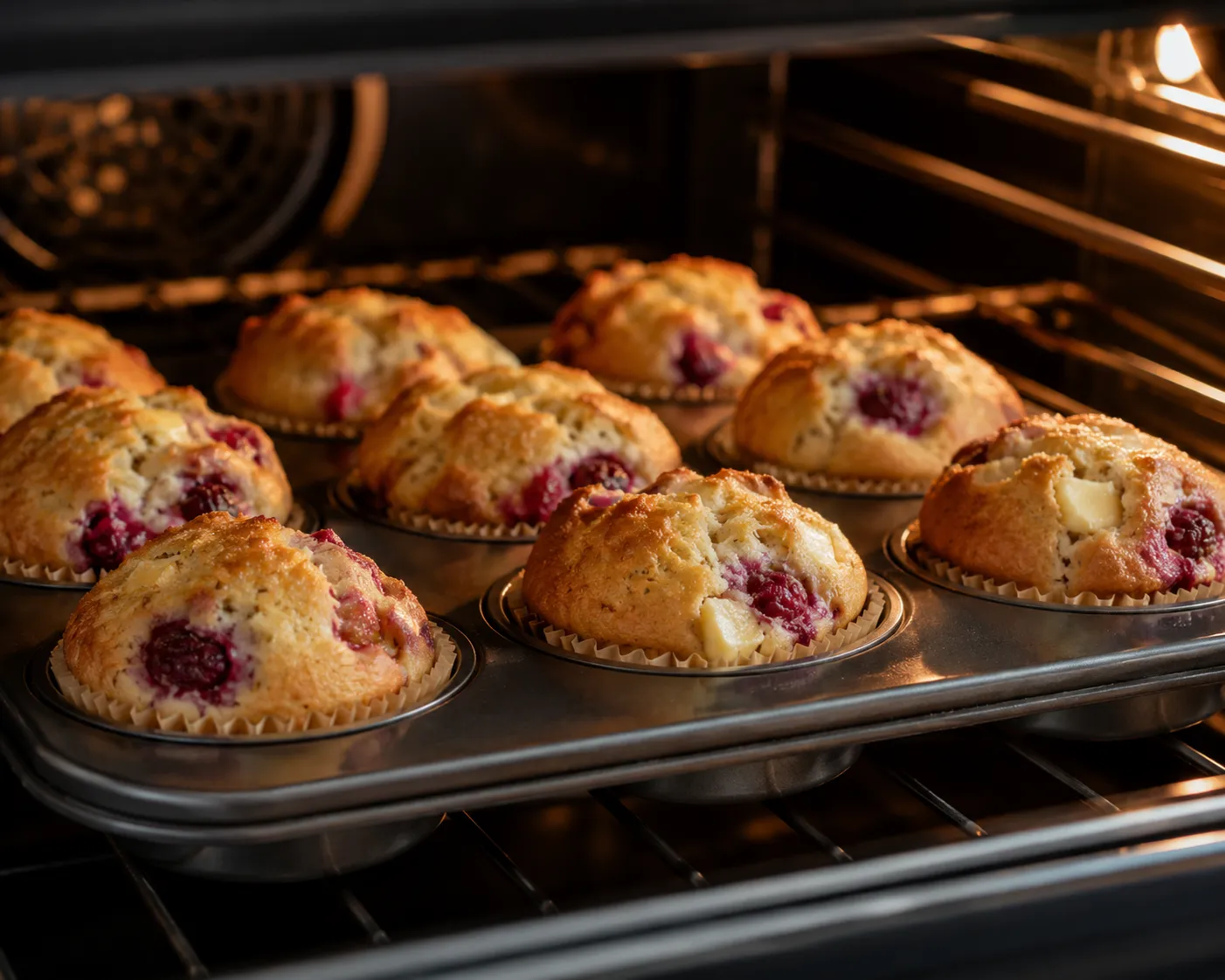
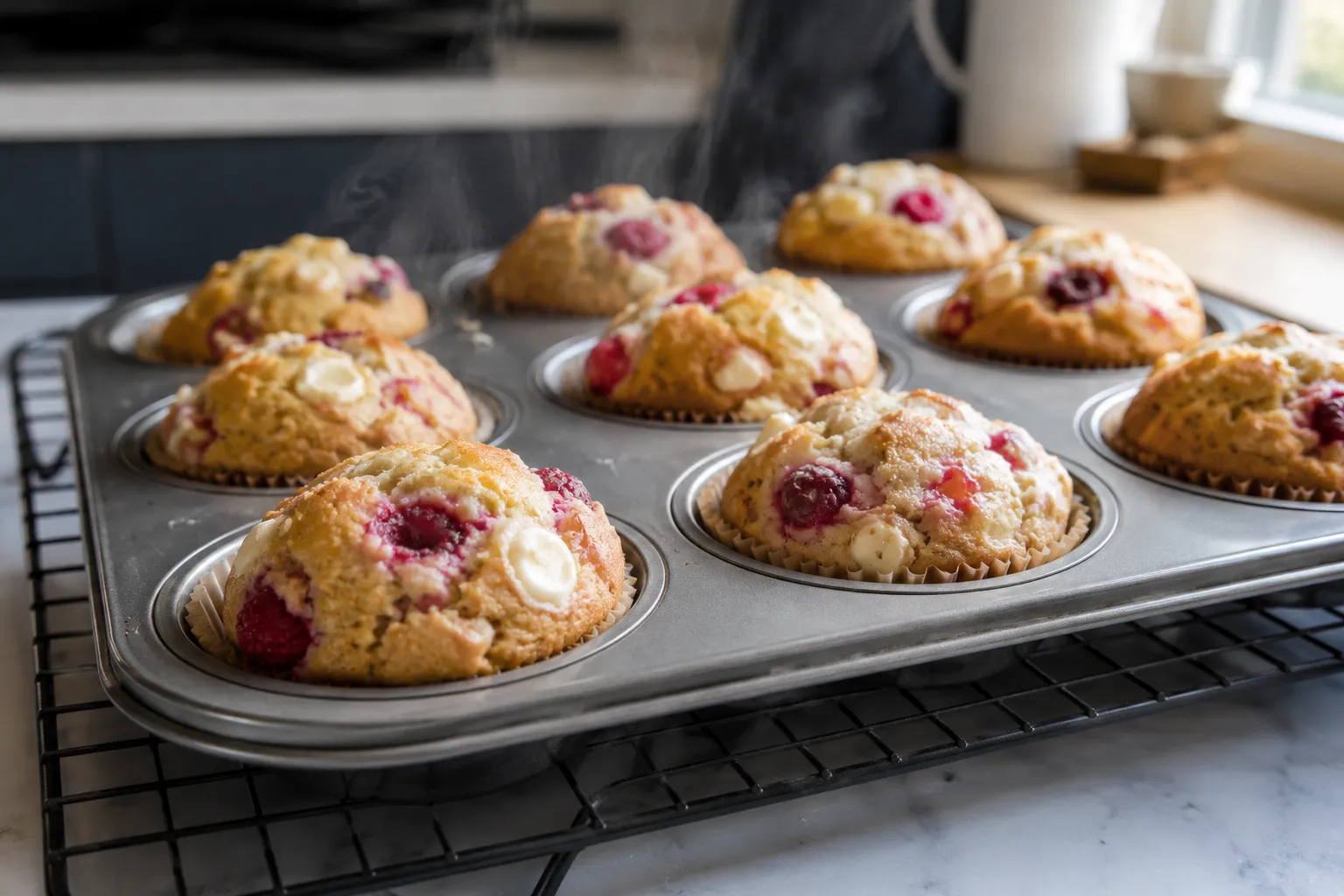
8. Cool on a wire rack. Let muffins cool for at least 10 minutes in the tin before removing them so the melted chocolate sets cleanly.
---
A Simple Streusel Topping Worth Adding
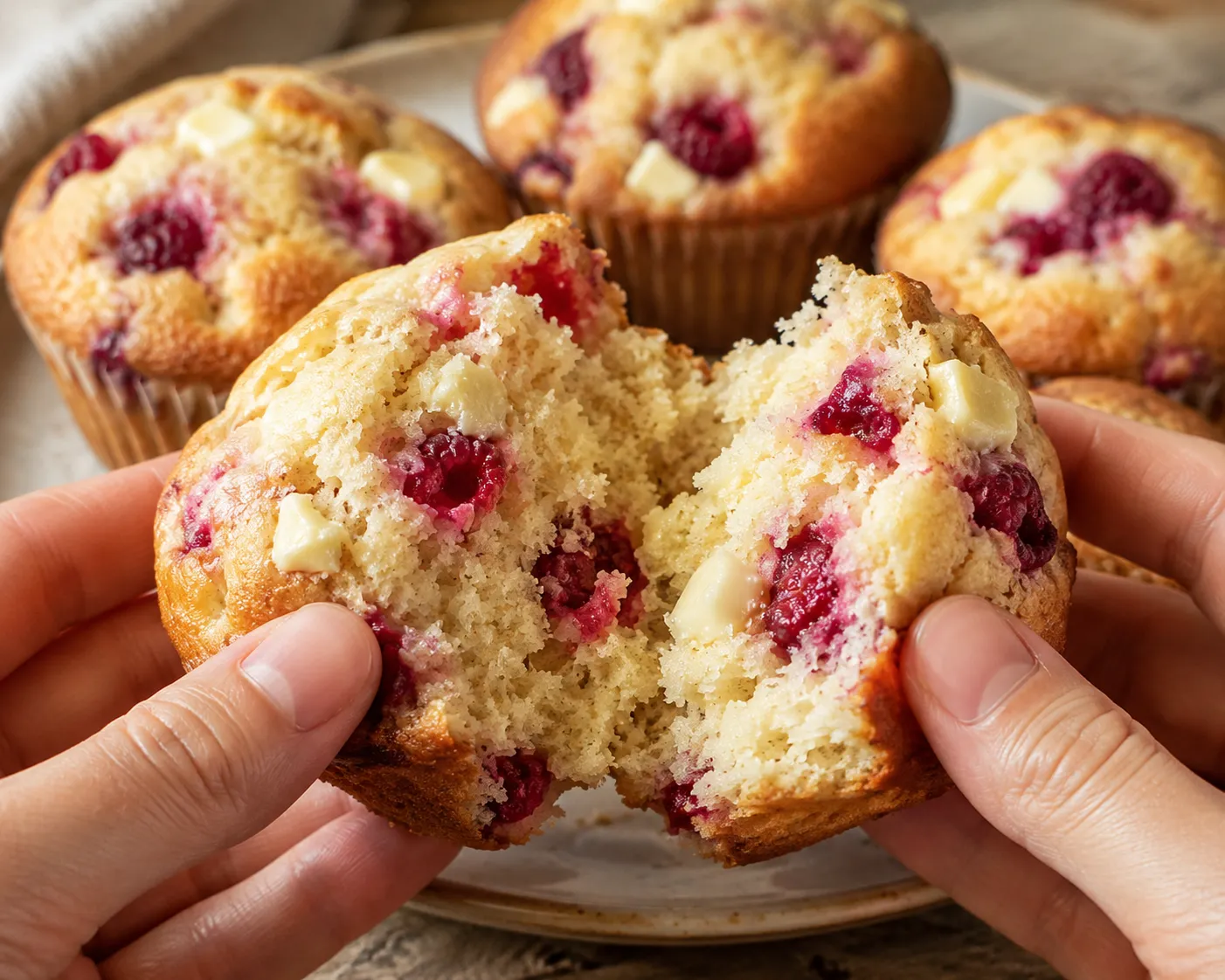
If you want to push these from good to memorable, a streusel topping does a lot of work for very little effort. Mix 1/4 cup flour, 2 tablespoons sugar, and 2 tablespoons cold butter cut into small pieces, using your fingers to work it into coarse crumbs. Sprinkle it over each muffin before baking. It adds textural contrast against the soft crumb and melted chocolate, and it hides minor imperfections in the muffin top.
---
Common Mistakes and How to Fix Them
| Issue | Root Cause | How to Fix |
|---|---|---|
| Muffins are dense and heavy | Overmixing batter or expired baking powder | Fold less than 15 times; test baking powder in hot water first |
| White chocolate sank or disappeared | Chunks too small or not coated in flour | Chop chocolate larger and toss in flour with berries |
| Muffins stuck to paper liners | Melted white chocolate bonded to paper while hot | Cool 10 minutes in tin; use parchment paper liners |
| Raspberries turned batter purple | Over-folding fresh or thawed berries | Use frozen berries straight from freezer and fold gently at the end |
| Muffins are flat instead of domed | Flat baking temperature (350°F whole time) | Bake at 425°F for initial 5 minutes before lowering to 350°F |
---
Storage and Make-Ahead Tips
These muffins keep at room temperature in an airtight container for about 2 days before the texture starts to decline. For longer storage, refrigerate for up to a week, though the crumb will firm up somewhat — a quick 15-second zap in the microwave brings back a lot of the fresh-baked texture.
They also freeze well. Cool completely, then wrap individually in plastic wrap and store in a freezer bag for up to 3 months. Thaw at room temperature or microwave from frozen in 30-second increments.
If you want fresh muffins without doing everything the morning you bake, you can portion the batter into a lined muffin tin, cover it, and refrigerate overnight, then bake straight from the fridge in the morning, adding a couple of extra minutes to the bake time.
---
Frequently Asked Questions
---
Final Result
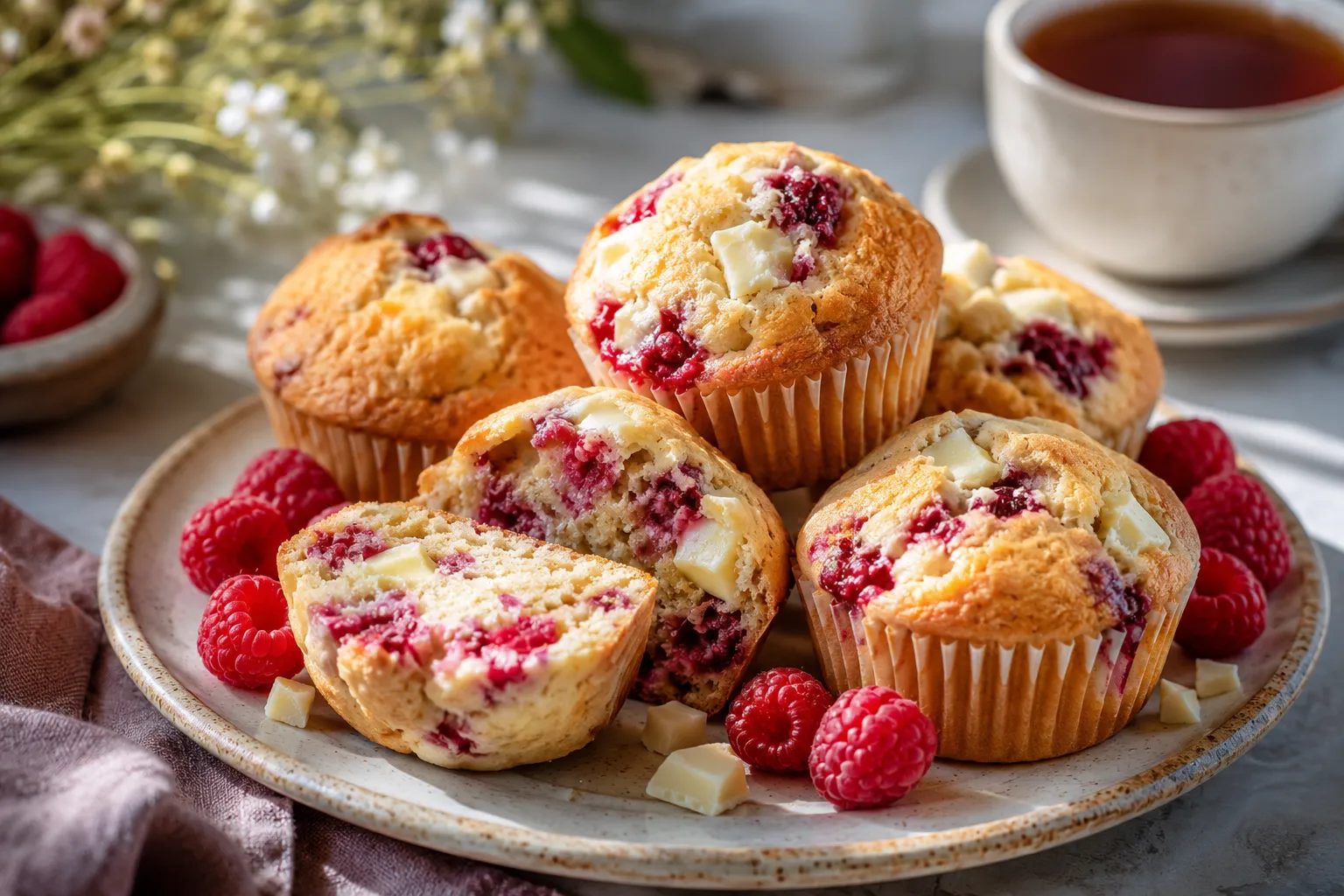
The gap between an average raspberry white chocolate muffin and a genuinely great one usually comes down to three small decisions: using frozen berries instead of fresh, stopping the mixing before the batter looks smooth, and giving the oven that initial blast of high heat. None of it requires special equipment or hard-to-find ingredients — just a bit more attention at the moments most recipes rush through.