There's a specific kind of disappointment that comes from biting into a hot cross bun that's dense as a hockey puck. You waited three hours for the dough to rise, you piped the crosses with the patience of a surgeon, and what came out of the oven looks right but eats like a doorstop. If you've been there, this guide is for you.
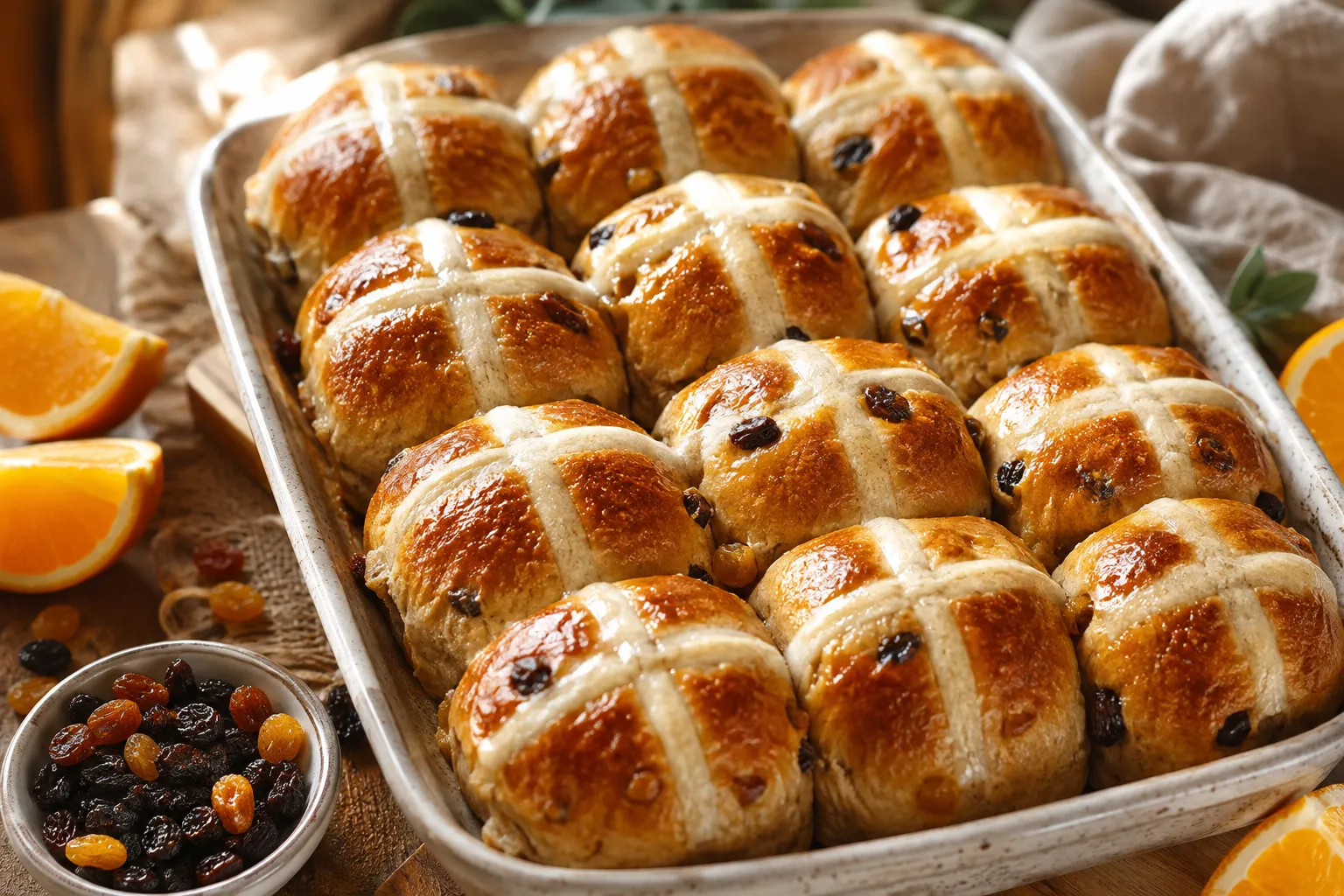
Hot cross buns are simple in theory — enriched, spiced, yeasted dough studded with dried fruit, marked with a cross, and finished with a sticky glaze. In practice, the difference between a bakery-quality bun and a sad one comes down to a handful of details most recipes skip over: how warm your liquid actually needs to be, why your dough feels too wet even when you followed the recipe exactly, and when to stop kneading.
This post walks through the full process, explains the "why" behind each step, and answers the questions people actually get stuck on.
What Makes a Hot Cross Bun Different From Regular Bread
A hot cross bun is an enriched dough, meaning it contains butter, eggs, milk, and sugar in addition to flour, yeast, salt, and water. Enrichment does two things: it makes the crumb softer and more tender, and it slows down yeast activity, because fat and sugar compete with the yeast for moisture and can inhibit gluten development if not managed properly. That's the main reason enriched doughs need a longer, gentler rise than a basic loaf of bread.
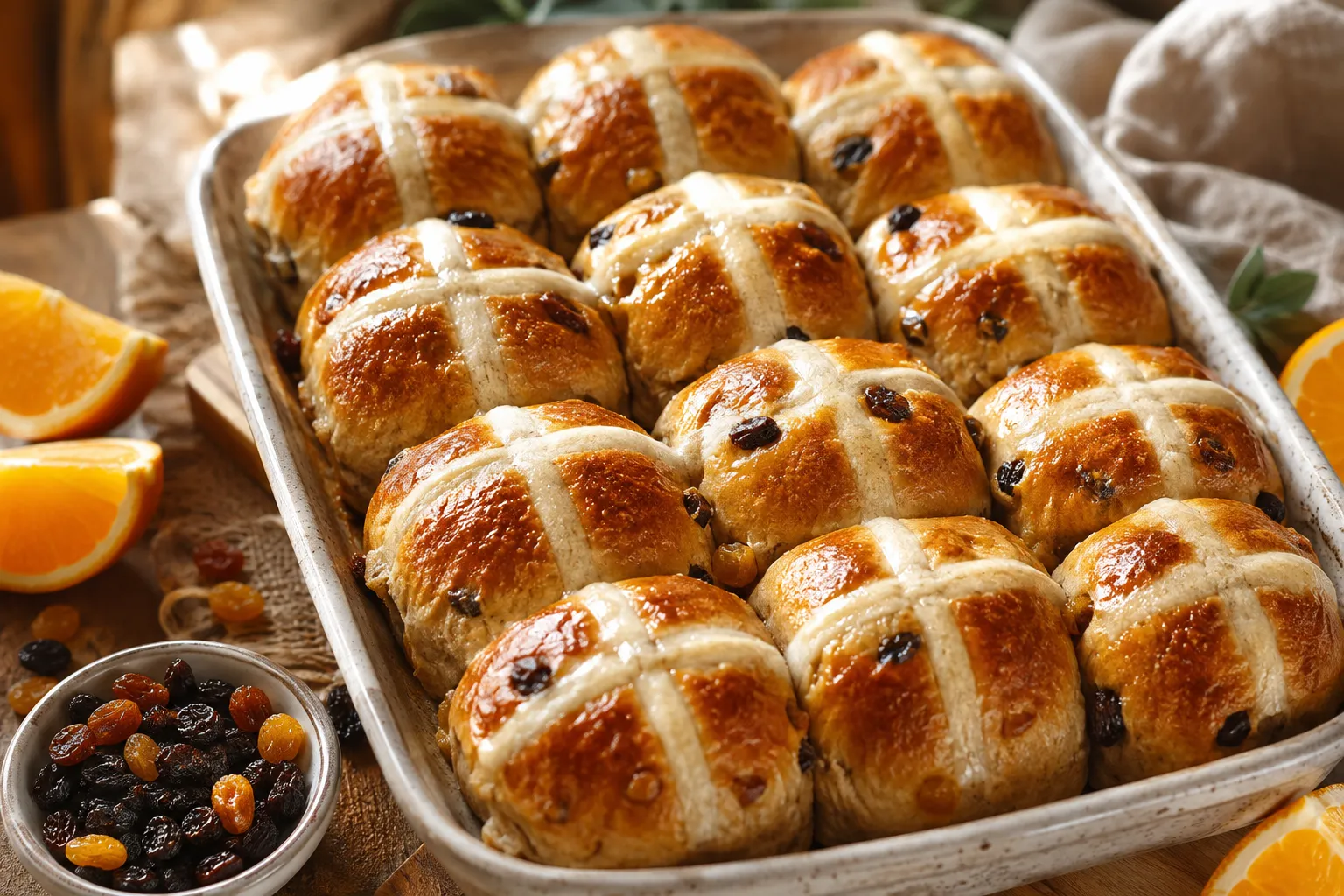
The spice mix is traditionally cinnamon, nutmeg, and allspice, sometimes with a little clove or mixed spice blend. The dried fruit is usually currants, sultanas, or a mix of raisins and candied peel. The cross itself started as a religious symbol tied to Good Friday, made originally with a knife cut and later with a piped flour-and-water paste.
---
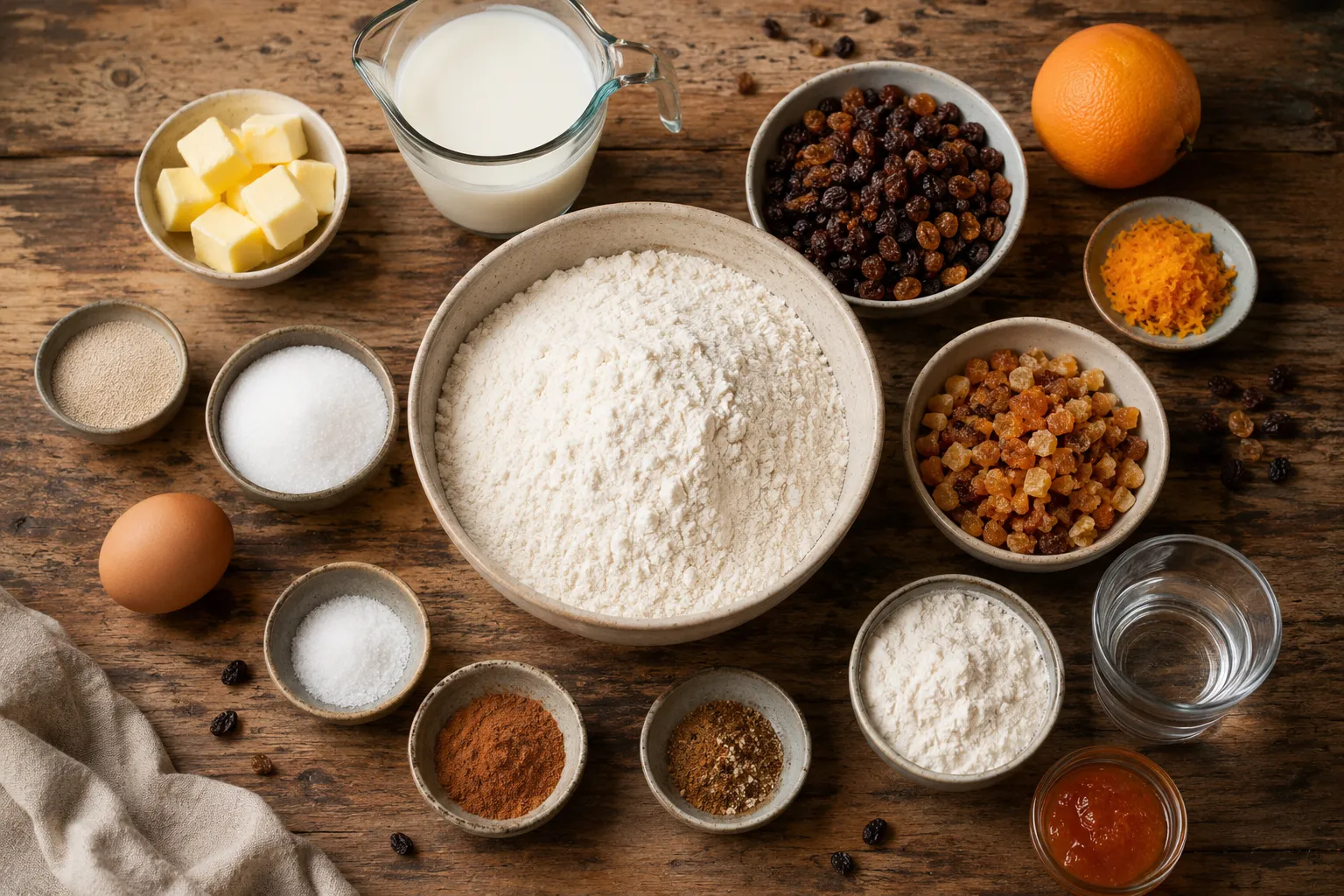
Ingredients You'll Need
---
Step-by-Step Method
1. Activate and mix
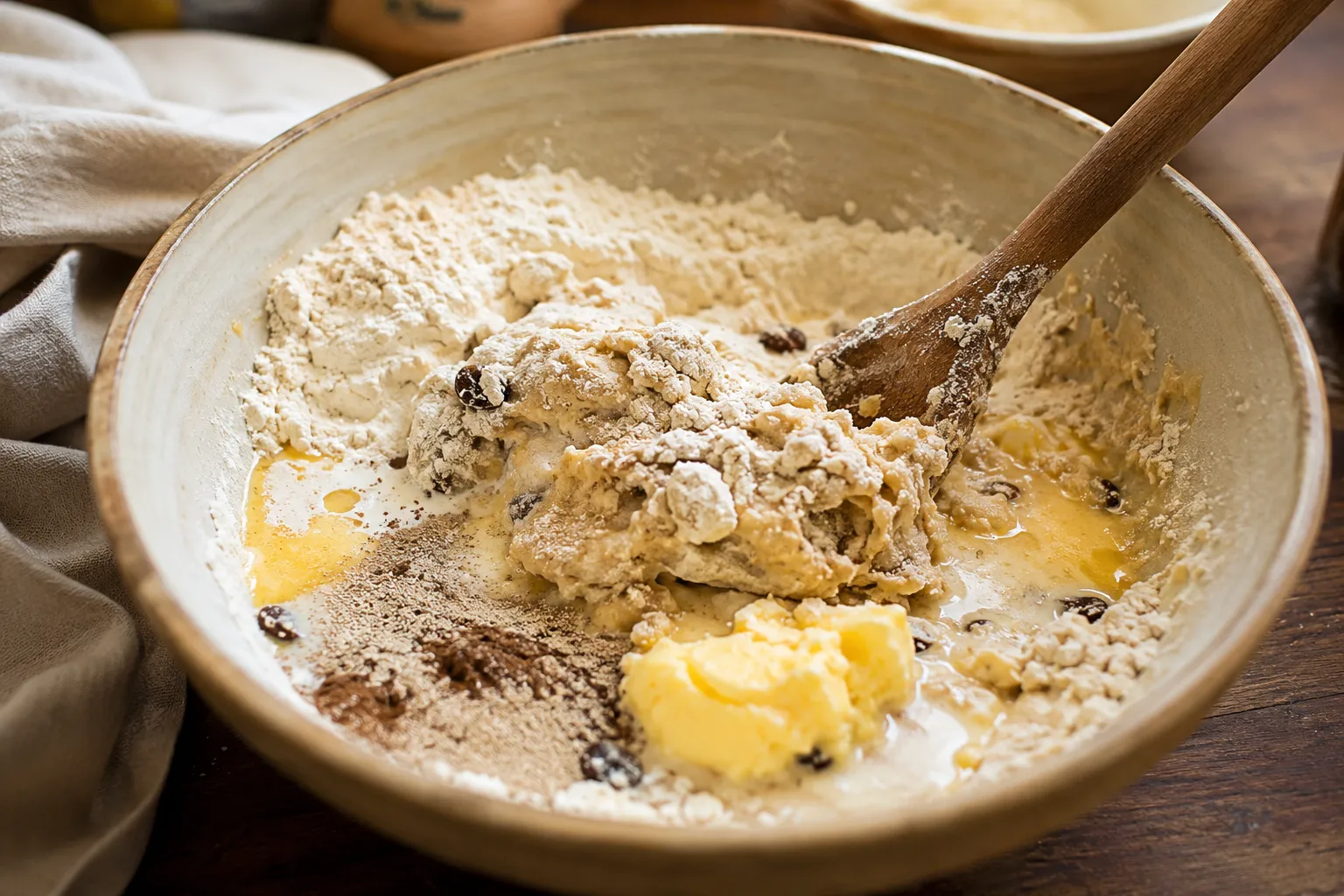 Warm the milk until it feels like bathwater — around 37°C (98°F). Too hot and you'll kill the yeast; too cold and it'll take forever to get going. In a large bowl, combine the flour, yeast, sugar, salt, and spices, keeping the salt and yeast on opposite sides of the bowl if you're not using instant yeast. Add warm milk, beaten egg, and softened butter. Mix until a shaggy dough forms.
2. Knead properly
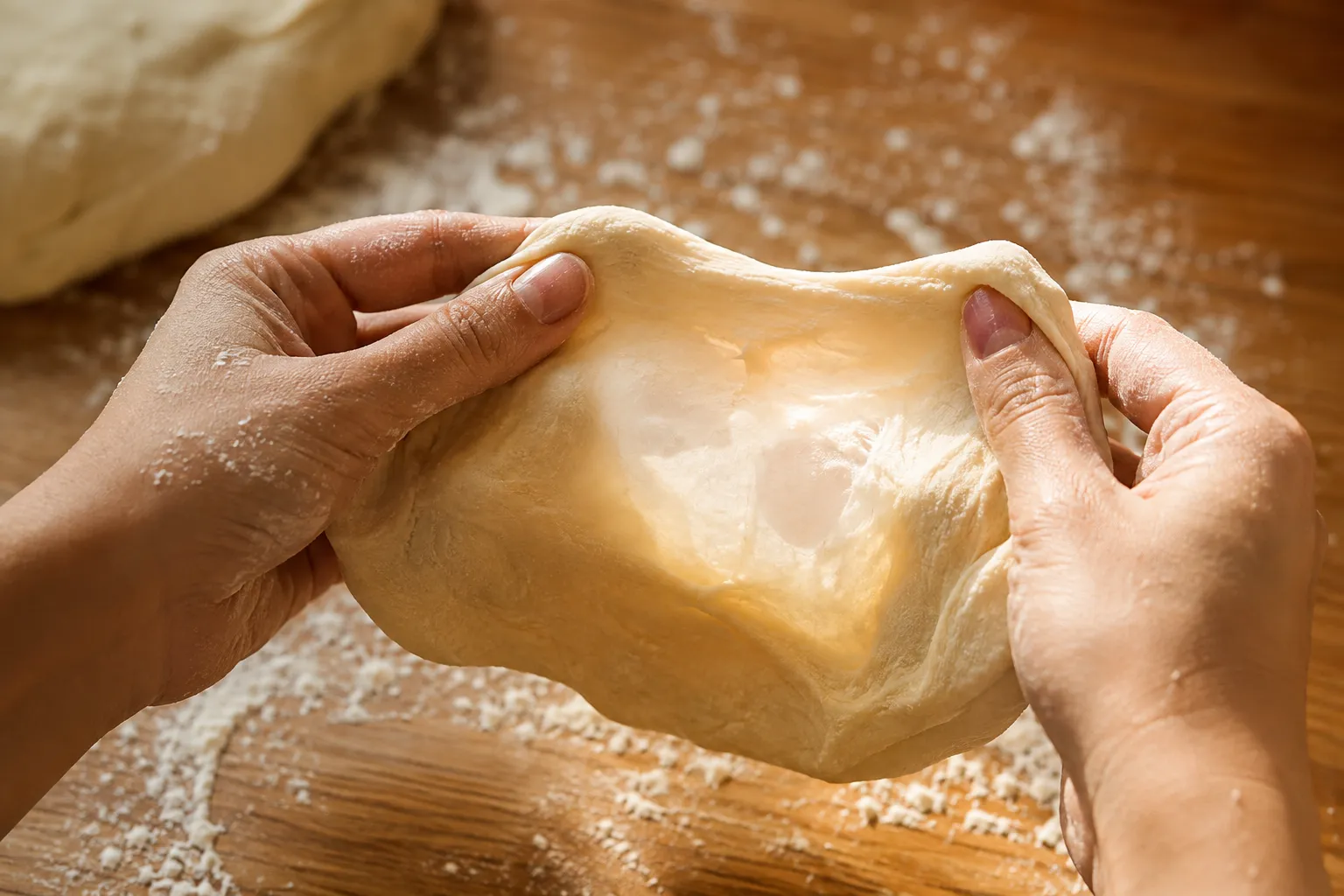 This is where most home bakers underdo it. Enriched doughs need 10–12 minutes of kneading by hand, or about 6–8 minutes in a stand mixer with a dough hook, to develop enough gluten structure to hold up against the weight of the butter and fruit. The dough should end up smooth, elastic, and only slightly tacky. Use the windowpane test to confirm.
3. First rise
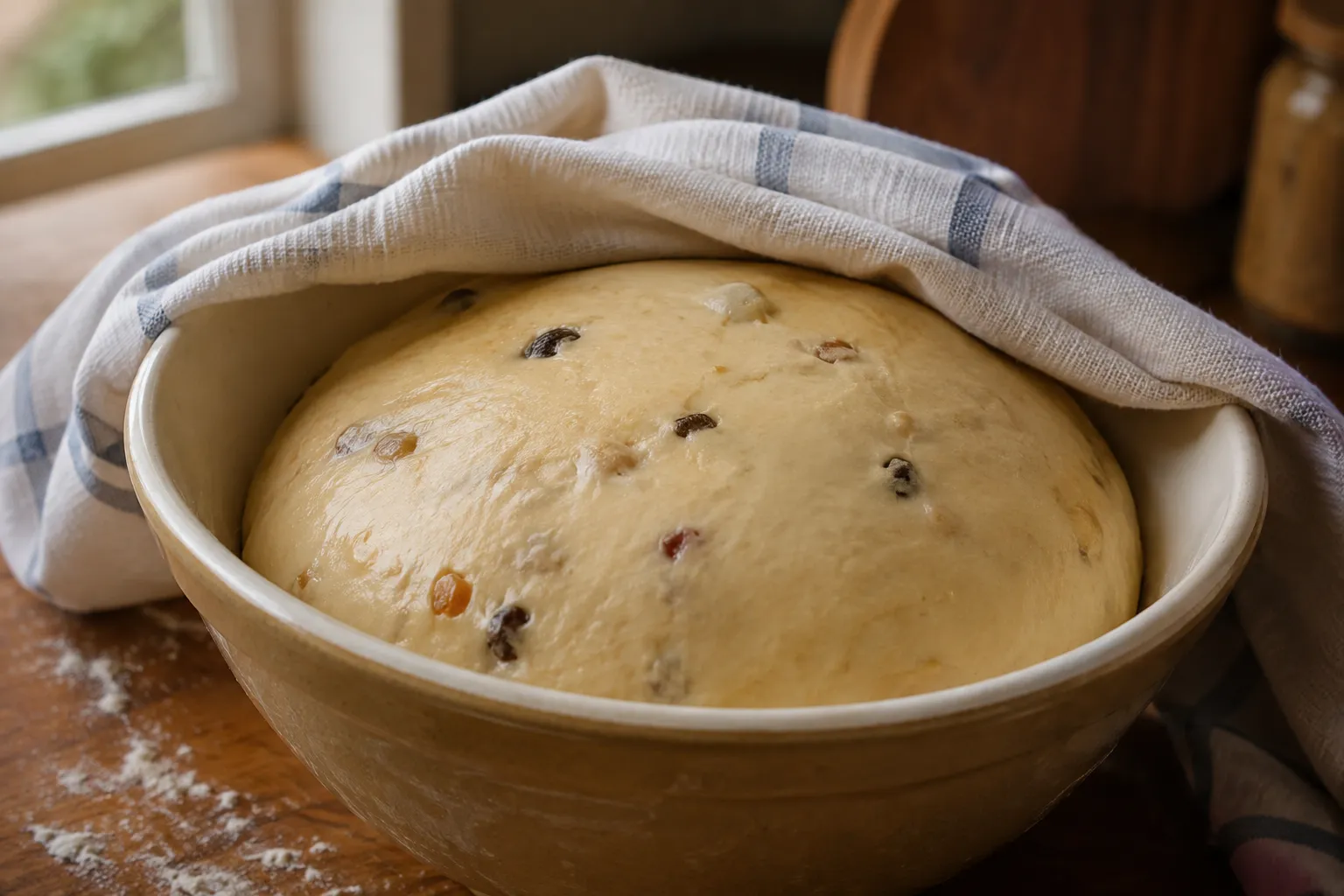 Place the dough in a lightly oiled bowl, cover, and let it rise somewhere warm until doubled — typically 1.5 to 2 hours. Don't rush this by cranking up the heat; too warm an environment can cause the butter to melt out of the dough and create a greasy, dense result.
4. Add the fruit and shape
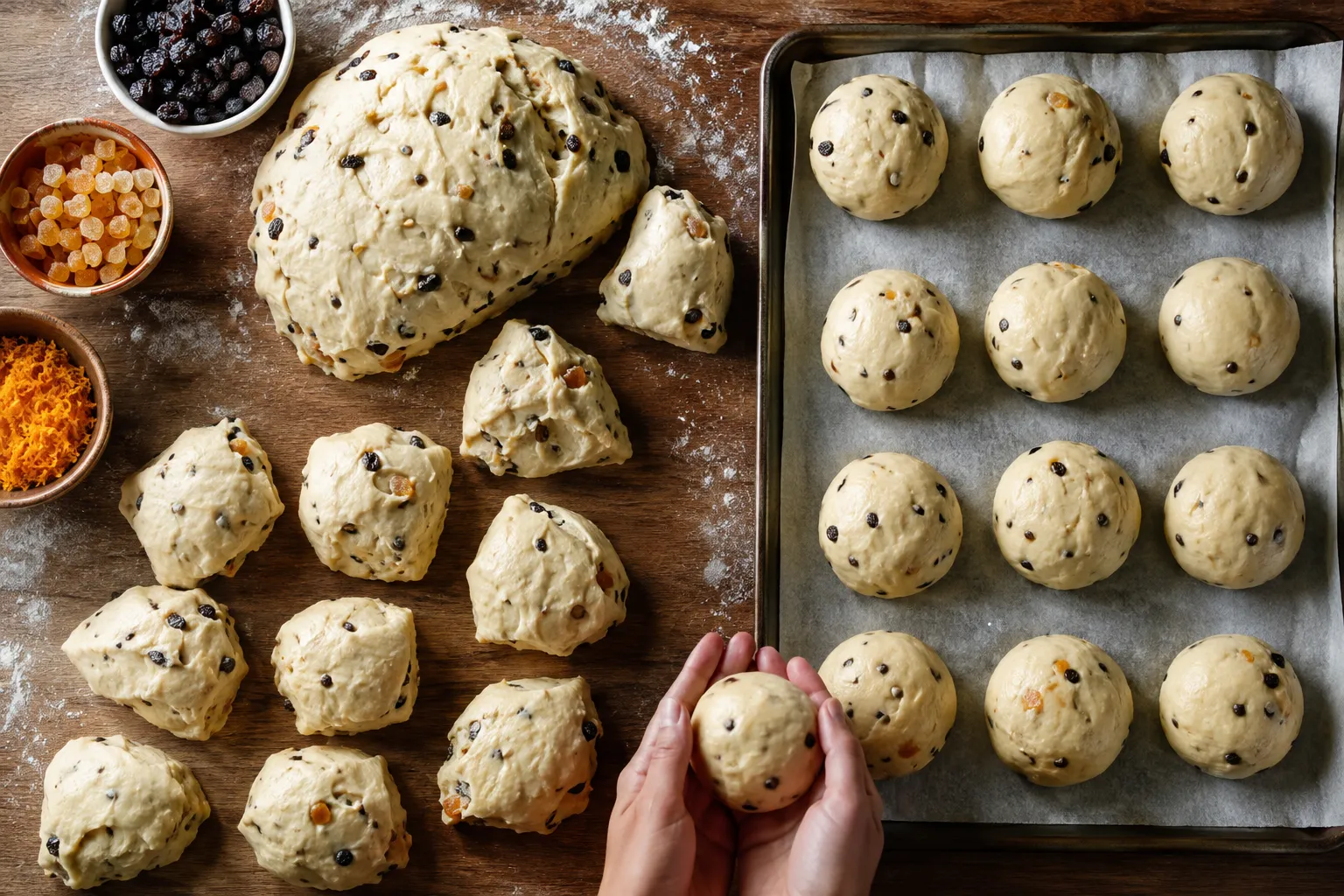 Once risen, turn the dough out and knead in the dried fruit and orange zest until evenly distributed. Divide into 12 equal pieces (approx. 90g each) and shape each into a tight ball by tucking the edges underneath. Arrange close together on a lined baking tray so they rise into each other for soft pull-apart sides.
5. Second rise
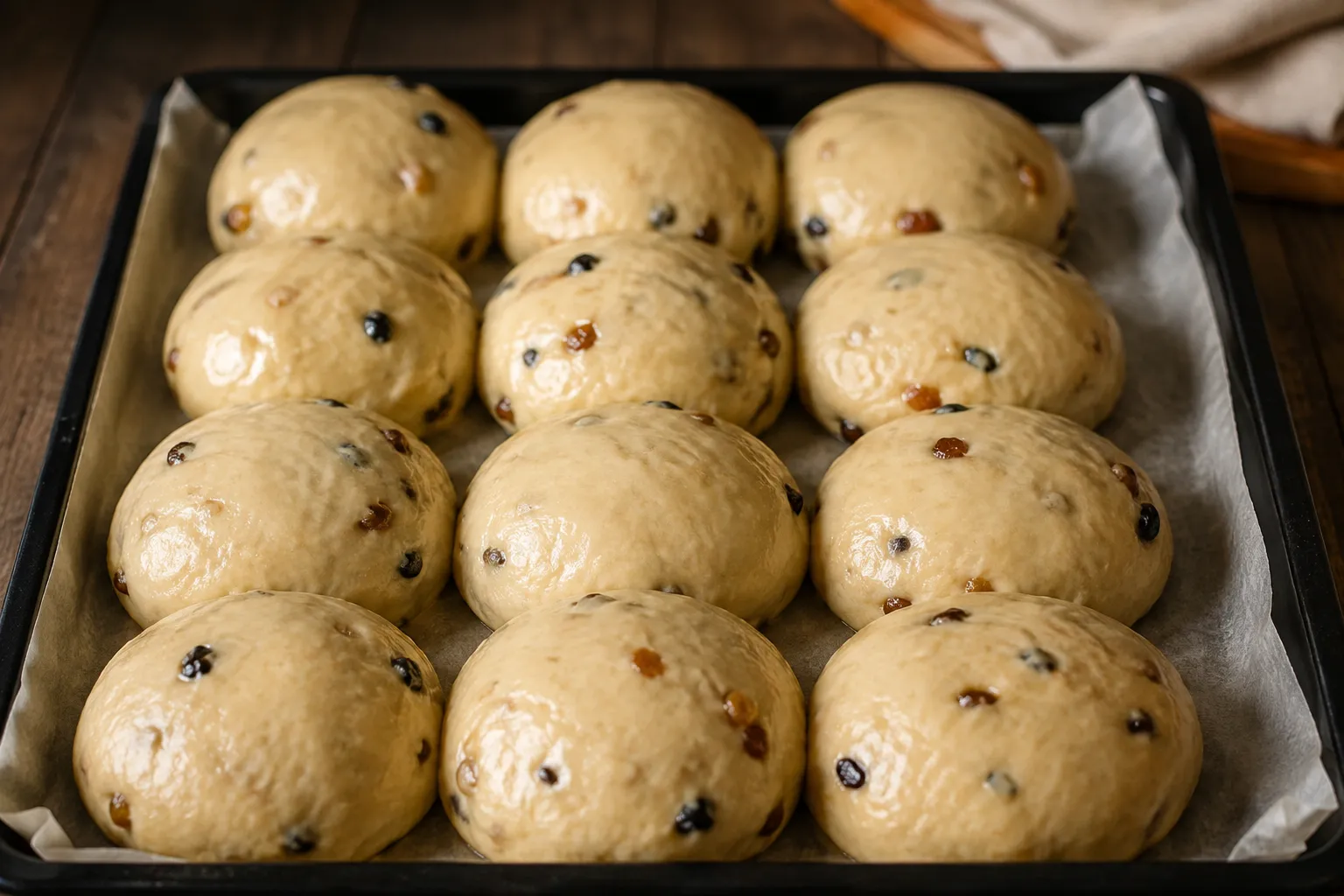 Cover loosely and let rise again for 45–60 minutes, until puffy and nearly doubled. Meanwhile, preheat the oven to 190°C (375°F).
6. Pipe the crosses
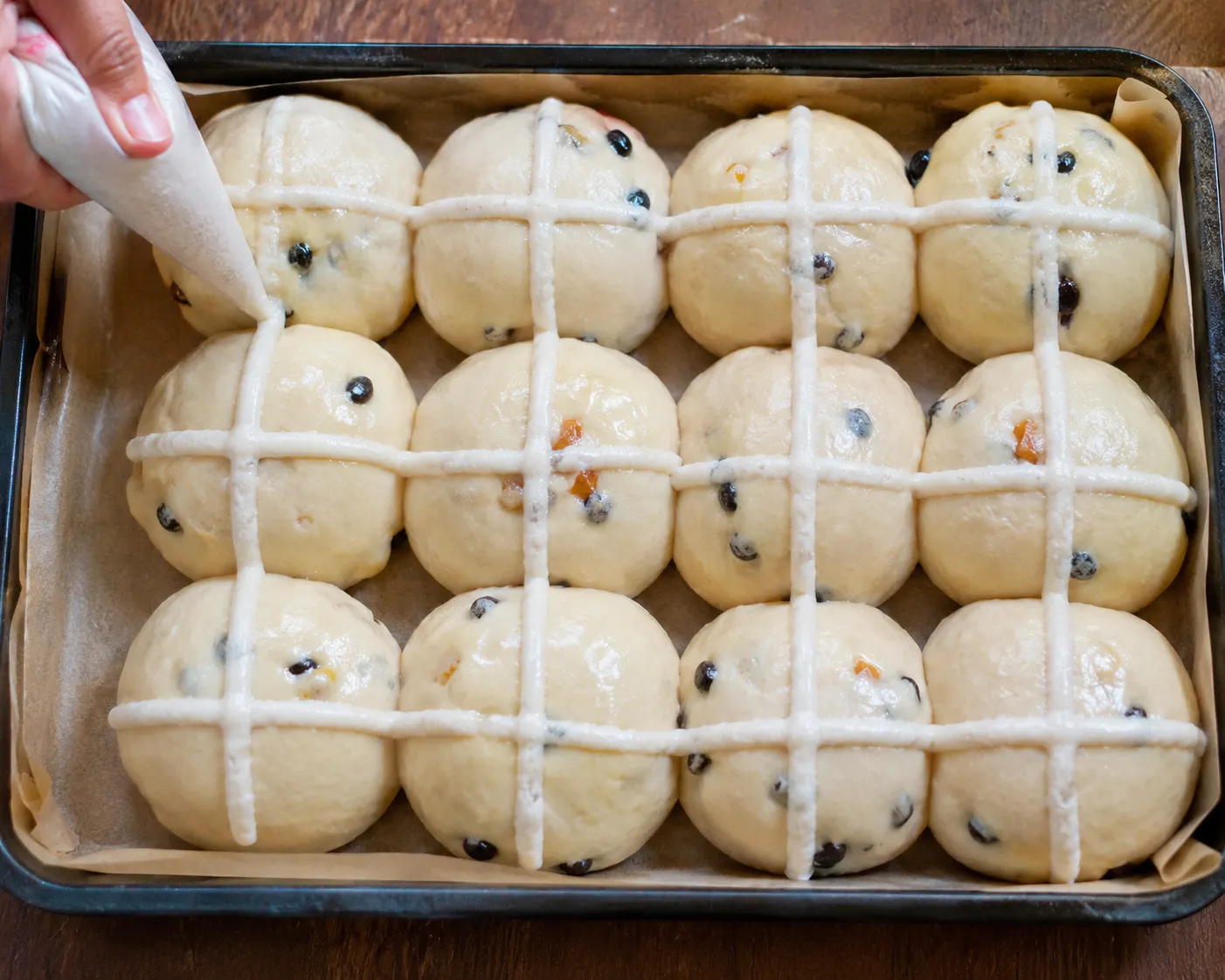 Mix the flour-water paste to a consistency thick enough to hold its shape but thin enough to pipe through a small nozzle or a snipped corner of a piping bag. Pipe straight lines across the buns in both directions right before baking.
7. Bake
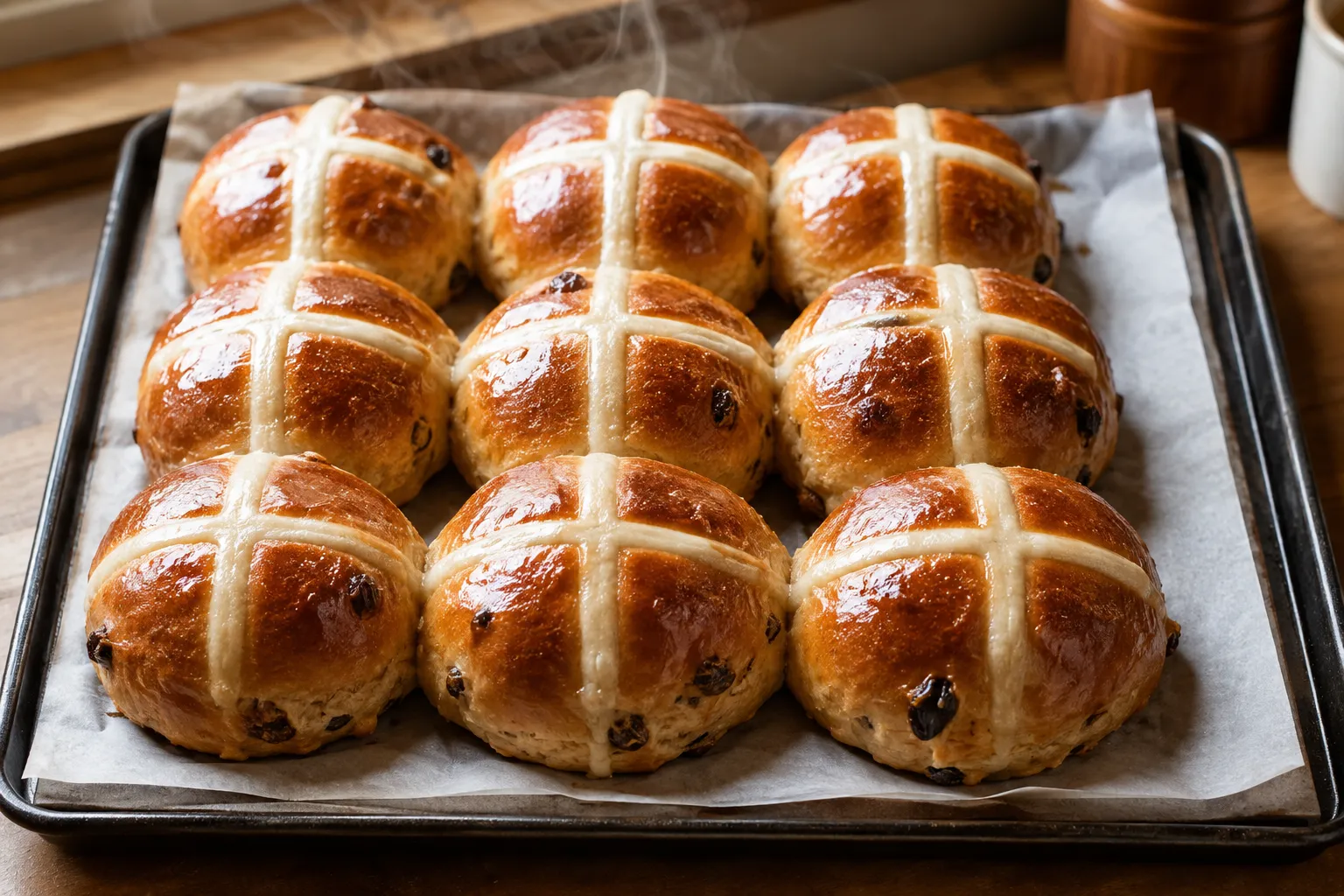 Bake for 18–22 minutes, until deep golden brown and the buns sound hollow when tapped on the base. If they're browning too fast before the centre is cooked, loosely tent with foil for the last few minutes.
8. Glaze while hot
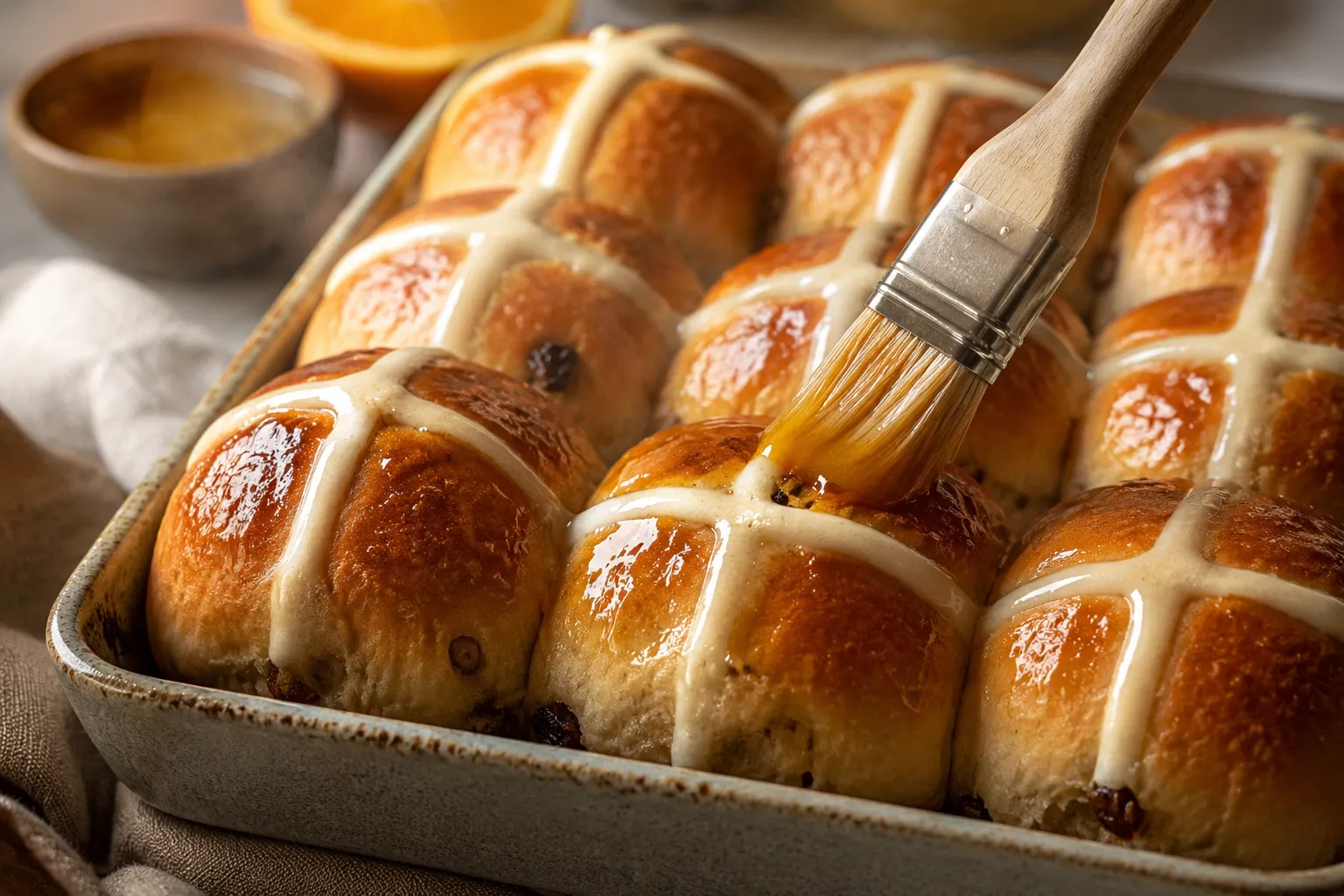 Brush warmed apricot jam or sugar syrup over the buns as soon as they come out of the oven. Glazing while hot lets the syrup soak in slightly rather than just sitting on the surface.
---
Common Problems and How to Fix Them
| Problem | Root Cause | Solution |
|---|---|---|
| Dense, heavy buns | Under-kneading or under-proofing | Knead full 10–12 mins; let proof until doubled |
| Dough too sticky to handle | Under-developed gluten | Avoid dumping raw flour; use a bench scraper and keep kneading |
| Buns didn't rise | Killed yeast or cold environment | Ensure liquid is ~37°C; proof in a warm 24–27°C spot |
| Crosses disappeared during baking | Paste was too runny | Mix paste to a thick pancake batter consistency |
| Buns turned out dry | Overbaking | Start checking at 18 minutes; pull when internal temp reaches ~89°C |
---
Make-Ahead, Storage, and Flavor Variations
---
Frequently Asked Questions
---
Final Thoughts
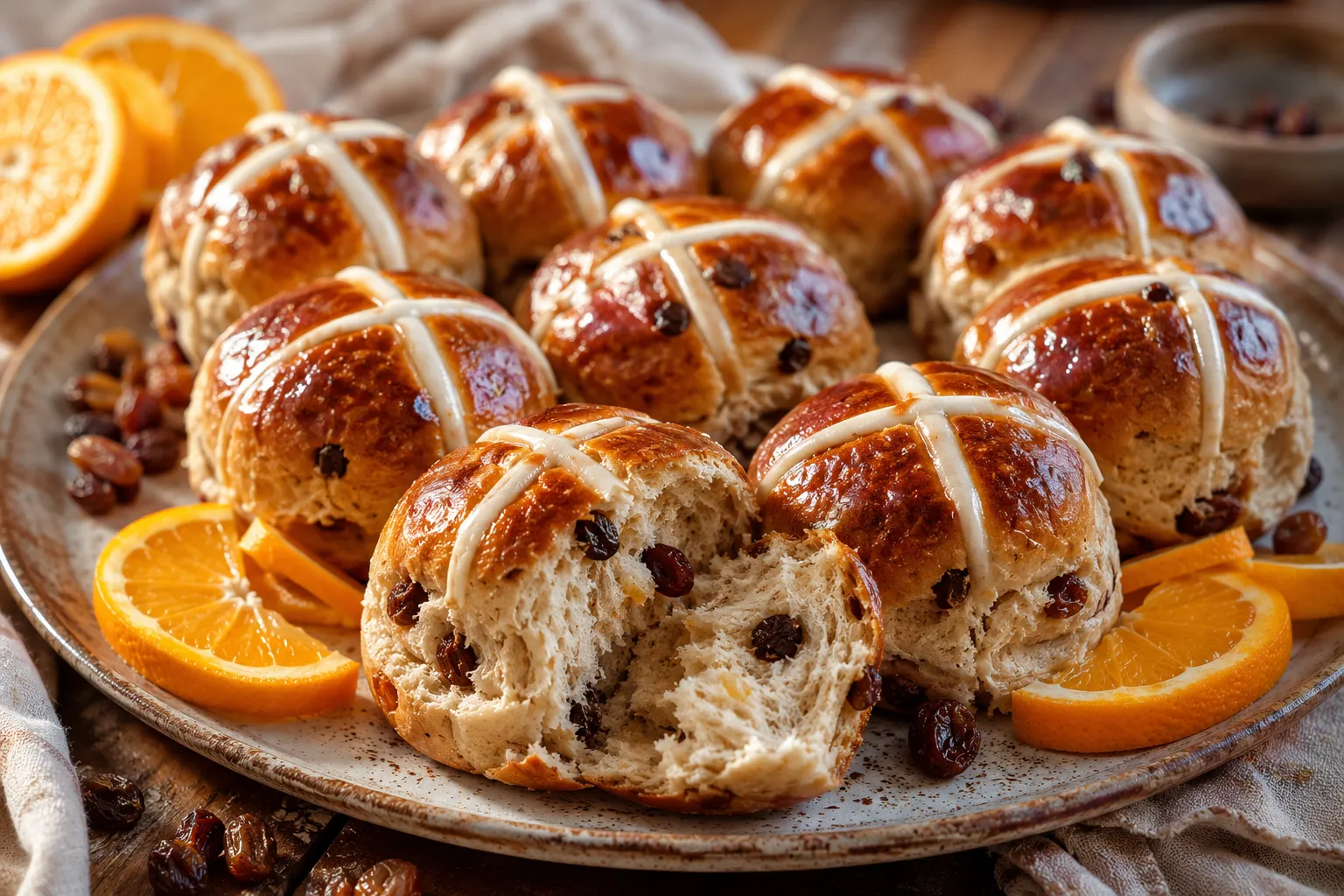
Good hot cross buns come down to patience more than technique — kneading long enough to build structure, and proofing long enough to let the enriched dough actually rise properly. Once you've made a batch that comes out soft, well-risen, and evenly spiced, the recipe becomes less about following exact steps and more about reading the dough itself.