There's a very specific kind of disappointment that comes from biting into a sausage roll and getting wet, pale pastry and a dry, crumbly filling. You know the one. It happens at bad bakeries, sadder office parties, and — if you're not careful — your own kitchen.
The good news is that sausage rolls are one of the most forgiving pastries you can make at home, once you understand the two things that actually matter: keeping your pastry cold and not overworking your meat. Everything else is detail.
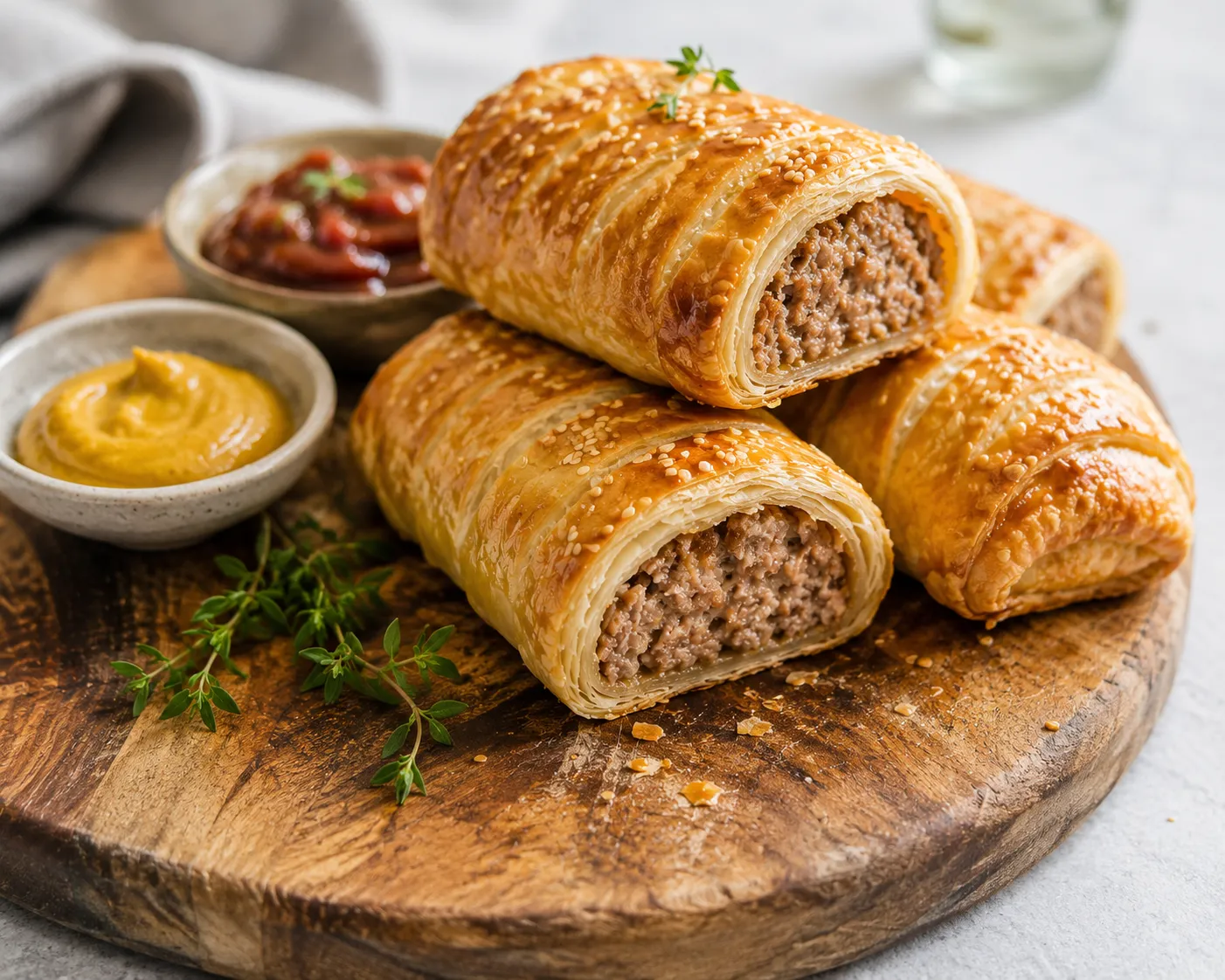
This recipe makes about 20 party-sized rolls or 8 hearty ones, and it leans British-style — all butter puff pastry, well-seasoned pork filling, egg wash, a good crackling crunch on top. Let's get into it.
Why Most Sausage Rolls Go Wrong
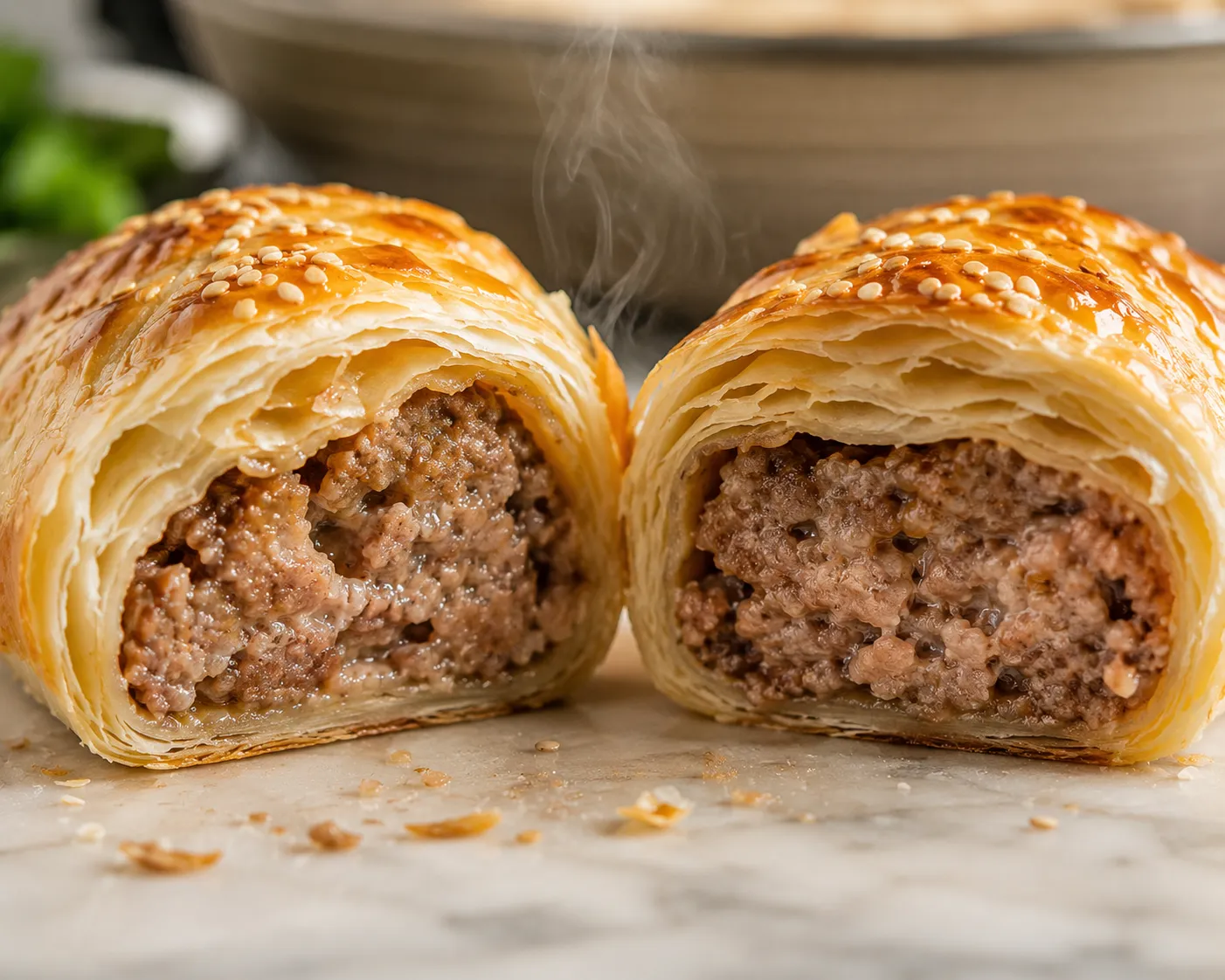
Two culprits show up again and again. First, warm pastry. Puff pastry gets its lift from layers of cold butter trapped between layers of dough. The oven's heat turns that butter to steam, and the steam pushes the layers apart. If your butter melts into the dough before it hits the oven — because your kitchen is warm, or you handled the pastry too much — you lose the puff and end up with something closer to a dense biscuit.
Second, overmixed filling. Sausage meat that's been beaten to a paste turns rubbery and bouncy in a way that isn't pleasant to eat. You want the meat mixed just enough to bind the seasoning through it, not a second longer.
Fix those two things and you're most of the way to a great sausage roll.
Step-by-Step Method
1. Make the filling
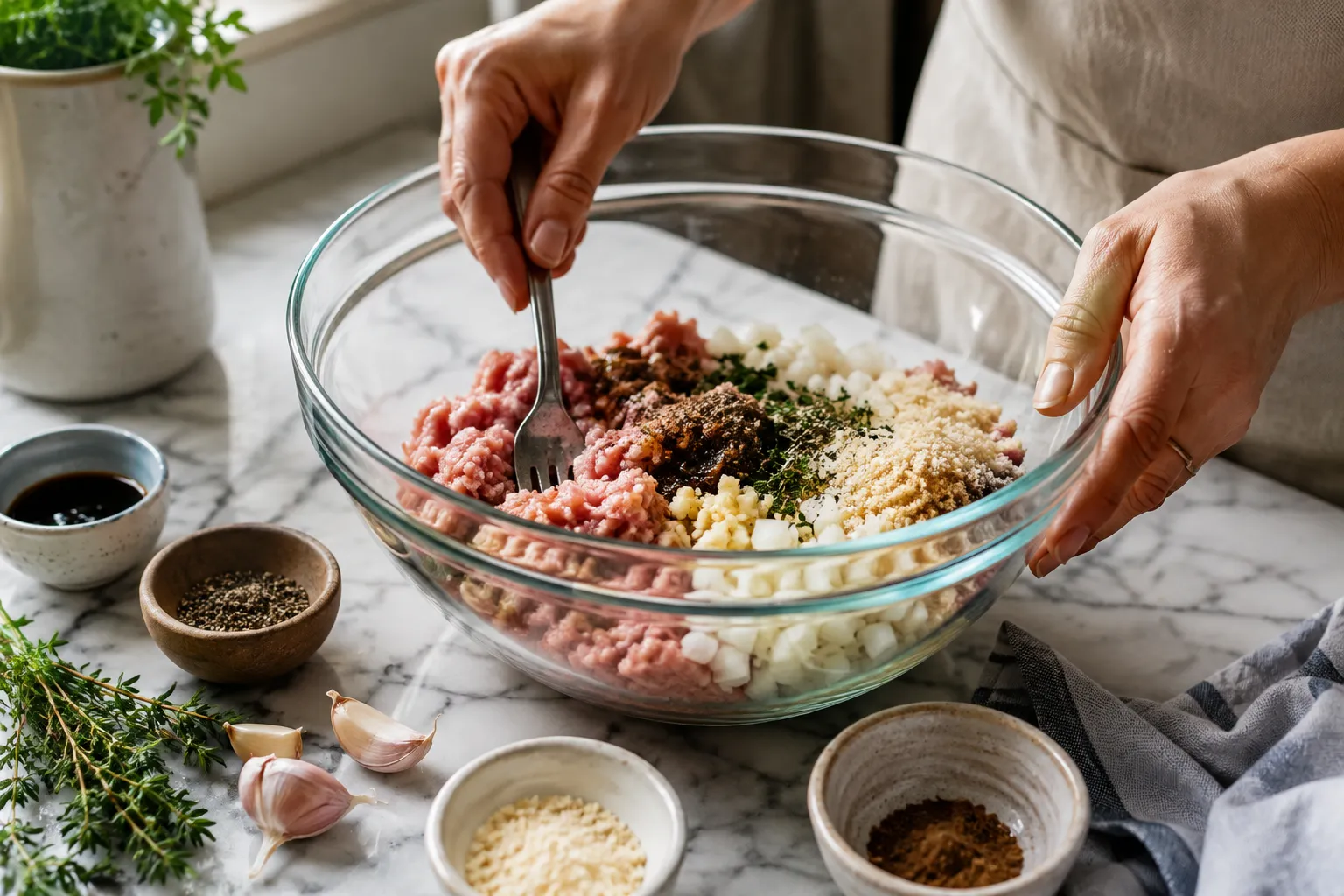 In a mixing bowl, combine the sausage meat, onion, garlic, thyme, white pepper, nutmeg, Worcestershire sauce, and breadcrumbs. Mix with a fork or your hands, but stop as soon as everything is evenly distributed.
2. Roll out the pastry
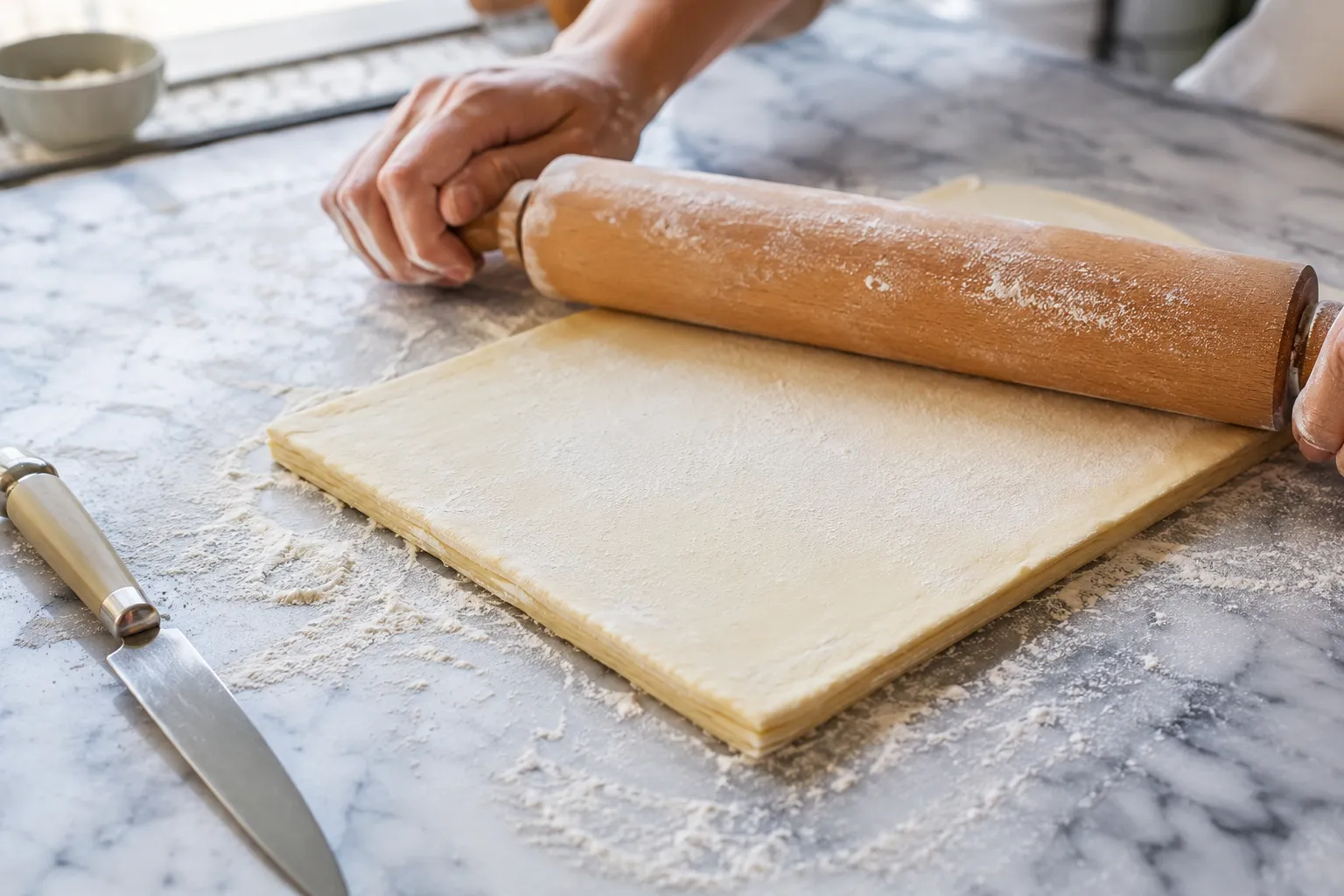 Work on a lightly floured surface, and work quickly. If your pastry has softened while you were making the filling, put it back in the fridge for 10 minutes before rolling.
3. Fill and roll
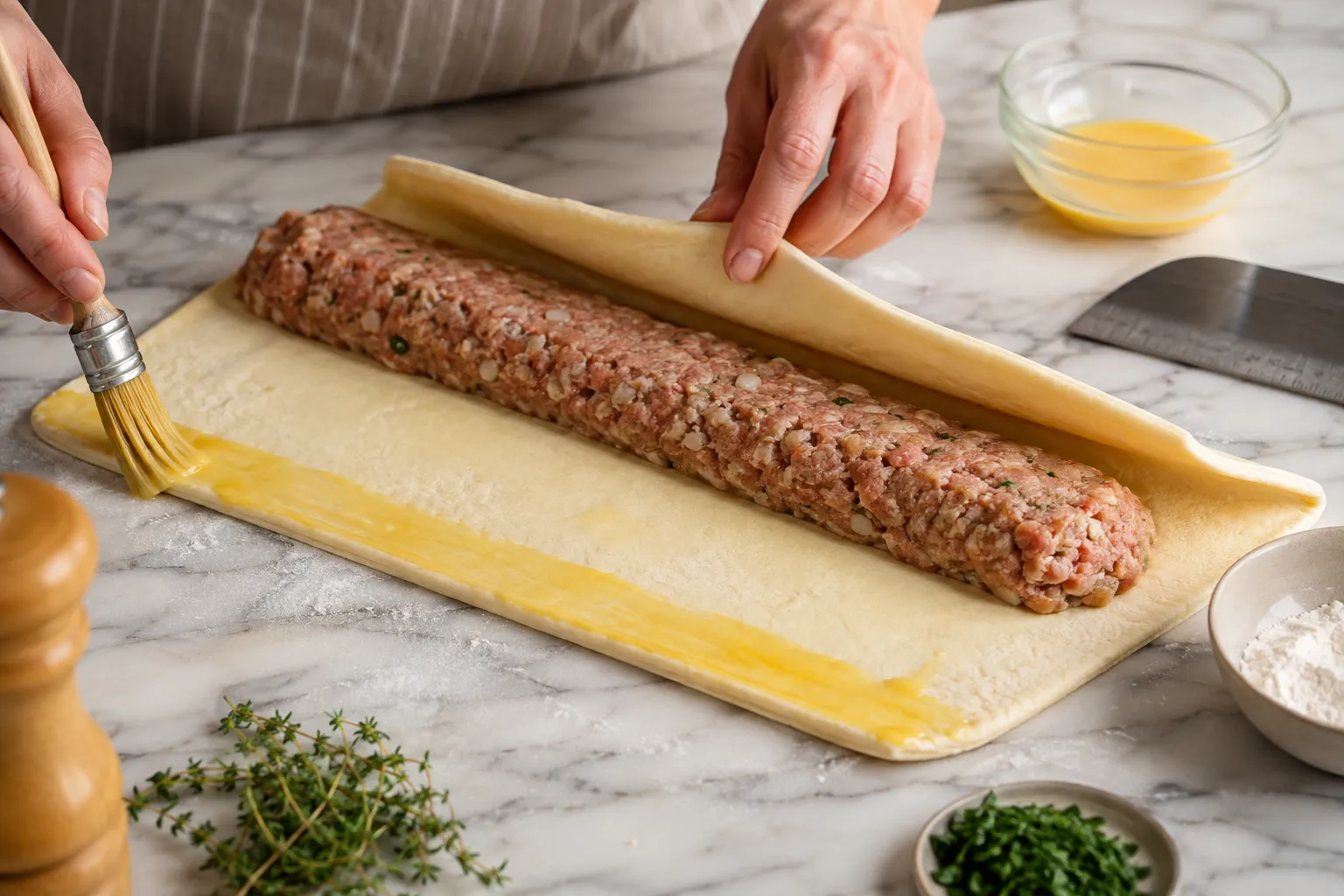 Pipe or spoon the sausage mixture in a log down the center of each strip. Brush the far edge with egg wash, fold the pastry over the filling, and press the seam to seal.
4. Chill before cutting
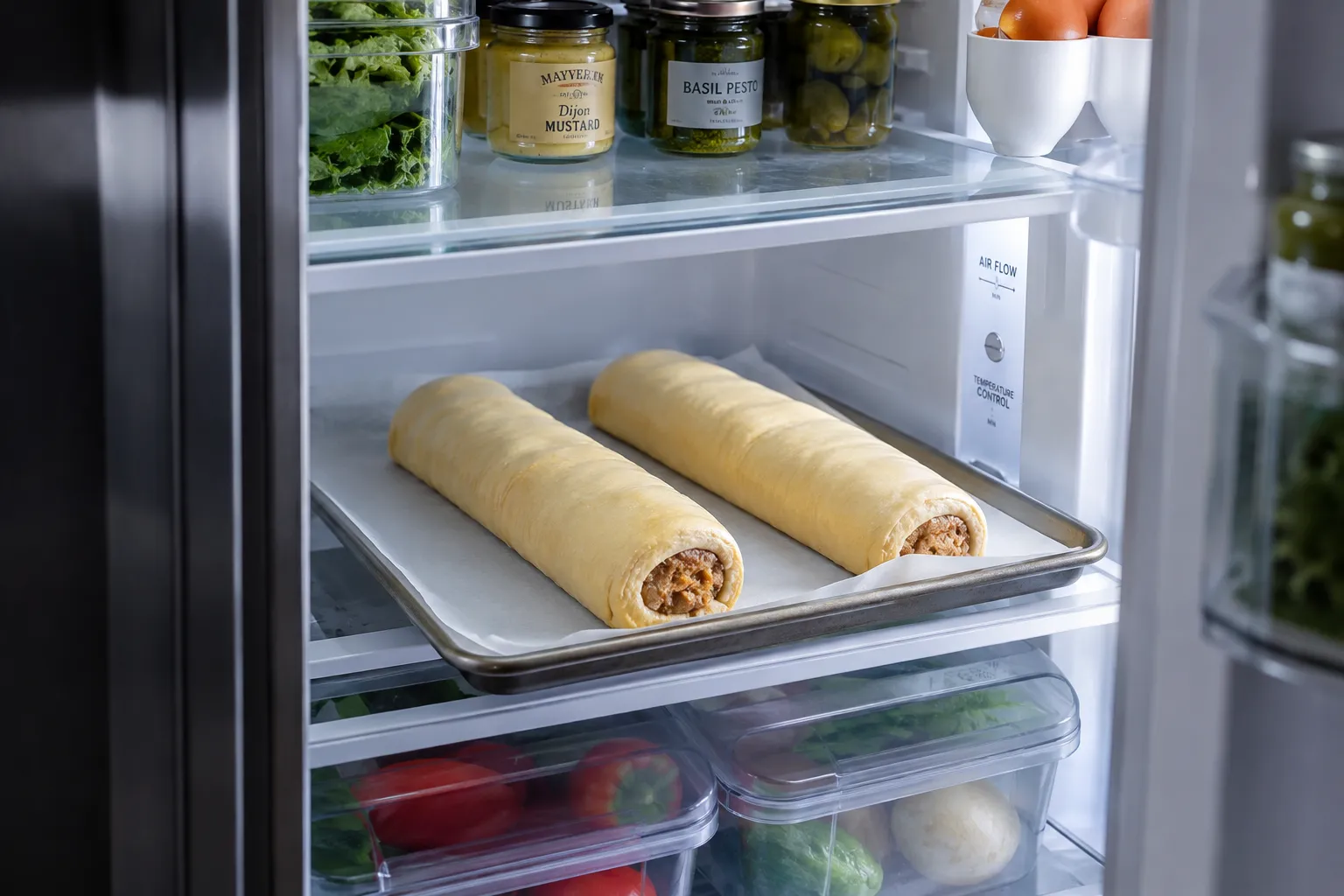 Put the filled logs on a tray in the fridge for 15–20 minutes. Cold pastry cuts cleanly and holds its shape in the oven instead of slumping.
5. Cut, brush, score
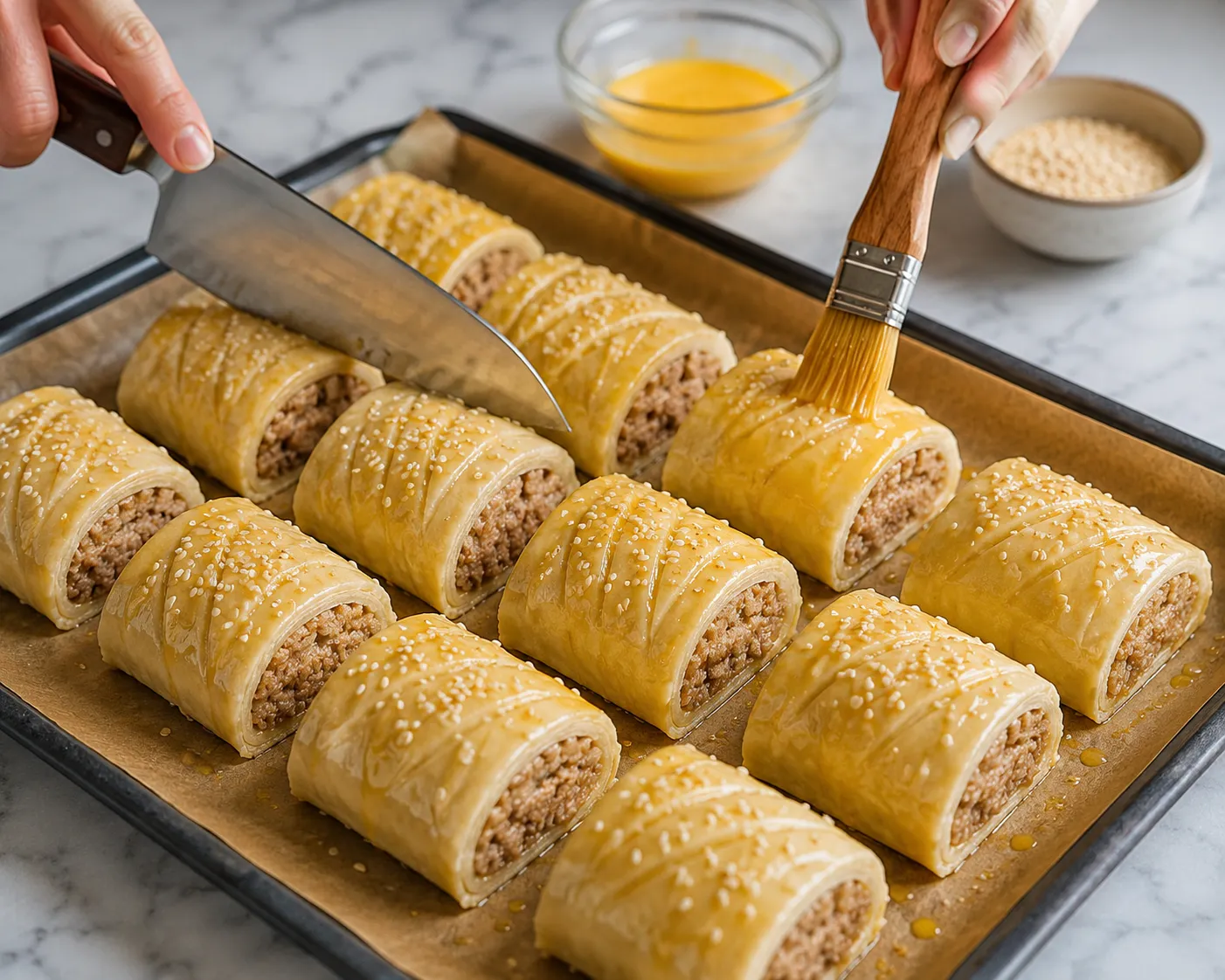 Cut each log into rolls — 2–3 inches for party-sized. Place seam-side down on a lined tray, brush generously with egg wash, and score the tops lightly with a knife.
6. Bake
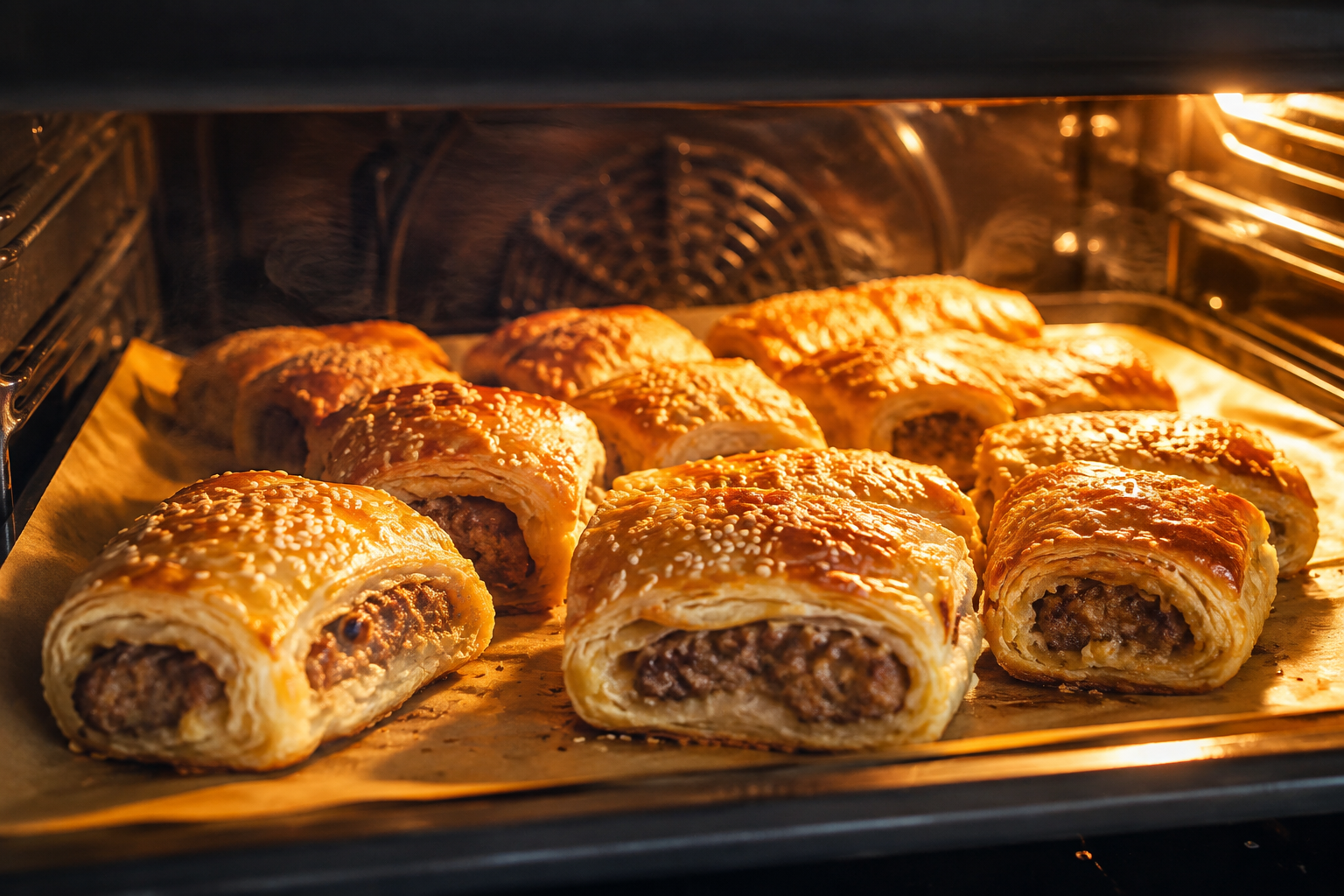 Bake at 200°C (400°F) for 25–30 minutes, until deep golden brown.
Shop-Bought vs. Homemade Pastry
Making your own rough puff pastry gives you more control over butter quality and thickness, and it's genuinely satisfying to do once or twice. But a good all-butter shop-bought puff pastry gets you 90% of the way there with a fraction of the effort, and most bakeries use it too — the sausage meat is where the real differentiation happens anyway. If you're short on time, buy the pastry and put your energy into the filling.
Common Problems and How to Fix Them
Flavor Variations Worth Trying
Make-Ahead and Freezing
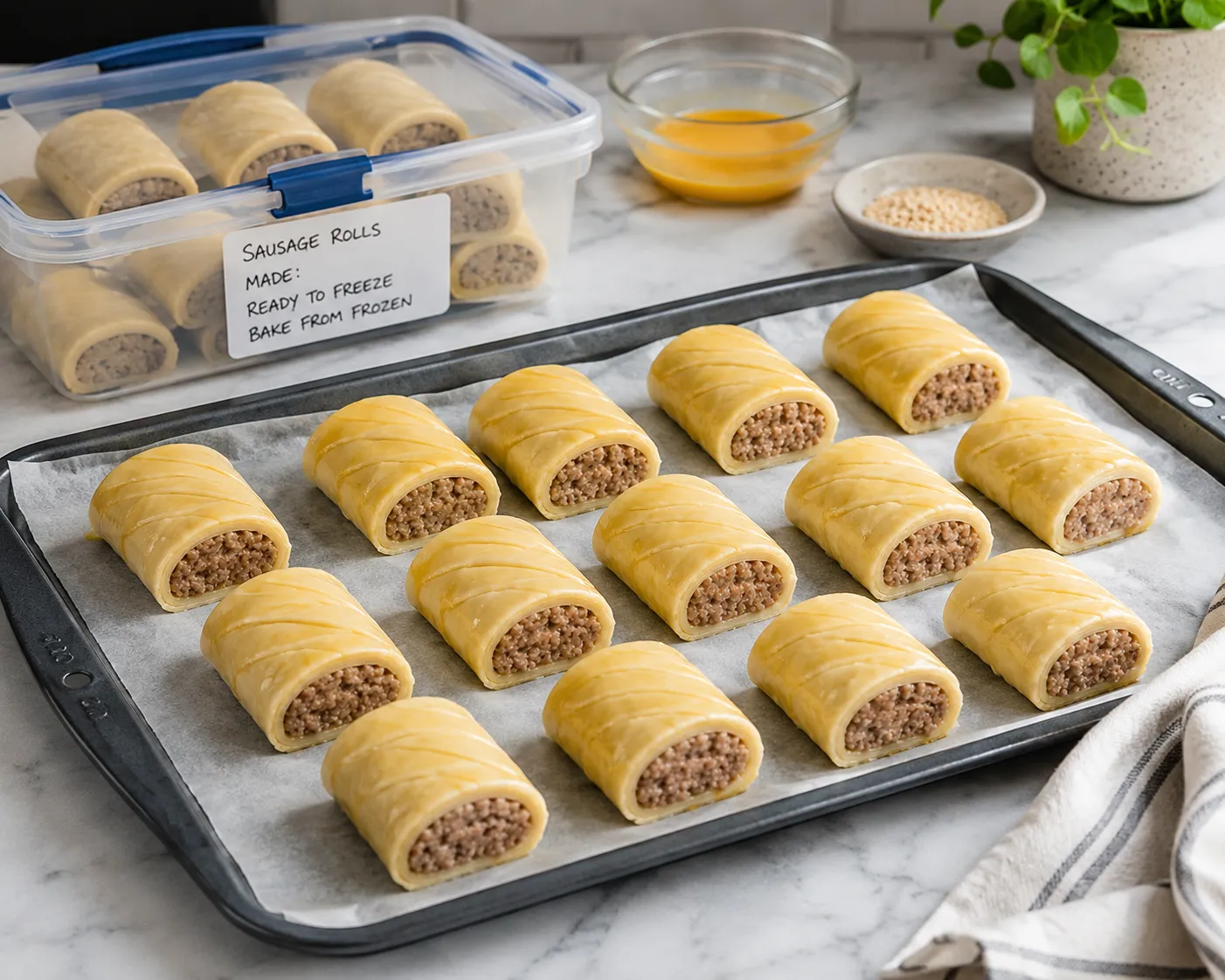
Sausage rolls freeze beautifully, which is one of their best qualities as a make-ahead food. Assemble and cut the rolls, then freeze them uncooked on a tray until solid before transferring to a bag — this stops them sticking together. Bake straight from frozen, adding about 10 minutes to the cooking time, and brush with egg wash just before they go in the oven rather than before freezing.
Cooked rolls also reheat well in an oven or air fryer, though the pastry will never be quite as crisp as fresh from the first bake.
Frequently Asked Questions
Final Thoughts
Sausage rolls reward attention to two simple things — cold pastry and well-seasoned, gently handled filling — far more than they reward complicated technique. Get those right, and you've got something that holds up at a picnic, a party, or just a Tuesday when you want something warm and a little indulgent.
If you try one of the variations above, it's worth making a note of what you changed — small tweaks to seasoning and fat content make a bigger difference here than in almost any other pastry.